


Manipur has long been marked by a culture of protest, where bandhs and general strikes are frequently used as tools of political expression. While the right to protest is a fundamental democratic value, its repeated and prolonged use in the form of total shutdowns raises a critical question: at what cost, and to whom?
Over time, these disruptions have evolved into a normalized response mechanism. Yet, their consequences are neither neutral nor evenly distributed. The burden falls most heavily on ordinary citizens—particularly daily wage earners and students—who have little control over these decisions but suffer their deepest impacts.
From Political Tool to Public Burden
The 139-day economic blockade imposed by the United Naga Council (UNC) in 2016–17 remains one of the most striking examples of how prolonged protests can cripple everyday life. Essential supplies were affected, mobility was restricted, and economic activity slowed dramatically.
However, beyond the visible hardships, there was a quieter, more lasting damage—education came to a near standstill.
Despite such experiences, Manipur continues to witness frequent bandhs. What was once an extraordinary measure has, in many ways, become habitual. This normalization demands critical reflection. When disruption becomes routine, it ceases to be a powerful statement and instead becomes a structural problem.
Education as the Silent Casualty
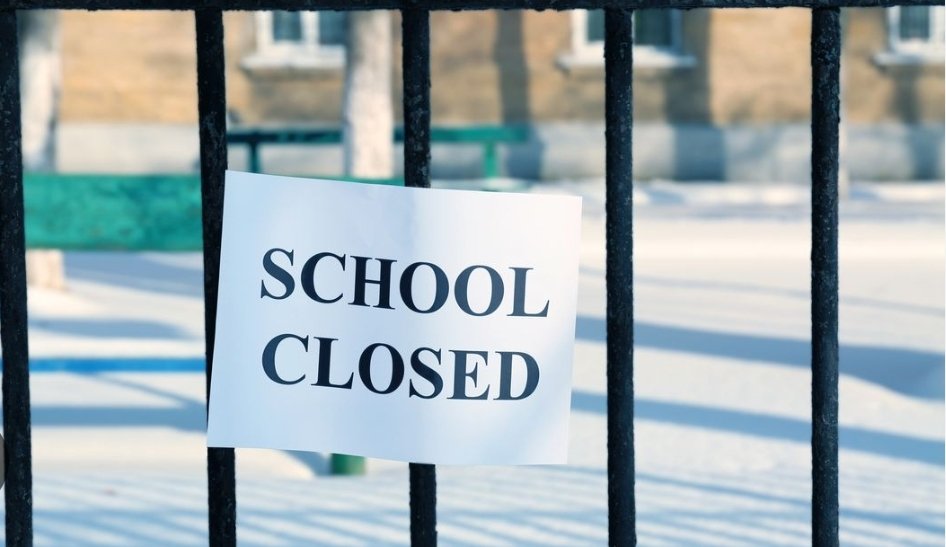
Among all sectors, education suffers the most sustained and irreversible damage. Schools, colleges, and universities are often forced to close during strikes. Academic calendars are disrupted, examinations postponed, and classes cancelled without adequate recovery mechanisms.
Students in Manipur reportedly lose up to 60 academic days annually due to such disruptions. This is not a marginal loss—it is a systemic erosion of learning. Missed lessons cannot always be compensated, and
rushed syllabi reduce the depth and quality of education. Teacher-student interaction declines, and academic continuity is broken repeatedly.
Even when pass percentages may not show immediate drastic decline, the underlying learning deficit grows steadily. Education is not merely about examination outcomes; it is about consistent engagement, conceptual clarity, and intellectual development—all of which are undermined by repeated interruptions.
Forced Migration, Not Free Choice
A visible outcome of this instability is the increasing number of students leaving Manipur to pursue education elsewhere. This trend is often misinterpreted as a preference for better institutions outside the state. However, the reality is more complex.
Manipur does have competent colleges and universities. The issue is not the absence of quality, but the absence of stability. Students and parents seek predictability—regular classes, timely examinations, and uninterrupted academic pprogress
In the absence of these, migration becomes less of a choice and more of a necessity.
This gradual outflow not only affects individual students but also weakens the state’s own educational ecosystem.
Deepening Inequality in Access to Education
The impact of bandhs is not uniform across socio-economic groups. Students from financially secure families often manage disruptions through private tutoring or by relocating outside the state. In contrast, students from economically weaker backgrounds—especially those in government schools—have limited alternatives.
Online classes, sometimes introduced as a substitute during closures, fail to bridge this gap. Limited access to devices, unstable internet connectivity, and lack of digital literacy exclude a large section of students. As a result, educational disruption reinforces existing inequalities, widening the gap between the privileged and the marginalized.
Psychological Toll and Academic Uncertainty
Beyond academic loss, repeated disruptions create an environment of uncertainty and stress. Students are left unsure about examination schedules, syllabus completion, and their overall academic future.
This uncertainty contributes to anxiety, reduced motivation, and declining concentration. Exposure to prolonged unrest and, at times, violent protests can have deeper psychological consequences. Students may experience emotional distress, sleep disturbances, and difficulty focusing on studies. The learning environment becomes not just interrupted, but also mentally exhausting.
The Question of Student Involvement in Protests
Another concerning trend is the involvement of students in protest activities. Educational institutions should ideally remain neutral and protected spaces. The mobilization of students during agitations blurs this boundary and exposes them to risks that extend beyond academics.
There is a need for clear regulatory frameworks to prevent the use of students in political or social protests. Organizations that involve students in such activities must be held accountable. Safeguarding education requires keeping it insulated from external pressures.
Post-Pandemic Setback and Continuing Delays
The educational system in Manipur is still recovering from the setbacks caused by COVID-19. However, instead of stabilization, continued disruptions have compounded the problem. Academic schedules remain inconsistent, and semester examinations are frequently delayed.
While many states conduct semester exams by the first week of June, institutions in Manipur often lag behind due to repeated closures. Recent incidents, such as the violence in Toronglaobi, led to nearly 30 days of shutdown across schools, colleges, and universities.
Students, particularly those at Manipur University, report that syllabi are still incomplete even as examinations approach.
This persistent delay places students at a disadvantage compared to their peers in other sstates
A Stark Contrast with Neighboring States
A comparison with neighboring states reveals an important insight: educational disruption is not inevitable. Many states with their own social and political challenges have managed to maintain relatively stable academic environments.
This contrast suggests that the issue in Manipur is not merely structural but also systemic and attitudinal. It calls for a reassessment of how protest is practiced and how essential services—especially education—are protected during such times.
Towards Accountability and Public Awareness
One of the most pressing needs is public awareness. The long-term consequences of frequent bandhs on education are often underestimated. When schools close, it is not just a temporary pause—it is a cumulative loss that shapes the future of an entire generation.
There must also be institutional accountability. Educational institutions should be recognized as essential services and safeguarded from shutdowns. Policy interventions are needed to ensure that academic activities continue, even during periods of unrest.
Parents, student bodies, civil society, and the government all have a role to play. A collective effort is required to prioritize education over disruption.
Conclusion: Protecting the Future from the Present
The right to protest is vital in any democracy, but it cannot override the right to education. In Manipur, the current pattern of frequent bandhs has shifted the cost of protest onto those who are least responsible for the issues being contested—students.
When education is disrupted, the damage is not always immediately visible, but it is deeply consequential.
It affects learning, mental health, equity, and future opportunities. If Manipur is to move forward, it must ensure that its classrooms remain open, its academic calendars remain intact, and its students remain focused on learning rather than uncertainty. Protecting education is not just a policy necessity—it is a moral imperative.