


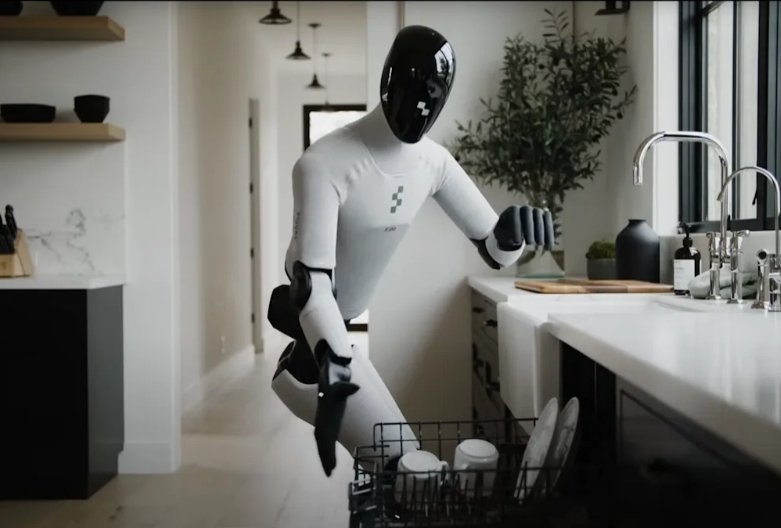
I find myself at an important fork in the road with artificial intelligence, and the title says it all: AI to Do versus AI to Create. One path excites me deeply, using AI as a liberator that handles the drudgery so I can reclaim time for what truly matters: meaningful relationships, exploration, invention, and authentic human expression.
The other path, the one the world is hurtling down in March 2026, fills me with unease: handing over the core acts of creation, writing novels, composing music, painting visuals, scripting stories to machines that generate at industrial scale, often at the cost of depth, skill, soul, and cultural vitality.I’m not against generative AI.
Far from it. The tools available right now are astonishing, and some of you must be using them regularly. For text and reasoning, most of you must turn to powerhouses like Google’s Gemini 3.1 Pro, which leads in multimodal reasoning and long-context planning.
OpenAI’s GPT-5 series variants for their warm, adaptive prose and creative benchmarks; Anthropic’s Claude Opus 4.6 / Sonnet 4.6 when you need nuanced long-form fiction, emotional intelligence, or tasks involving computer-like interface navigation; and xAI’s Grok 4.x (including betas like 4.20) for its witty, multi-agent thinking that reduces hallucinations and sparks unconventional ideas.
On visuals, Midjourney v7 remains the go-to for artistic, cinematic mastery; diffusion leaders like Flux Pro variants deliver photorealism and control. Video generation has leaped forward—Google Veo 3.1 sets the bar for 4K cinematic realism with native audio sync, physics accuracy, and scene extension; OpenAI Sora 2 excels in narrative clips with lifelike motion and sound; Runway Gen-4.5 offers granular editing tools that fit creator workflows.
For music, Suno v5+ and Udio produce full tracks with realistic vocals and stems almost instantly.These aren’t experimental toys, they’re production-ready. I’ve seen solo creators whip up polished short films, album demos, or viral campaigns in hours.
Businesses love the speed: content scales endlessly, marketing ships faster, teams cut costs. And personally? I’ve grabbed quick wins, an Instagram caption, a brainstorm prompt, a reference image, without the usual grind.
But here’s where my concern grows: this “AI to create” explosion is seductive, and the incentives reward it heavily. Capitalism chases low marginal cost and infinite scale. Platforms prioritize volume and engagement metrics over depth.
The result is a flood of smooth, statistically averaged output that buries authentic voices in noise. I worry about discovery becoming harder in that sea. Skill-building suffers, when I skip the painful iterations of bad drafts, revisions, and failures, I never forge real taste or mastery.
The deep satisfaction of wrestling an idea into existence myself gets replaced by a frictionless generate-and-post loop that feels hollow. Creative professions hollow out: mid-tier roles vanish, narrowing the path to true excellence. Culture risks becoming recursive imitation, losing the raw, jagged edges that drive real evolution.
Economically, it amplifies inequality. Those who control the models, datasets, and compute capture the value; the rest compete in a race to the bottom on price and novelty.
What starts as “democratized creation” can devolve into commoditized slop, where “everyone’s a creator” means no one’s work truly stands out.
That’s why I advocate so strongly for the alternative: AI to do. I want AI to act as my relentless helper, eliminating paperwork, triaging emails, aggregating data, writing boilerplate code, managing logistics, processing invoices, scheduling households, summarizing meetings, conducting basic research.
By automating these soul-draining tasks, AI reclaims my bandwidth for empathy, moral nuance, live performance, physical craft, deep human connections, and genuine creative expression.History backs this up.
The washing machine didn’t destroy domestic life; it freed time for education, art, and community. Electricity ended manual toil so minds could innovate.
Today’s tragedy is that incentives skew toward flashy generation over quiet liberation. Companies optimize for content velocity, not human flourishing. Algorithms reward endless scrolling over meaningful depth. The path of least resistance is replacement, not augmentation.
I believe resistance, and redirection is not only possible but essential. I deploy generative AI aggressively to erase toil: letting it draft outlines, suggest structures, generate references, critique my work, remix ideas, speed up research.
But I insist the final expressive act stays mine, the soul-infused choices, the vulnerable risks, the unique taste, the courage to share something imperfect yet personal.
The future I’m rooting for isn’t one where AI surpasses humans in novels or symphonies. It’s one where AI handles spreadsheets, commutes, and rote edits so seamlessly that millions more of us attempt novels, paint canvases, compose melodies, even if most remain awkward, flawed, and unmistakably human. Imperfection is the price of authenticity; machine perfection is the price of meaning.
In March 2026, displacement is accelerating in creative and knowledge work as agentic systems roll out. Industries face generative floods. The tools are neutral; the choice is ours.
I choose to harness AI to erase drudgery and amplify what makes us human, rather than let it commoditize our defining acts.I draw the line decisively: automate the grind relentlessly, safeguard the spark fiercely.
The world may currently favor unchecked creation, but I believe wiser societies, and wiser individuals prioritize liberation instead.


Naorem Mohen is the Editor of Signpost News. Explore his views and opinion on X: @laimacha.