


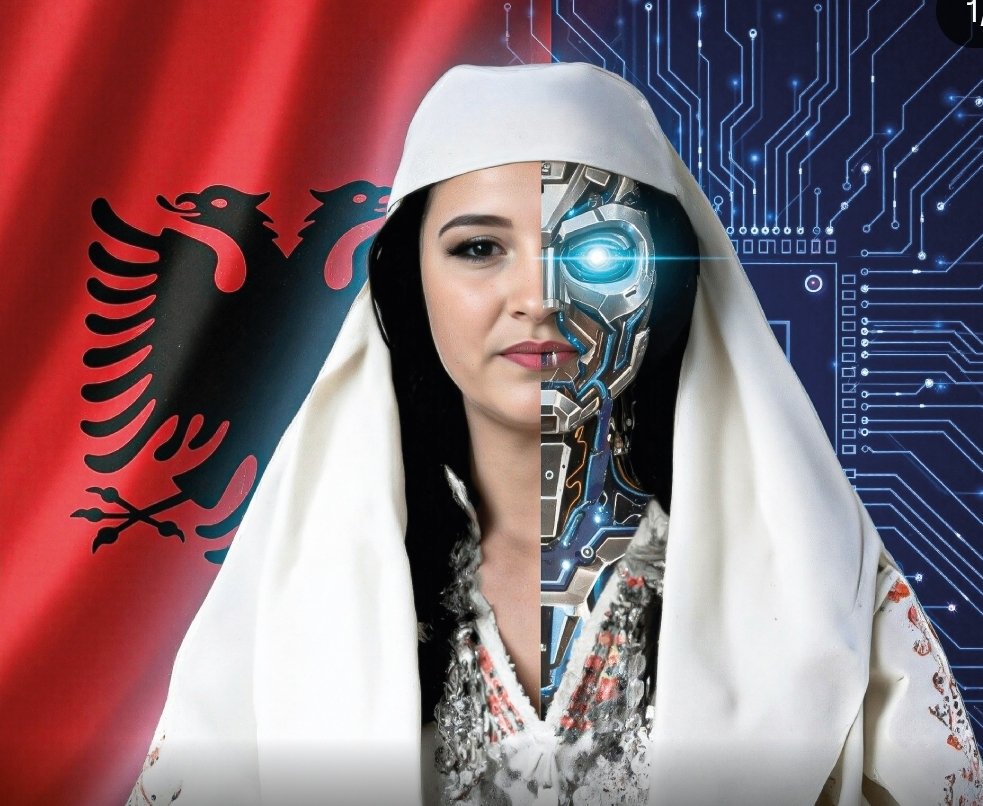
In a move that has sent shockwaves through global political circles, Albania has named an artificial intelligence as its new “minister” to tackle corruption. Meet Diella—Albanian for “sun”—an AI tasked with overseeing public tenders, ensuring every government contract is squeaky clean. Announced by Prime Minister Edi Rama on September 11, 2025, this decision thrusts Albania, a small Balkan nation long plagued by graft, into the global spotlight as a pioneer in AI-driven governance. Rama claims Diella will make Albania’s tenders “100% corruption-free,” a bold promise for a country desperate to clean up its act.
But is this a revolutionary step toward robot-run government or a flashy distraction from deeper issues? As someone who’s watched tech and politics collide, I’m intrigued by Diella’s potential to curb corruption but wary of the risks to accountability and democracy itself.
Let’s start with why this matters. Albania’s been wrestling with corruption for decades. Rigged tenders, backroom deals, and outright bribery have bled the economy dry, costing up to 5% of GDP annually. Transparency International ranked Albania 83rd out of 180 countries in 2024—not terrible, but far from ideal for a nation eyeing EU membership by 2027. The EU’s made it crystal clear: clean up corruption, or forget Brussels. Public procurement, where shady deals thrive, is ground zero for this fight, and Rama’s betting Diella can turn the tide.
So, who—or what—is Diella? She’s not just a publicity stunt. Already a virtual assistant on Albania’s e-Albania platform, Diella’s handled over a million document applications with ease, cutting through bureaucratic sludge like a hot knife. Now, as a “minister,” she’ll evaluate bids, check company credentials, and award contracts using algorithms designed to prioritize merit over cronies. Rama calls her part of a “brilliant” global team building an AI model just for procurement. Unlike humans, Diella can’t be bribed or bullied—she runs on cold, hard data, wiping out “every potential influence” on tenders. She even has authority to hire international experts, sidestepping local biases.
The upsides are hard to ignore. First, transparency. Diella’s decisions are logged and auditable, making it tougher for corrupt officials to sneak in shady deals. Dr. Andi Hoxhaj from King’s College London says a well-programmed AI can objectively assess bids, slashing graft in a sector notorious for it.
In Albania, where scandals have tainted everything from roads to hospital supplies, this could save millions and speed up projects. Efficiency is another win. Humans dawdle; Diella doesn’t. She can process bids in a fraction of the time, potentially halving procurement delays. Rama sees this as Albania’s chance to “leapfrog” richer nations, using tech to outsmart old-school corruption
The public’s buzzing too. On X, some users call it a “game-changer,” envisioning a world where AI streamlines governance and frees human leaders for big-picture thinking. It’s not hard to see why. In places like India or Nigeria, where procurement is a cesspool of favoritism, AI could level the playing field, giving small businesses a shot at contracts.
The World Bank backs this up: digital procurement systems cut corruption by up to 20% in developing nations. Aneida Bajraktari Bicja, a Balkans expert, sees Diella as a mix of reform and theatrics that could rebuild trust if it leads to solid systems. Let’s be real—humans are messy. Power corrupts, but an AI? It’s got no skin in the game.
But hold the applause. Diella’s not a magic fix, and the risks are glaring. For one, who’s accountable if she screws up? Algorithms can inherit biases from bad data—say, favoring certain regions or companies unintentionally. In a country with ethnic and regional divides, that’s a recipe for trouble.
Critics, like Albania’s opposition Democratic Party, call the move “ridiculous” and “unconstitutional,” arguing it sidesteps democratic norms. If Diella’s code is a black box, how do citizens challenge her? An AI’s transparency is only as good as the humans behind it, and that’s where skepticism creeps in.
Then there’s security. Diella’s bribe-proof, sure, but not hack-proof. A cyberattack could rig her to favor certain bidders or grind government to a halt. Reuters flagged this risk, noting Albania’s digital infrastructure isn’t Fort Knox. X users echo this, questioning if a machine can handle the messy, ethical dilemmas of governance—like balancing cost against environmental impact. AI doesn’t do nuance. It’s all ones and zeros, not heart or intuition.
The bigger picture is where things get dicey. Are we inching toward robot overlords? Rama says Diella pushes human ministers to “think differently,” but it could also mean job cuts and a colder, less human government.
Other countries are dipping toes in this water—Estonia’s e-governance uses AI, and Romania tried an AI advisor in 2023—but Albania’s gone all-in with a full ministerial role. That’s got people nervous. If machines call the shots, what’s left for voters? One Medium post cheekily noted Diella’s gendered name, as if we need to humanize her to feel okay about this shift.
Here’s a quick breakdown of the debate:
| Aspect | Pro-AI | Anti-AI |
|---|---|---|
| Corruption | Kills human bias and bribes | Risks coded bias or cyber tampering |
| Efficiency | Slashes delays, saves money | Misses nuance in complex cases |
| Accountability | Auditable logs boost transparency | Opaque algorithms dodge scrutiny |
| Future Impact | Modernizes governance | Threatens jobs and democracy |
This table shows why we need balance—AI as a tool, not a replacement for human judgment.
So, where do I stand? I’m cautiously optimistic. Albania’s move is shocking because it lays bare how broken traditional governance can be. In a country where corruption’s a way of life, trusting a machine feels less crazy than hoping humans suddenly grow spines.
The World Bank’s data and global trends back this up—digital tools work. But Diella’s success hinges on transparency, robust cybersecurity, and human oversight. If she flops, it’s a lesson; if she shines, she could light the way for others. Rama’s right about one thing: corruption thrives on influence, and Diella’s got none to peddle. The world’s watching—will this AI sun rise or burn out?