


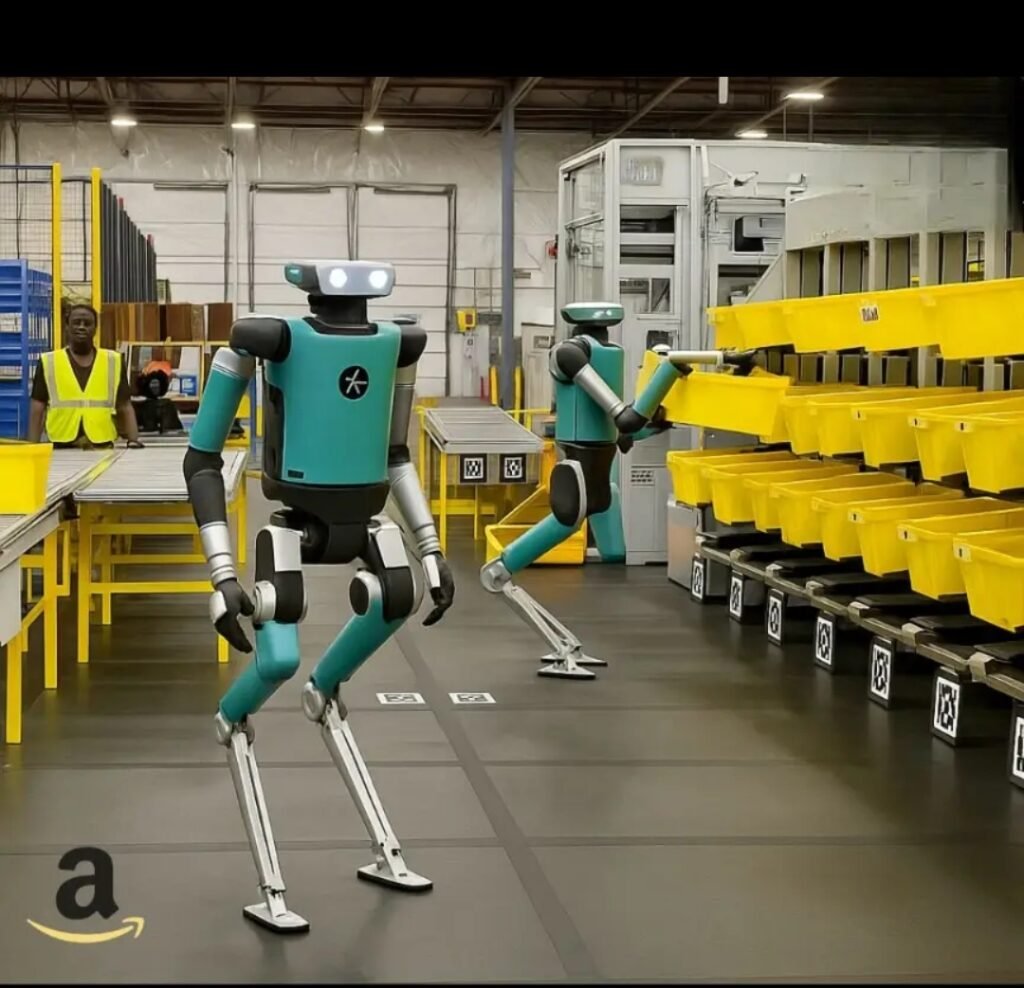
Amazon’s recent deployment of its 1 millionth robot, coupled with a cutting-edge AI foundation model to manage its vast robotic fleet, marks a historic moment in the evolution of artificial intelligence and automation. Announced as part of a broader push toward full automation in its fulfillment centers, particularly highlighted in the UK, this milestone showcases a future where AI doesn’t merely assist but fundamentally transforms logistics and supply chains. While Amazon’s achievement promises unprecedented efficiency, it also raises urgent questions about the societal costs of such rapid technological advancement.
These aren’t your average warehouse robots. Powered by advanced machine learning and real-time data analytics, Amazon’s autonomous systems handle tasks like sorting, packing, and transporting goods with a precision and speed that outstrips human capabilities. According to Amazon, its robotic fleet has grown from 350,000 units in 2019 to over 1 million in 2025, a nearly threefold increase in just six years. This expansion has slashed processing times in fulfillment centers, with some facilities reporting up to a 25% reduction in order fulfillment duration compared to human-led operations. Enhanced safety is another win: robots have reduced workplace injuries by 15% in automated facilities by taking over hazardous, repetitive tasks.
Yet, the numbers tell only part of the story. Amazon’s goal of full automation—where robots handle the bulk of warehouse operations—signals a seismic shift in labor dynamics. The company claims this will “free up” human workers for higher-skill roles like problem-solving or tech maintenance. However, with 60% of warehouse tasks now automated in Amazon’s most advanced facilities, the reality is that many low-skill jobs are disappearing. Globally, Amazon employs over 1.5 million people, but analysts estimate that widespread automation could reduce this number by 10-20% in the next decade if current trends continue. Without robust retraining programs or economic safety nets, this could exacerbate unemployment and widen income inequality, particularly for workers in regions heavily reliant on logistics jobs.
The AI foundation model driving Amazon’s robots is equally transformative. Capable of coordinating millions of robots across thousands of facilities, it optimizes workflows in real time, adapting to demand spikes or supply chain disruptions. This level of centralized intelligence isn’t just a logistics breakthrough—it’s a blueprint for other industries. From manufacturing to retail to healthcare, AI systems like this could manage complex operations at scale, potentially boosting global productivity by trillions of dollars. A 2023 McKinsey report estimated that AI-driven automation could add $4.4 trillion annually to the global economy by 2030, with logistics as a leading sector.
But this brave new world comes with risks. As AI systems grow more autonomous, concerns about accountability, bias, and transparency intensify. Who ensures these algorithms prioritize fairness? What happens when an AI misjudges a critical decision in a high-stakes environment? Amazon’s tight-lipped approach to its AI’s inner workings only fuels these questions. Furthermore, the environmental impact of scaling up robotic fleets—requiring vast amounts of energy and rare earth metals for production—remains underexplored. A 2024 study suggested that large-scale automation could increase carbon emissions by 5-10% in logistics if not paired with sustainable energy solutions.
Amazon’s millionth robot is a triumph of innovation, setting a new standard for retail and supply chain efficiency. But it’s also a wake-up call. The rush to automate must be tempered by a commitment to reskilling workers, ensuring equitable access to the benefits of AI, and addressing the ecological footprint of such technologies. If we’re to embrace this AI-driven future, we must balance its promise with its perils, ensuring that the march toward automation doesn’t leave humanity behind. The robots are here—what comes next depends on how we choose to shape their impact.