


Look, the news is coming at us hard and fast these days. Just a few days ago, on February 28, 2026, U.S. and Israeli forces launched major airstrikes on Iran under what the administration calls Operation Epic Fury.
The targets included nuclear sites, missile facilities, and regime leadership, Iran’s Supreme Leader Ayatollah Ali Khamenei was killed, along with other top officials. Iran has pushed back hard by shutting down the Strait of Hormuz, firing missiles at regional allies, and even a drone strike that killed at least six American service members near our interests in Saudi Arabia.
President Donald Trump frames this as a short, decisive move, four to five weeks tops to neutralize a real threat from Iran’s nuclear program and its proxies. It’s the kind of high-stakes action that dominates every screen and conversation.
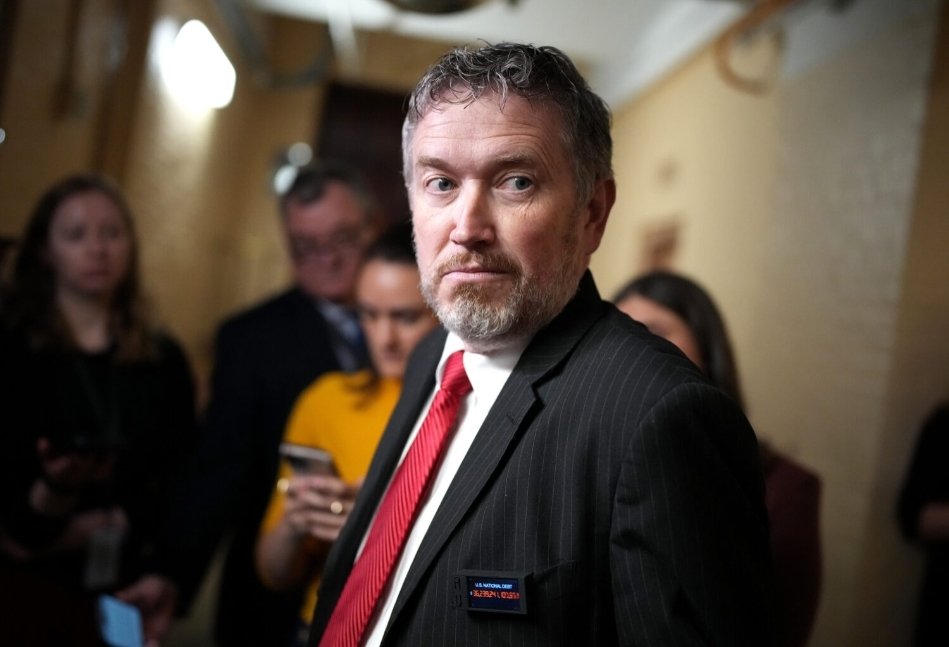
But Republican congressman is refusing to play along. Thomas Massie of Kentucky isn’t letting it drown out everything else. On March 1, he posted on X: “PSA: Bombing a country on the other side of the globe won’t make the Epstein files go away, any more than the Dow going above 50,000 will.”
It’s a sharp, no-nonsense jab straight at the idea that foreign military drama can sideline domestic scandals. Massie, who helped push the Epstein Files Transparency Act into law, has been relentless about getting those DOJ and FBI documents out, millions of pages exposing ties between Jeffrey Epstein’s sex trafficking network and powerful figures in finance, politics, and academia.
Recent drops have already forced resignations, like former Harvard President Larry Summers stepping away from boards over resurfaced connections. Massie keeps pressing for more: unredacted files, probes into things like Epstein’s Zorro Ranch, and explanations for why some investigations got quietly buried.
The timing of the Iran strikes has people talking diversion. As the Epstein revelations keep coming, a big overseas conflict conveniently shifts the spotlight. Massie isn’t the only one noticing, he’s just the most direct about it.
And he’s got a consistent track record, he opposes unauthorized wars, citing the Constitution’s war powers clause, and he’s already teaming up with Rep. Ro Khanna (D-CA) on a resolution to force Congress to vote on (or against) continued U.S. involvement in Iran.
“This is not ‘America First,'” he said right after the strikes began. For him, it’s about congressional oversight, protecting troops, and not letting executive action bypass debate.
That said, Massie’s stance draws plenty of criticism. Some accuse him of being too soft on Iran or even sympathetic to the regime’s narrative. Online and in comments sections, detractors point to the long, sour U.S.-Iran history.
Back in the 1970s, the U.S. backed Shah Mohammad Reza Pahlavi as a key ally against Soviet influence and for oil stability. He was modernizing Iran, women’s rights, education, infrastructure, but his authoritarian rule fueled resentment.
Then came 1979: the Islamic Revolution, the Shah’s ouster, the U.S. embassy hostage crisis that humiliated President Jimmy Carter and dragged on for 444 days. Many see that as the moment relations shattered, with Iran labeling America the “Great Satan” and sponsoring attacks through proxies ever since.
Critics of Massie (and similar non-interventionists) argue the current strikes are finally addressing decades of Iranian aggression, starting with the revolution that overthrew a U.S.-friendly leader and continuing through support for terrorism, missile threats, and nuclear ambitions.
Some even frame it as correcting Carter’s “mistake” of abandoning the Shah. They point out that ordinary Iranians have suffered enormously under the Khamenei regime. The brutal crackdowns on protests, economic misery from sanctions and mismanagement, suppression of women and minorities.
The strikes, in this view, could open the door to real change, maybe even a freer Iran, rather than propping up a theocracy that’s tormented its own people for 47 years.
Massie doesn’t defend the current regime, he’s called it brutal and destabilizing in the past. His opposition is constitutional and pragmatic: no unilateral wars without Congress weighing in, no endless entanglements that drain American resources, and no distractions from fixing problems at home.
He questions whether this action truly serves U.S. interests first or risks pulling us deeper into another Middle East quagmire.
Supporters of the strikes counter that Iran’s threats are real and immediate, nuclear breakout, attacks on allies, regional chaos and that decisive action prevents worse problems down the line.
It’s a messy, polarized debate. The Epstein files keep forcing tough questions about elite accountability and potential cover-ups. The Iran conflict raises legitimate fears of escalation, civilian costs, and blowback.
Both demand attention, and pretending one cancels the other out only breeds more distrust.
Massie’s point stands, you can’t bomb away domestic scandals or constitutional principles. But the counterargument has weight too, Iranians have endured real suffering under this regime, and U.S. policy toward Iran has a complicated, often tragic history that doesn’t fit neat isolationist or interventionist boxes.
A balanced approach would demand congressional debate on the war, full transparency on Epstein, and careful consideration of what actually advances American security without endless commitments abroad.In the end, these crises aren’t zero-sum.
We can pursue justice at home while avoiding reckless adventures overseas. Massie’s warning reminds us that distractions, whether military fireworks or market highs don’t erase the need for accountability. And ignoring the human cost in Iran, or the lessons from 1979, would be just as shortsighted.


Naorem Mohen is the Editor of Signpost News. Explore his views and opinion on X: @laimacha.