


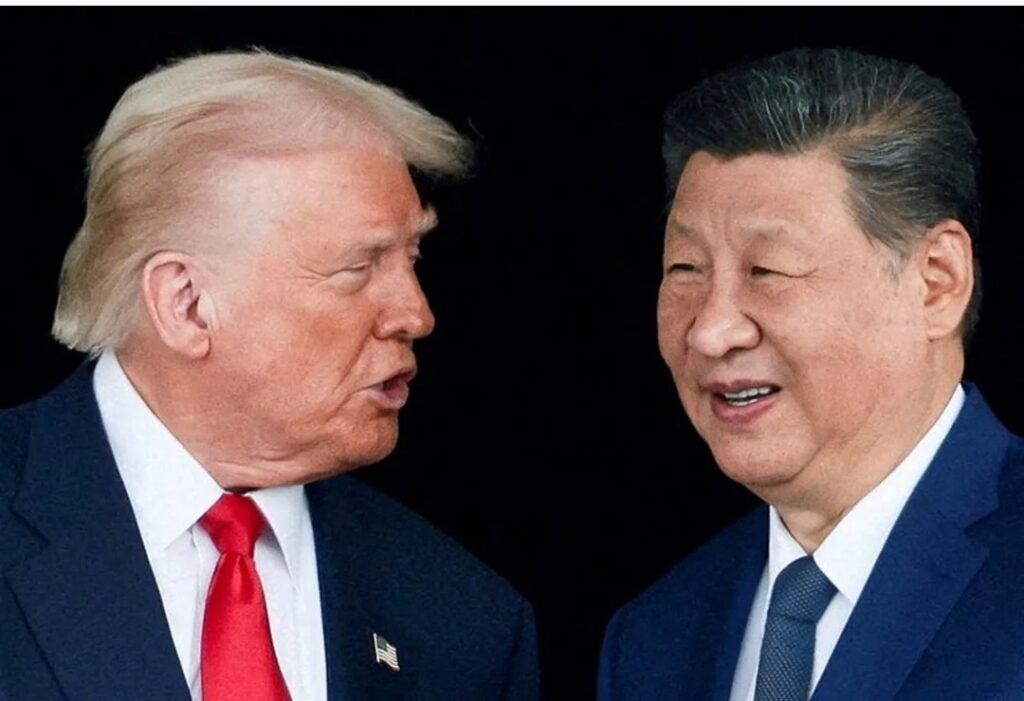
US President Donald Trump recently claimed that Beijing has agreed not to supply weapons to Iran. At the same time, he vowed to permanently reopen the Strait of Hormuz for safe global energy flows. “China is very happy that I am permanently opening the Strait of Hormuz. I am doing it for them, also — and the World. This situation will never happen again,” Trump posted on his Truth Social platform.
He went further, stating that China has “agreed not to send weapons to Iran,” and confidently predicted that “President Xi Jinping will give me a big, fat, hug when I get there in a few weeks.”
These remarks came ahead of Trump’s planned visit to Beijing on May 14-15 — marking his first trip to China in this second term.
Trump described the current engagement as smart and practical: “We are working together smartly, and very well! Doesn’t that beat fighting? But remember, we are very good at fighting, if we have to — far better than anyone else.”
The entire arrangement, according to the US President, hinges on one firm condition — the nuclear issue. There will be no peace deal if Iran continues pursuing nuclear weapons. In an interview with Fox Business, Trump was direct: “They cannot have a nuclear weapon. If they don’t, we’re not making a deal.”
He noted that Iran had been “hit very hard” and warned that America could destroy every bridge or electric power plant in the country within one hour if necessary, though he added, “We don’t want to do that. We’ll see what happens.”
This latest development provides a timely lens to examine a widely discussed idea in global affairs: Can Donald Trump really pressure China’s Xi Jinping in the same way he pressures leaders of other nations? The answer lies not just in personal chemistry or summit optics, but in deeper differences of power structures, economic scale, and strategic autonomy.
Trump’s Transactional Approach in ActionTrump has long favored a direct, deal-making style. He uses a mix of personal praise, shared-interest framing, tariff threats, and reminders of American military strength to extract concessions. With many nations that maintain close economic and security ties with the United States, this approach often produces quicker results.
Leaders of such countries frequently face immediate domestic pressure when Washington threatens higher tariffs, adjusts trade rules, or links security cooperation to policy changes. Economic interdependence — especially reliance on the vast US market for exports — creates tangible leverage points that can influence decisions in relatively short timeframes.
In the current Iran situation, Trump has positioned US military actions as beneficial to global energy security, particularly for major importers like China. By claiming Beijing’s agreement on weapons supplies and expressing confidence in a warm reception from Xi, he frames the episode as a diplomatic win achieved through American strength and pragmatic engagement.
Chinese officials, however, have consistently denied supplying weapons to Iran and have publicly urged de-escalation and dialogue. What Trump presents as a new “agreement” may simply reflect Beijing reaffirming its existing policy rather than yielding to direct pressure.
The key contrast lies in how power operates. Many nations operate within systems where economic vulnerabilities and domestic political accountability make leaders more responsive to external signals.
When trade disputes arise or tariffs loom, the impact on jobs, growth, and public opinion can force rapid negotiations or adjustments. Alliance commitments and integrated supply chains further narrow the margin for defiance.
Xi Jinping, by comparison, leads from a highly centralized position. China’s enormous domestic market, manufacturing base, push for technological self-reliance, and extensive global partnerships provide significant resilience.
While US-China economic ties remain deep, Beijing possesses counter-leverage tools — ranging from export controls to market diversification — and can absorb short-term costs better than smaller or more dependent economies. Xi’s long-term vision of national rejuvenation encourages strategic patience over reactive concessions on core interests.
This difference explains why many observers believe Trump faces steeper challenges when dealing with Xi. On issues like Iran, any Chinese restraint would likely stem from Beijing’s own calculations — protecting stable oil prices, preserving its international image, and avoiding broader regional chaos — rather than straightforward submission to US demands.
The May 14-15 summit in Beijing will test this dynamic directly. Trump arrives expecting tangible outcomes, possibly including further understandings on Gulf stability and trade matters. His colorful prediction of a “big, fat hug” reflects his optimistic style of personal diplomacy.
Yet history shows that such summits often deliver photo opportunities and incremental steps while leaving fundamental rivalries — over technology, Taiwan, and regional influence — largely intact.
Trump’s nuclear red line remains clear: no deal if Iran pursues the bomb. This position aligns with longstanding US policy but adds complexity to China’s balancing act between opposing proliferation and resisting unilateral American enforcement in the region.
No leader is entirely immune to pressure, and no major power is completely uncontrollable. Even nations more exposed to US leverage retain tools for pushback through diversification or domestic consensus-building.
However, the speed and effectiveness of influence vary sharply depending on economic scale, decision-making structures, and strategic depth.
Trump’s style works most effectively where interdependence creates clear vulnerabilities. With China, the relationship involves both deep mutual dependencies and intense competition, which naturally limits how far pressure can be applied without triggering costly retaliation or accelerated decoupling.
The Hormuz episode itself illustrates overlapping interests rather than one-sided dominance. Secure shipping lanes benefit China’s energy needs and the global economy alike. US actions project strength, while Beijing gains practical stability without overt concessions.
A Realistic ConclusionCan Trump really pressure Xi the way he does others? The evidence suggests the answer is “not to the same degree.” Xi enjoys greater insulation thanks to China’s scale, centralized authority, and long-term strategic focus. Trump’s transactional tools — praise, threats, and personal engagement — can still open channels for cooperation, but they rarely produce quick shifts on issues Beijing views as fundamental.
This does not mean Xi is uncontrollable or that summits are pointless. Pragmatic deals remain possible where interests align, as the current Iran-related claims demonstrate. Yet the May summit is more likely to yield measured understandings than dramatic breakthroughs or signs of one-sided pressure.
In today’s complex international political scenario, personal diplomacy helps manage crises, but it cannot override differences in national power and resilience. True influence flows from domestic strength, credible capabilities, and clear strategic thinking — not merely from bold statements or warm gestures.
As Trump prepares for Beijing, the world will watch whether transactional engagement can bridge the gap or whether structural realities will once again set the limits. Global stability benefits from continued dialogue, but illusions of easy leverage risk miscalculation on all sides.


Naorem Mohen is the Editor of Signpost News. Explore his views and opinion on X: @laimacha.