


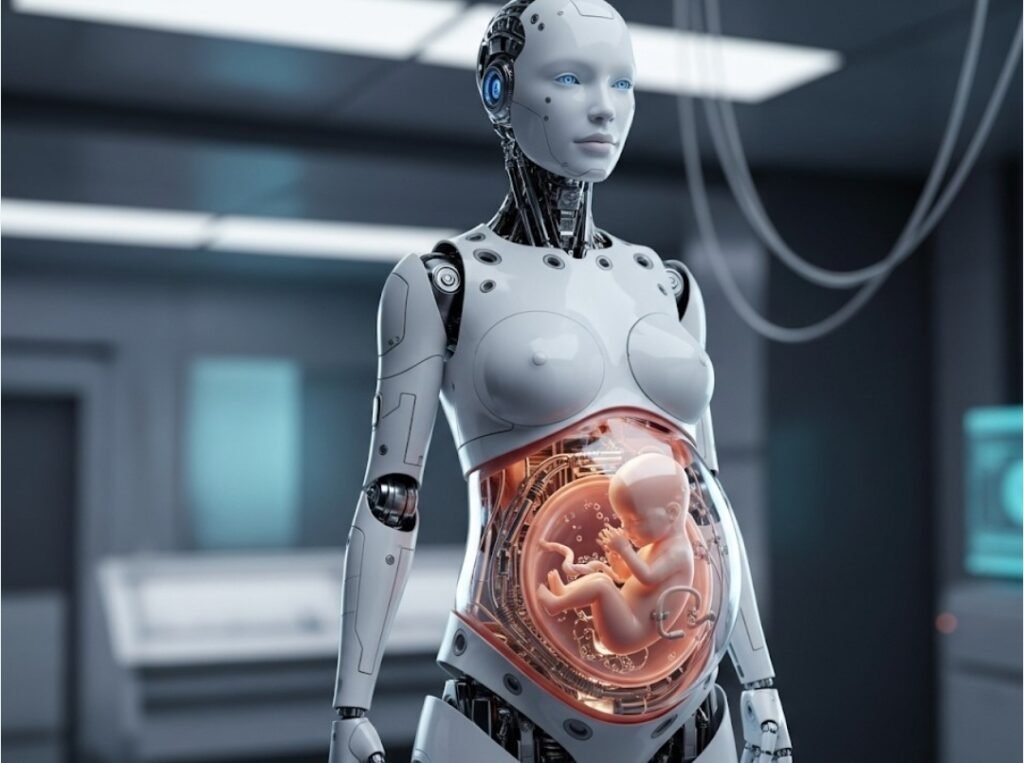
The announcement from Kaiwa Technology in Guangzhou, China, about the development of the world’s first humanoid pregnancy robot with an artificial womb is a staggering leap in reproductive technology. Led by Dr. Zhang Qifeng of Nanyang Technological University, the project aims to replicate the full human gestation process—10 months from conception to birth—within a robotic surrogate. Priced at under 100,000 yuan (approximately $14,000), the robot is expected to reach the prototype phase by 2026, with potential commercial availability as early as 2027, pending regulatory approval and further testing. The initiative seeks to address China’s declining birth rates and offer hope to infertile couples, but it also ignites fierce ethical debates about the nature of life and humanity.
China’s fertility crisis is dire, with infertility rates rising from 11.9% in 2007 to 18% in 2020 and birth rates plummeting, threatening economic and social stability. For the millions of couples facing infertility, the emotional and financial toll of treatments like artificial insemination or surrogacy can be crushing. The humanoid pregnancy robot, equipped with an artificial womb filled with nutrient-rich amniotic fluid, offers a potential alternative. Building on successful animal trials—such as the 2017 experiment at the Children’s Hospital of Philadelphia, where a premature lamb thrived in a “biobag”—this technology could provide a viable path to parenthood for those unable to conceive or carry a pregnancy. Its relatively low cost could make it more accessible than traditional surrogacy, democratizing access to parenthood.
On a societal level, the implications are profound. China’s aging population and shrinking workforce pose existential challenges, and a technology that boosts birth rates could ease these pressures. By offering a controlled prenatal environment, the robot could optimize factors like nutrition and temperature, potentially reducing complications and improving health outcomes for babies. If the project meets its timeline, with prototypes in 2026 and broader rollout by 2027, it could mark a turning point for a nation grappling with demographic declined.
Yet, the promise of this technology is shadowed by profound ethical concerns. A humanoid robot gestating a human fetus challenges our core understanding of birth, motherhood, and humanity. Critics argue that depriving a fetus of maternal connection—physical, emotional, and biological—could lead to unforeseen psychological or developmental consequences. The long-term impact on a child’s identity and attachment remains uncharted territory, as science lacks data on such scenarios.
Questions also arise about the sourcing of eggs and sperm. Who will provide these biological materials, and how will the process be regulated? The risk of exploitation, particularly of vulnerable populations in the reproductive trade, is a serious concern. Feminist scholars like Andrea Dworkin have warned that artificial wombs could marginalize women’s reproductive agency, reducing them to genetic donors. Her question—“Will men, once the artificial womb is perfected, want to keep women around?”—resonates as a cautionary note about gender dynamics in a tech-driven future.
The legal and social status of robot-born children is another gray area. Will they have the same rights as those born naturally? Kaiwa Technology’s ongoing discussions with Guangdong authorities suggest policy frameworks are in progress, but as of 2025, clarity is lacking. Posts on X reflect public unease, with some labeling the project “ethically bankrupt” and warning of a dystopian future where life becomes a manufactured commodity.
The humanoid pregnancy robot forces us to confront the trajectory of technological progress. If prototypes emerge in 2026 and commercialization follows by 2027, the integration of AI and robotics into reproduction will accelerate. This mirrors trends like China’s GEAIR breeding robot for agriculture, which uses AI to optimize crop yields. While such innovations showcase human ingenuity, they risk treating life as a process to be engineered. The Children’s Hospital of Philadelphia cautioned in 2022 that artificial wombs could “pathologize” pregnancy, turning a natural process into a medical procedure. This mindset might erode the human elements of reproduction—love, connection, and sacrifice—in favor of efficiency.
Accessibility and equity are also concerns. While $14,000 is lower than surrogacy costs, it remains prohibitive for many. Will this technology, if rolled out by 2027, deepen inequalities, creating a tiered system where only the affluent can afford robotic gestation? The potential for misuse—such as designer babies or mass production of humans—looms large, especially without global regulations.
China’s humanoid pregnancy robot, with its projected timeline of a 2026 prototype and 2027 commercialization, is a testament to human ambition. For infertile couples, it offers hope. For a nation facing demographic collapse, it presents a solution. But the ethical, social, and psychological implications demand rigorous debate. This technology challenges us to redefine life, parenthood, and birth. As we approach this brave new world, society must ensure innovation serves humanity without undermining it. The line between progress and peril is thin, and we must tread carefully to preserve what makes us human.