


Chinese researchers have achieved a landmark in agricultural biotechnology with the development of the Fix8 series, a hybrid rice variety that reproduces clonally through seeds with extraordinary efficiency, preserving heterosis (hybrid vigor) indefinitely.
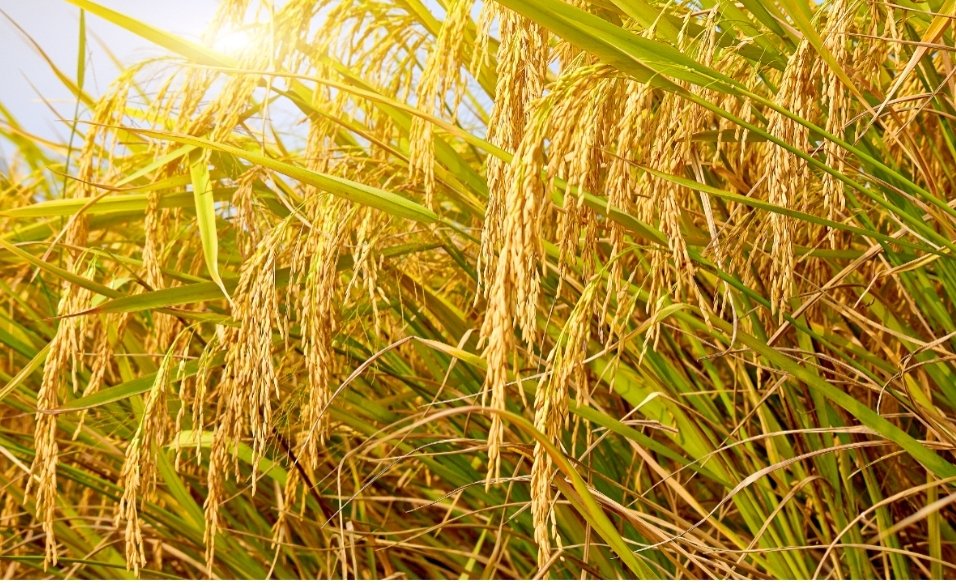
A golden rice field in China, illustrating the lush, high-yield potential of advanced hybrid varieties like the new Fix8 series.
Led by Professor Wang Kejian at the China National Rice Research Institute (part of the Chinese Academy of Agricultural Sciences), the team published their findings in a preprint on bioRxiv on October 17, 2025, titled “Fixing Hybrid Rice: >99% Efficient Apomixis with Near-Normal Seed Set.”
The breakthrough relies on synthetic apomixis — engineering the rice to mimic natural asexual reproduction, where seeds develop without fertilization, producing genetically identical offspring.
Lead researcher Wang Kejian and his team, pioneers in synthetic apomixis for hybrid rice.
Key details on the Fix8 series are as follows:
Cloning efficiency
Over 99.7% of seeds are perfect clones of the parent plant, ensuring hybrid vigor is maintained across generations.
Seed-setting rate
In the standout line Fix8#3, the seed-setting rate reaches 74.3%, nearly matching conventional hybrid rice (around 74.9%). This resolves previous challenges where high cloning rates often reduced seed yield.
“One-line” production system
Unlike traditional hybrids requiring complex cross-breeding each season, Fix8 allows farmers to save and replant seeds directly, reducing production costs by up to 99% and potentially lowering seed prices dramatically.
Yield potential
By fixing heterosis permanently, the variety could sustain yields far superior to traditional rice, with implications for doubling output in some regions and boosting production significantly in food-insecure areas like parts of Africa.
Close-up of hybrid rice panicles heavy with seeds, representing the high fertility achieved in the Fix8 apomictic lines.The technology builds on years of iterative advancements, including earlier work on genes like OsWUS and MiMe mutations to induce apomeiosis (mitosis instead of meiosis) and parthenogenesis (embryo development from unfertilized eggs).
While still awaiting peer review and field trials, experts hail Fix8 as the world’s first near-fully penetrant apomictic hybrid rice. If scaled globally, it could empower smallholder farmers by eliminating dependence on costly annual seed purchases, enhance food security for billions, and mark a revolutionary shift in crop breeding.
A modern agricultural research laboratory in China, similar to facilities at the China National Rice Research Institute where the Fix8 breakthrough was developed.
This self-propagating “super rice” promises not just higher yields, but sustainable, affordable agriculture for a growing world population.