


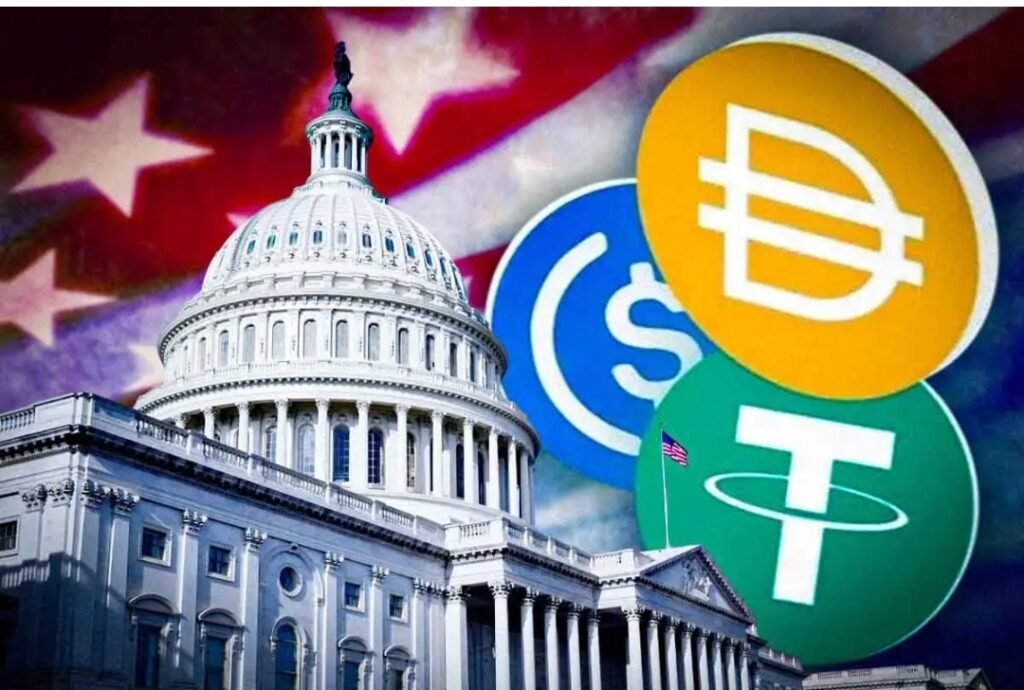
On July 29, 2025, President Donald Trump inked the Guiding and Establishing National Innovation for U.S. Stablecoins Act (GENIUS Act) into law, thrusting the $250 billion stablecoin market into a new era of federal oversight. Touted as a historic leap toward mainstreaming cryptocurrency, the legislation has crypto enthusiasts buzzing and skeptics sounding alarms. As stablecoins—digital currencies pegged to assets like the dollar—take center stage, the GENIUS Act could redefine payments, boost U.S. competitiveness, or, if critics are right, spark chaos in the financial system.
Stablecoins like Tether’s USDT and Circle’s USDC have long been the backbone of crypto trading, powering over $2 trillion in transactions last year alone—outpacing giants like Visa. They promise fast, low-cost transfers with the stability of fiat, making them a go-to for everything from DeFi to remittances. But with great power comes great risk: depegging scares, like USDC’s wobble during the 2023 banking crisis, and murky reserve practices have left users jittery. Enter the GENIUS Act, which mandates issuers to hold 1:1 reserves in cash or Treasuries, enforce anti-money laundering checks, and open their books for audits. Passed with a 68-30 Senate vote and 308-122 in the House, it’s a rare bipartisan win in a polarized Congress.
Crypto bulls are hyped. The GENIUS Act could lure heavyweights—think JPMorgan or even Apple—into issuing their own stablecoins, supercharging innovation. “This is crypto’s iPhone moment,” says blockchain analyst Sarah Tran. “Clear rules mean more players, cheaper payments, and a shot at dethroning PayPal’s fee racket.” Posts on X echo the excitement, with users predicting stablecoins could handle everyday purchases by 2030. The Act also keeps the U.S. ahead of the EU’s MiCA framework, reinforcing the dollar’s dominance in digital finance. Circle’s CEO Jeremy Allaire called it “a triumph for trust and adoption,” hinting at plans to expand USDC’s reach.
But not everyone’s buying the hype. Critics warn the GENIUS Act is a Pandora’s box. Allowing non-banks like fintechs or tech titans to issue stablecoins raises red flags. Imagine “Google Coin” or “Amazon Cash” flooding the market—convenient until they’re not. “Private currencies could fracture trust if they’re not interoperable or redeemable,” says financial watchdog Lena Carter. X posts from skeptics highlight fears of tech giants wielding unchecked power over money. Worse, the Act’s reserve rules don’t fully shield against depegging or issuer flops, and its insolvency protections might not hold up in a crisis. Economist Rachel Holt likens it to “giving crypto a driver’s license without crash-testing the car.”
Then there’s the political stench. The Trump family’s World Liberty Financial, which launched the USD1 stablecoin and scored a $2 billion Binance payout, looms large. Senators like Sherrod Brown cry foul, slamming the Act for weak anti-corruption guardrails. While it bars officials from issuing stablecoins in office, it doesn’t stop their cronies from cashing in. X users have dubbed it the “Trump Coin Act,” with some calling for probes into conflicts of interest.
The GENIUS Act is a high-stakes bet. It could make stablecoins as common as Venmo, slashing costs and speeding up global trade. Or it could birth a fragile system where a single misstep—like a major issuer’s collapse—triggers economic tremors. For now, it’s a win for crypto’s legitimacy, but the road ahead is rocky. Will the Act live up to its name, or is it a gamble we’ll regret? Stay tuned—this story’s just getting started.


Naorem Mohen is the Editor of Signpost News. Explore his views and opinion on X: @laimacha.