


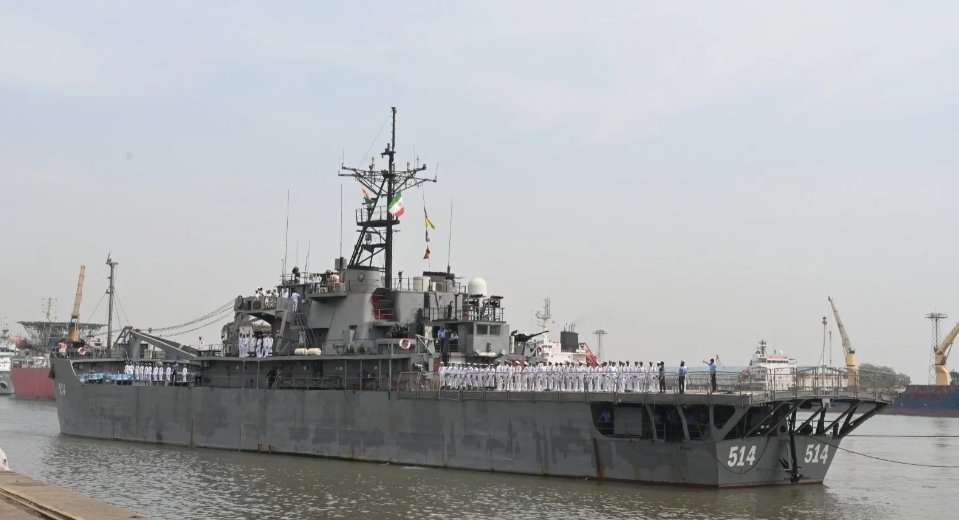
In a striking display of diplomatic balancing amid the raging US-Israel-Iran conflict, Iran has publicly thanked India for extending humanitarian assistance to one of its naval vessels.
Iran’s Ambassador to India, Mohammad Fathali, formally expressed gratitude for allowing the frigate IRIS Lavan to dock at Kochi port in Kerala, where it has been undergoing essential technical and logistical repairs since March 4.
The gesture comes against the backdrop of a devastating incident just days earlier: On March 4, the Iranian frigate IRIS Dena was torpedoed and sunk by a US Navy submarine in international waters in the Indian Ocean, approximately 40 nautical miles off Galle, Sri Lanka.
The attack, confirmed by US Defense Secretary Pete Hegseth as the first such submarine sinking of an enemy warship since World War II, resulted in heavy casualties, around 87 sailors killed and only about 32 survivors rescued by the Sri Lankan Navy.
Ambassador Fathali described the docking of IRIS Lavan as a vital lifeline following the “tragic incident” involving IRIS Dena. “The Islamic Republic of Iran is continuing to follow up on the situation of the crew members and to examine the different aspects of this incident,” he stated.
He praised India’s “cooperation and humanitarian approach” in facilitating the berthing and supporting the vessel’s 183 crew members, who are now accommodated at Indian naval facilities in Kochi.
The ambassador linked the assistance to the deep-rooted friendly ties between Tehran and New Delhi, expressing confidence that these “historic and constructive relations” would only grow stronger despite the regional turmoil.
India’s response has been framed firmly through a humanitarian lens. Speaking at the Raisina Dialogue 2026, External Affairs Minister S Jaishankar called the decision “purely humane,” noting that the ship and its young crew were simply “caught on the wrong side of events” as geopolitical realities shifted overnight.
Government sources clarified that Iran had approached India on February 28, prior to the IRIS Dena sinking, with an urgent request for docking due to technical issues on IRIS Lavan. Approval was granted on March 1, well before the escalation escalated further.
This assistance underscores India’s delicate navigation of its longstanding ties with Iran, including energy partnerships and cultural connections, while maintaining its Major Defense Partnership with the United States.
The IRIS Lavan had recently participated in India’s International Fleet Review 2026 and the multinational naval exercise MILAN 2026 (held February 15–25), highlighting the irony: an Iranian vessel that had been a guest of the Indian Navy now sought, and received refuge in Indian waters amid open conflict.
The broader context remains explosive. The sinking of IRIS Dena followed massive joint US-Israeli strikes on Iranian territory in late February 2026, which killed Supreme Leader Ayatollah Ali Khamenei and other key figures, triggering Iranian retaliatory drone and missile barrages across the region targeting US bases and allies.
India’s Foreign Secretary Vikram Misri signed a condolence book at the Iranian Embassy in New Delhi, conveying official sympathy.
By offering safe harbor to IRIS Lavan’s crew, India has signaled its commitment to humanitarian principles even as the Indian Ocean becomes an unexpected theater in a widening war.
The move has drawn appreciation from Tehran but also scrutiny amid questions about intelligence sharing and regional alignments.
As tensions show no signs of abating, New Delhi’s approach, rooted in humanity rather than alliance politics may serve as a rare stabilizing thread in an increasingly fractured geopolitics.