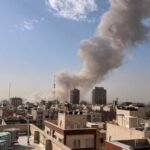
In a stunning escalation that has shaken the Middle East and reverberated globally, Iran’s Supreme Leader Ayatollah Ali Khamenei has been confirmed dead following a joint U.S.-Israeli military operation launched on Saturday, February 28, 2026.
Iranian state media, including IRIB state television, Fars News Agency, and IRNA announced his “martyrdom” early Sunday, March 1, declaring a 40-day national mourning period and a week of public holidays.
The 86-year-old cleric, who held absolute authority over the Islamic Republic since succeeding Ayatollah Ruhollah Khomeini in 1989, was killed in his office at the leadership compound during the initial wave of strikes.
U.S. President Donald Trump broke the news first on Truth Social, stating: “Khamenei, one of the most evil people in history, is dead.” He described the operation as a pathway to regime change, promising continued “heavy and pinpoint bombing” throughout the week “or as long as necessary to achieve our objective of PEACE THROUGHOUT THE MIDDLE EAST AND, INDEED, THE WORLD!”
Trump called on Iranians to act: “This is the single greatest chance for the Iranian people to take back their country.”
Israeli Prime Minister Benjamin Netanyahu addressed his nation, confirming the destruction of Khamenei’s compound in central Tehran. “This morning we destroyed the compound of the tyrant Khamenei,” he said. “For more than 30 years, this cruel tyrant has spread terror across the world while oppressing his own people, while working tirelessly and without pause on a plan to destroy Israel. That plan is no more—and there are many signs that this tyrant is no longer alive.”
Netanyahu noted the elimination of senior officials, IRGC commanders, and nuclear program figures, vowing to strike “thousands more targets” if needed. He urged Iranians to “take their destiny into their own hands” for lasting peace and prosperity in the region.
The strikes targeted leadership sites, military bases, and nuclear-related facilities, timed to hit Khamenei during a meeting with inner-circle aides.
Iranian retaliation was immediate and intense: missile and drone barrages struck Israel, U.S. bases in Qatar, Bahrain, and elsewhere in the Gulf, and caused reported damage near Dubai’s Burj Khalifa and at Dubai International Airport (with at least four injuries).
Casualties are mounting, with hundreds reported dead in Iran, and global oil prices have spiked as shipping through the Strait of Hormuz faces disruption.The personal toll was stark: Iranian media confirmed the deaths of Khamenei’s daughter, son-in-law, and granddaughter in the strikes, though which of his six children (including three daughters) was not specified.
Khamenei’s Enduring Legacy of Control and ConfrontationKhamenei’s 37-year rule shaped the Islamic Republic more profoundly than even its founder. He centralized power through the IRGC, crushed protests (from the 2009 Green Movement to the 2022 Mahsa Amini uprising), and advanced Iran’s nuclear ambitions despite sanctions.
His “Axis of Resistance” backing Hezbollah, Hamas, Houthis, and militias made Iran a dominant regional force and Israel’s chief adversary.
Internally, economic woes, youth alienation, and women’s rights struggles chipped away at the regime’s legitimacy. Khamenei often overruled reformist presidents, with the Guardian Council ensuring hardline dominance.
No clear successor was groomed. Ebrahim Raisi, once favored, died in a 2024 crash. Speculation points to Khamenei’s son Mojtaba (influential but controversial for potential dynastic rule), or clerics like Alireza Arafi, Mohammad Mehdi Mirbagheri, or others from the Assembly of Experts.
Khamenei reportedly named three unnamed clerics as backups. In the interim, a council (possibly involving the president, judiciary, and IRGC) may hold power. The IRGC, already controlling vast economic and security levers could dominate, installing a figurehead or shifting to overt military rule. This risks infighting or renewed protests, with Trump signaling support for defectors.
Condemnations came from Russia and China; some Gulf states quietly approve. Aviation chaos and oil market volatility persist amid escalation fears.
Is Khamenei’s death the end of an era?
It removes the architect of post-revolutionary Iran, but the system, velayat-e faqih, IRGC entrenchment, anti-Western ideology persists. External interventions rarely topple regimes without internal drive; precedents like Iraq or Libya warn of chaos.
However, the strikes’ audacity, economic despair, and public anger create unprecedented openings. Succession turmoil could fracture hardliners, spark uprisings, or harden the regime.
The next days, amid ongoing attacks, retaliations, and power struggles will reveal if March 1, 2026, heralds transformation or prolonged conflict.The Islamic Republic faces its gravest crisis yet: the fall of its longest-ruling leader, and an uncertain future.

Naorem Mohen is the Editor of Signpost News. Explore his views and opinion on X: @laimacha.

Naorem Mohen
View More PostsNaorem Mohen is the Editor of Signpost News. Explore his views and opinion on X: @laimacha.