In a groundbreaking shift triggered by India’s GST 2.0 overhaul, Maruti Suzuki has slashed prices across its entry-level lineup, positioning the S-Presso as the country’s most affordable car, starting at an astonishing Rs 3.50 lakh (ex-showroom). This bold move dethrones the iconic Alto K10, which held the title of India’s cheapest car for over a decade but now starts at Rs 3.70 lakh.
The S-Presso’s aggressive pricing, coupled with its SUV-inspired design, marks a strategic pivot by Maruti Suzuki to capture the price-sensitive entry-level market while appealing to evolving buyer preferences for high-riding, bold-looking vehicles. This historic moment reflects not only a significant tax reform but also a changing automotive segment where even the most affordable cars are adopting crossover-like aesthetics.
Unpacking the GST 2.0 Impact and Price Variations
The price reductions stem from a landmark revision in India’s GST structure for sub-4-meter petrol cars, with excise duties dropping sharply from 28% to 18% and the complete removal of additional cess. This is the most substantial tax cut for small cars in decades, breaking a long-standing trend of rising automotive taxes. The S-Presso benefits the most from this reform, with price cuts of up to Rs 1.2 lakh on select variants, making it a standout in Maruti’s revised lineup. Here’s a breakdown of the S-Presso’s price variations post-GST 2.0:
- S-Presso LXi (Base Variant): Now priced at Rs 3.50 lakh (down from Rs 4.26 lakh), a reduction of Rs 76,000.
- S-Presso VXi: Reduced to Rs 3.95 lakh from Rs 4.72 lakh, a drop of Rs 77,000.
- S-Presso VXi+: Now at Rs 4.25 lakh (previously Rs 5.01 lakh), saving buyers Rs 76,000.
- S-Presso VXi (O) AMT: Priced at Rs 4.45 lakh, down from Rs 5.51 lakh, a significant Rs 1.06 lakh cut.
- S-Presso VXi+ (O) AMT: The top variant now costs Rs 4.75 lakh, reduced from Rs 5.95 lakh, offering a massive Rs 1.2 lakh discount.
In contrast, the Alto K10, now starting at Rs 3.70 lakh for its base LXi variant, saw a more modest price reduction of up to Rs 60,000 across its range. The Celerio, another entry-level contender, starts at Rs 5.00 lakh after a similar price adjustment. The S-Presso’s larger absolute and percentage price cuts underscore Maruti’s intent to position it as the new entry point to car ownership in India, targeting two-wheeler upgraders, first-time buyers, and younger drivers seeking affordability with a touch of style.
Why the S-Presso Stands Out
Unlike the Alto K10 and Celerio, which recently received safety upgrades including 6 airbags as standard, the S-Presso continues with just 2 airbags, allowing Maruti to keep costs low. This decision, while potentially controversial in an era of increasing safety awareness, aligns with the S-Presso’s positioning as a budget-friendly alternative.
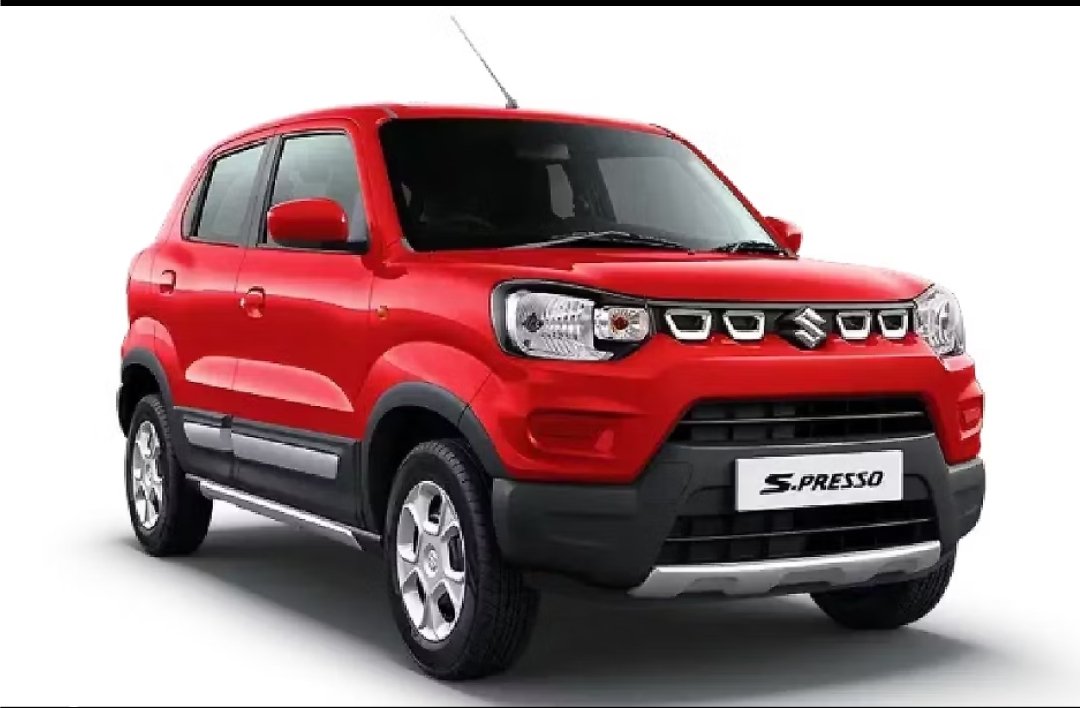
Its high-riding, SUV-like stance—despite being built on the same HEARTECT platform as Maruti’s hatchbacks—gives it a unique edge in the entry-level segment. The S-Presso’s boxy, upright design, with a bold front grille, high ground clearance (180 mm), and chunky cladding, appeals to buyers who want road presence without breaking the bank.
Features and Facilities of the S-Presso
The S-Presso offers a surprising amount of kit for its price, making it a practical choice for urban commuters and small families. Here’s a look at its key features across variants:
- Engine and Performance: Powered by a 1.0-liter, 3-cylinder K10C petrol engine, the S-Presso delivers 66 bhp and 89 Nm of torque. It’s available with a 5-speed manual or an AMT (Auto Gear Shift) transmission, offering fuel efficiency of around 24-25 kmpl (ARAI-certified), ideal for cost-conscious buyers. A CNG option is also available, boosting efficiency to 32.73 km/kg.
- Exterior Design: The S-Presso’s crossover-inspired look includes a high bonnet, squared-off wheel arches, and a prominent grille. Higher variants (VXi+) add stylish touches like body-colored ORVMs, wheel covers, and a front skid plate for a rugged vibe.
- Interior and Comfort: The cabin is functional with a high seating position for better visibility. Base variants offer fabric upholstery, manual AC, and a basic instrument cluster, while top trims include a 7-inch SmartPlay Studio touchscreen infotainment system with Android Auto and Apple CarPlay, steering-mounted audio controls, and power windows.
- Safety Features: All variants come with dual front airbags, ABS with EBD, rear parking sensors, and a speed alert system. However, the absence of side and curtain airbags (unlike the Alto K10 and Celerio) is a notable compromise to maintain its low price.
- Practicality: With a 240-liter boot and a compact footprint (3.56 meters long), the S-Presso is easy to maneuver in crowded cities. Its tall-boy design ensures decent headroom and legroom for four adults, though the rear bench is best for short trips.
Maruti’s Strategy and Market Implications
Maruti Suzuki’s decision to position the S-Presso below the Alto K10 reflects a calculated strategy to rejuvenate the entry-level segment, which faces intense pressure from rising vehicle costs, stricter safety norms, and shifting buyer preferences toward SUVs. By leveraging the S-Presso’s crossover-like appeal, Maruti aims to attract two-wheeler upgraders and younger buyers who prioritize style and affordability. The high ground clearance and upright stance give the S-Presso a perceived edge over traditional hatchbacks, even if its engineering remains firmly rooted in hatchback territory.
However, the S-Presso’s quirky, polarizing design—often described as an “oddball” mix of SUV and hatchback—may not resonate with all buyers. Its lack of advanced safety features compared to competitors like the Alto K10 could also raise concerns among safety-conscious consumers. Still, the massive price cut makes it an unbeatable value proposition, especially for those prioritizing cost over premium features.
A Historic Shift in India’s Auto Market
The S-Presso’s rise to the title of India’s cheapest car is a historic moment, signaling a broader shift in the entry-level segment. For the first time, the most affordable car in India isn’t a conventional hatchback but a crossover-styled vehicle, reflecting changing consumer aspirations.
Maruti Suzuki’s ability to capitalize on the GST 2.0 tax cuts underscores its dominance in the small car market, but the challenge now lies in sustaining the S-Presso’s appeal. Will its budget-friendly pricing and SUV-like charm win over new buyers, or will its dated safety features and unconventional design hold it back? Only time will tell, but for now, the S-Presso is rewriting the rules of affordability in India’s automotive sector.