


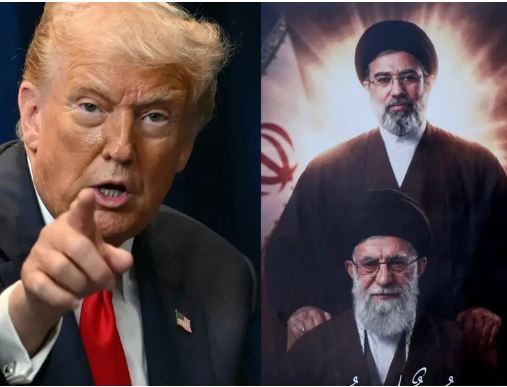
The reported vow by Iran’s Supreme Leader Mojtaba Khamenei to avenge the killing of his father, Ayatollah Ali Khamenei, marks a grave escalation in an already dangerous confrontation between Iran, the United States and Israel. According to Reuters, Mojtaba Khamenei pledged revenge after the former Supreme Leader was killed in a US-Israeli strike on February 28, with Iran’s Fars news agency carrying a statement that described retaliation as a national demand.
This is not merely the language of grief. It is the language of state mobilisation.
The significance lies in the political position of the speaker. Mojtaba Khamenei is not an ordinary bereaved son. He is reported to have taken over Iran’s highest office after the death of his father, and his words carry institutional meaning. When a Supreme Leader speaks of revenge, it becomes difficult to separate personal mourning from national policy. In a system where religious authority, revolutionary ideology and security command are closely intertwined, such a declaration cannot be treated as symbolic alone.
Once a Supreme Leader speaks of revenge, it becomes difficult to separate personal mourning from national policy.
The US position is equally severe. President Donald Trump has spoken of massive retaliation if Iran targets him, though Associated Press reporting makes clear that any post-assassination military response would legally require a successor president’s decision rather than an automatic mechanism. Claims circulating about “1,000 missiles” being ready against Iran should therefore be treated with caution unless confirmed by official and credible sources. What is publicly clear is that Washington is signalling overwhelming force.
This is the essential danger. Tehran is speaking in the vocabulary of vengeance. Washington is speaking in the vocabulary of deterrence. Israel is operating within the logic of pre-emption. Each side believes it is acting defensively. Each side sees restraint by the other as weakness. This is how limited war expands.
Iran’s leadership also faces an internal problem. The killing of a long-serving Supreme Leader would inevitably create pressure within the system for visible retaliation. The Revolutionary Guards, conservative clerical networks and nationalist opinion will expect a response that demonstrates continuity and strength. If Mojtaba Khamenei does not respond, he risks appearing weak at the very moment he must consolidate authority. If he responds too sharply, he risks dragging Iran into a wider war it may not be able to control.
For the United States, the challenge is different but no less serious. A president who threatens massive retaliation can strengthen deterrence, but he can also reduce diplomatic space. Public threats may satisfy domestic politics, but they leave fewer options for de-escalation. Once leaders place their credibility on the line, compromise becomes harder to explain to their own supporters.
The wider region is already vulnerable. Reports of renewed tension around the Strait of Hormuz show how quickly a political crisis can affect global shipping, energy security and civilian life across the Gulf. A direct or indirect Iranian strike, an American response, or an Israeli follow-up operation could bring the region closer to a prolonged confrontation involving missiles, drones, cyber operations and maritime disruption.
The lesson from West Asian conflicts is clear. Assassinations can remove individuals, but they rarely remove structures. In many cases, they harden them. The death of a leader may weaken command temporarily, but it can also produce martyrdom, succession discipline and public justification for retaliation. The killing of Ayatollah Ali Khamenei, if followed by an open cycle of revenge, may become less an ending than a beginning.
The immediate requirement is not moral theatre but political control. Iran must understand that revenge against current or former US leaders would invite severe consequences. Washington must understand that unlimited threats can push adversaries into desperate calculations. Israel must understand that tactical success does not always translate into strategic security.
This crisis now rests on a narrow line between deterrence and escalation. The world has seen many confrontations where leaders believed they could calibrate violence. Once missiles begin to move, calibration becomes an illusion. The region does not need another war conducted in the name of honour, deterrence or historical justice. It needs restraint backed by credible channels of communication.
Iran’s vow of revenge may satisfy an immediate demand for dignity. America’s threat of retaliation may serve an immediate demand for deterrence. But neither can produce security unless both are restrained by statesmanship. The true test before Tehran, Washington and Tel Aviv is not who can threaten more convincingly. It is who can prevent revenge from becoming policy and policy from becoming catastrophe.


Naorem Mohen is the Editor of Signpost News. Explore his views and opinion on X: @laimacha.