


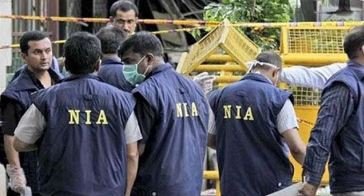
The recurring decision of the Manipur government to hand over sensitive cases to the National Investigation Agency (NIA) raises fundamental questions about federalism, police capability, and public trust. Why does the state consistently lean on a central agency for matters that appear solvable at the local level?
Is this a vote of no-confidence in the state police, or a pragmatic response to deeply entrenched ethnic divisions and potential cross-border dimensions?
Since the ethnic violence erupted in May 2023, the NIA has taken over multiple high-profile cases linked to the Manipur crisis. These include murders, abductions, attacks on security personnel, and probes into alleged foreign involvement or terror financing. The agency has made some arrests, and a special NIA court has been set up for related trials.
However, after three years, comprehensive public information on the exact number of fully “solved” cases — meaning convictions — tied directly to the broader crisis remains limited. Many investigations are ongoing, which fuels public frustration: accountability feels distant.
The NIA was established post-26/11 Mumbai attacks as a specialized central agency for terrorism, organized crime with inter-state or international links, and cases affecting national security. Under the NIA Act, state governments can request the Centre to hand over cases involving scheduled offences, or the Centre can take them up suo motu.
Not every incident qualifies. Routine crimes, local disputes, or many abductions typically fall under state police jurisdiction unless they show clear patterns of insurgency, foreign funding, arms smuggling, or threats to sovereignty.
In Manipur’s context, the ongoing conflict has blurred these lines. Allegations of militant involvement, looted weapons, and cross-border elements justify federal intervention in select cases. Yet, the trend risks painting all violence with the same broad brush.
The abduction incident on May 13, 2026, exemplifies this tension. Following the killing of three Thadou church leaders and others, retaliatory actions led to civilians (Naga and Kuki) being taken hostage. Many were released through community efforts, but 14 Kukis and 6 Naga men remain missing or held.
Naga families claim they can identify specific villagers involved in handing them over to militants. Similar allegations exist from the other side. Families have provided leads and assert they can identify those perpetrators. This appears as a localized inter-community clash involving identifiable actors — precisely the kind of case state police, with their ground knowledge, local intelligence networks, and familiarity with terrain and dynamics, should lead.
Labeling them simply as “missing” when eyewitness accounts point to detention and handover stretches credibility and delays justice. Summoning identified villagers, questioning them, and conducting targeted searches are standard police procedures that do not inherently require NIA expertise.
Handing this to the NIA signals either a lack of trust in state forces or an admission of their limitations amid polarized loyalties. State officers are not inherently “weak.” Many have shown dedication in difficult circumstances. Empowering them with resources, political backing, and insulation from interference could rebuild capacity and confidence. Over-centralization may foster dependency and erode local accountability.
Public trust in the NIA will inevitably erode if case after case continues to pile up while the government merely announces that they have been handed over to the agency. Transferring investigations cannot become a substitute for swift justice; when people see no tangible progress or convictions despite repeated handovers, cynicism grows and faith in the entire system weakens.
Routine or community-specific crimes should stay with state agencies to strengthen them. Local intelligence is often faster and more nuanced in fluid ethnic conflicts.
The government must invest in training, modernization, and community policing rather than bypassing the system. The state agency deserve the chance — and the mandate — to handle what they can.
Not every incident meets NIA thresholds, and over-reliance risks signaling institutional weakness. For cases like the recent abductions, immediate local action — rounding up identified individuals and thorough ground investigation — could deliver faster justice and help de-escalate tensions.
Trust in our officers is not blind faith; it is a necessity for functional federalism. The Centre and state must strike a balance, use NIA judiciously for truly complex, terror-linked probes, but empower and back state forces for the rest. Only then can Manipur move toward lasting peace and self-reliance in law enforcement.


Enjoy the Editorial of Signpost News, edited exclusively every Sunday.