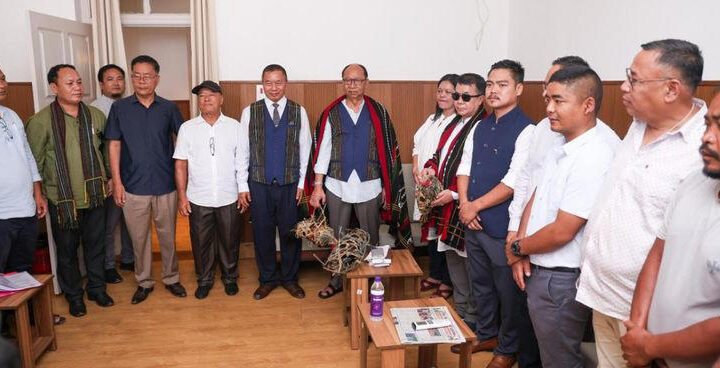
For the first time since the violence erupted in May 2023, legislators from the Meitei and Kuki communities sat together under one roof, discussing peace, stability, and the path forward for the state.
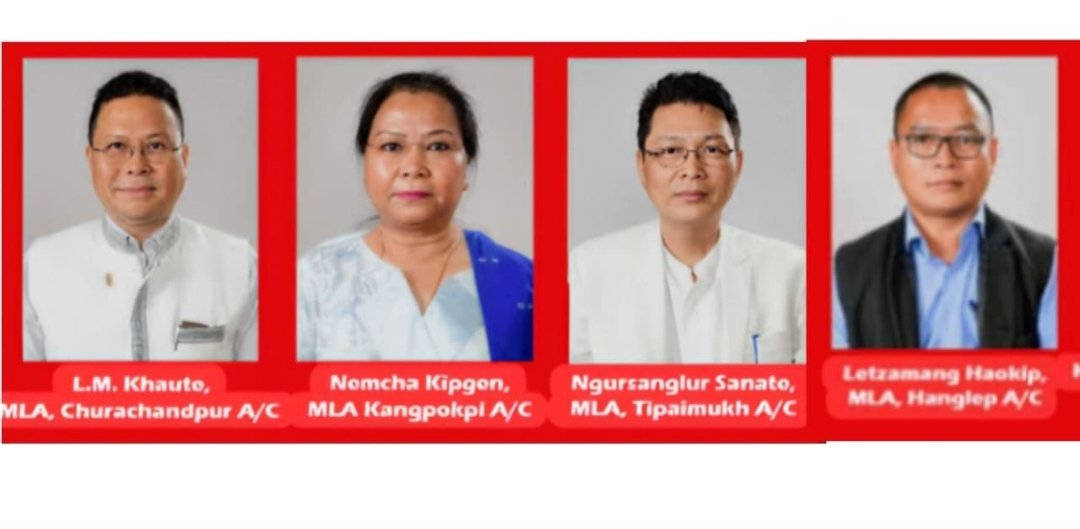
The four BJP MLAs from the Kuki community—Nemcha Kipgen, L.M. Khaute, Ngursanglur Sanate, and Letzamang Haokip has demonstrated remarkable courage by attending the crucial BJP legislature party meeting at the national headquarters in New Delhi on December 14, 2025.
This was no ordinary gathering; it was a bold step toward reconciliation in a land scarred by over two years of conflict.These four leaders chose dialogue over division, unity over isolation. While three of their Kuki colleagues were absent for personal reasons, Nemcha Kipgen, L.M. Khaute, Ngursanglur Sanate, and Letzamang Haokip crossed a significant barrier by joining their Meitei counterparts and the party’s central leadership, including B.L. Santhosh and Sambit Patra.
Their presence symbolized a willingness to engage, to listen, and to work toward restoring normalcy in Manipur—a state that has endured immense suffering, with thousands displaced and lives lost.Yet, this act of statesmanship has not been met with universal acclaim within their own community.
Certain hardline voices, including groups advocating for complete separation, have branded them as “traitors” and accused them of betraying Kuki aspirations. The Kuki Human Rights Council, for instance, condemned the meeting and demanded resignations from all Kuki MLAs.
Meanwhile, figures like Paolienlal Haokip—one of the absent MLAs who has long championed a separate administration—are elevated by some as “heroes” for staying away and adhering to separatist demands.
To be very frank, such labels are deeply misguided. These four MLAs are the ones who have shown true commitment to the suffering Kuki people languishing in relief camps. By participating in the Delhi discussions, they positioned themselves to advocate directly for the displaced, the voiceless, and those whose grievances have often been suppressed amid polarized rhetoric.
They are bridging the gap, ensuring that the concerns of hill residents—access to aid, security in camps, and a fair share in governance—are heard at the highest levels. Absenteeism may garner applause from extremists, but it does little to alleviate the daily hardships faced by families in camps. Courage lies not in isolation, but in engagement that can lead to tangible relief and peace.
The central BJP leadership must recognize and acknowledge this bravery. These MLAs have taken a risk for the greater good, and their efforts deserve support and protection. Equally important, Meitei legislators and leaders must extend understanding and empathy.
Welcoming them to Imphal, fostering joint initiatives, and collaborating on peace-building measures would send a powerful message: that Manipur’s hills and valley are inseparable, complementary parts of one whole.
Now is the time for all ten Kuki MLAs—both those who attended the Delhi meeting and those who could not—to come together in unity. The differences in approach should not become permanent divisions.
A united front among all Kuki legislators would amplify their voice immensely, allowing them to negotiate better relief, rehabilitation, and security measures for the people in camps. Internal reconciliation within the Kuki MLAs can set a powerful example, showing that dialogue and compromise are possible even on sensitive issues.
Similarly, Meitei MLAs must seize this opportunity to build trust. Joint visits to relief camps, collaborative submissions to the central government on development projects for both hills and valley, and regular inter-community legislative forums could transform the narrative from confrontation to cooperation.
The BJP legislature party, as a whole, should institutionalize such interactions—perhaps through quarterly unity meetings or a dedicated peace committee comprising members from both communities.
In the words of President Droupadi Murmu during her recent visit, the hills and valley have always complemented each other. Let us build on this meeting in Delhi as a foundation for lasting peace. The four MLAs have lit a spark of hope; it is now upon all stakeholders—central leaders, Meitei representatives, the remaining Kuki MLAs, and moderate voices across communities—to fan it into a flame that heals Manipur.
Their courage reminds us that true leadership emerges in difficult times, choosing unity and dialogue over division.