Let me tell you a secret that every cybercop in this country already knows but rarely says out loud: For the last ten years, the single biggest enabler of organised financial fraud in India has not been some dark-web hacker in Russia or a Chinese hacking collective.
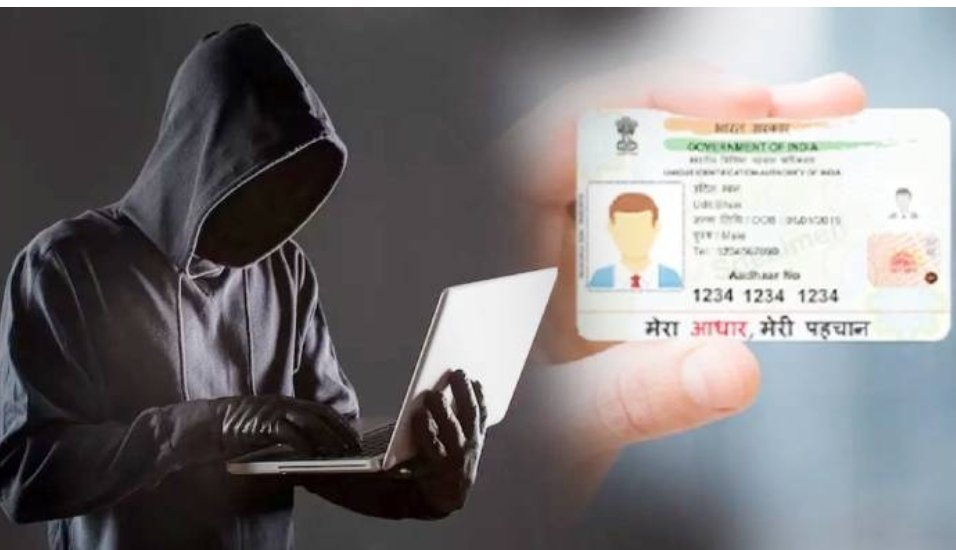
It has been a ₹2 Xerox copy of your Aadhaar card lying in a hotel’s steel almirah or a bank branch’s “KYC folder”.That ₹2 piece of paper has cost Indians more than ₹1 lakh crore in the last five years alone.
Tomorrow, when that piece of paper becomes illegal.When UIDAI notifies the new rule in the next few weeks, an entire underground economy built on discarded Aadhaar photocopies will collapse overnight.
That nightmare ends now.In a move that has fraudsters panicking and honest citizens cheering, the Unique Identification Authority of India (UIDAI) is about to drop the hammer: No hotel, no cinema hall, no wedding venue, no guest house — NO ONE — will ever be allowed to take or keep your Aadhaar photocopy again.
The New Law That Ends the Party
The new mandate – already approved at the highest level and likely to be notified within weeks – will make it mandatory for every “offline verification seeking entity” (hotels, theatres, event organisers, banks, liquor shops, etc.) to register with UIDAI and shift entirely to digital verification through QR codes or the newly launched Aadhaar mobile app.“
No more photocopies. No more storing of physical or digital images of Aadhaar cards,” Kumar said, almost smiling. “Verification will happen in real time with user consent through the app or by scanning the QR code on m-Aadhaar/e-Aadhaar. The business will only get a Yes/No response – nothing more.”
The Aadhaar app, launched on 8 April 2025 with facial authentication and AI-powered liveness detection, allows citizens to share only the specific details required (for example, just name and photo for hotels) while masking the Aadhaar number itself completely.
Union Minister Ashwini Vaishnaw had declared at the launch, “No Indian should ever have to hand over an Aadhaar photocopy again – whether at a hotel reception, shop counter, bank counter, or during travel.”
With the Digital Personal Data Protection (DPDP) Act now fully operational, retaining full Aadhaar photocopies without explicit, granular, time-bound consent will attract penalties that can go up to ₹250 crore.
I heard that in Meerut, Jamtara, and Bharuch teenagers collects clean Aadhaar photocopy with photo, DOB, and address sells for ₹30–150 depending on the state.
I have also read some years back that the Kolkata Police open a cupboard and pull out 40,000 photocopies that a single lodge owner was selling by the kilo.
So when I say this new rule is the biggest victory against Indian cybercrime since the setting up of I4C in 2018, I am not exaggerating for clicks. I am stating a fact.
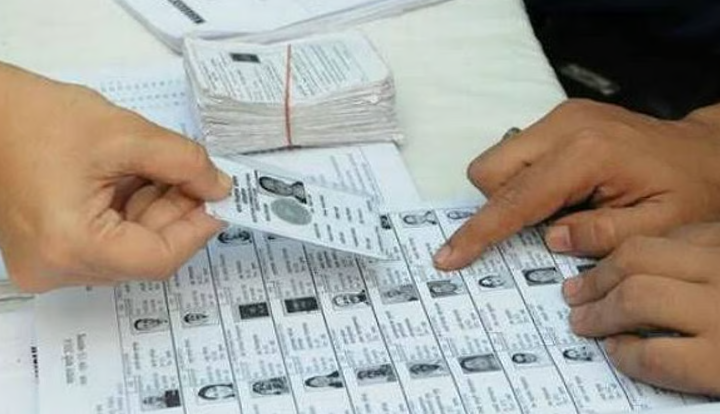
Let’s trace the journey of one innocent photocopy.You check into a budget hotel in Paharganj, Goa, or Ramoji Film City.
Receptionist asks for Aadhaar. You oblige.
The copy goes into a register or a file marked “2025 Guests”.
Night cleaner, runner boy, or data-entry temp gets paid ₹20–50 per usable copy.
Copies are scanned in bulk and uploaded to Telegram groups or WhatsApp groups with names like “Fresh KYC India”, “Aadhaar Gold 2025”, “Hotel Dimple Daily”.
Within 48 hours your full name, photo, address, DOB, and 12-digit Aadhaar number are being sold in lots of 1,000 for ₹25,000.
Buyers use them to: Activate prepaid SIMs (the oxygen of every scam call centre)
Open mule bank accounts
Take instant personal loans on fintech apps
Generate fake PAN cards
Clone fingerprints from high-resolution scans for AEPS fraud
Run “digital arrest” scams by showing victims their own Aadhaar as “evidence”
I have seen the rate cards. I have seen the invoices. And the beauty for the criminals? It was 100 % legal at the source. Hotels were never breaking any law by taking photocopies. UIDAI circulars since 2018 have repeatedly asked entities NOT to take photocopies, but there was no penalty, no enforcement, and no alternative. So everyone kept doing it.That changes now.
Arresting 50,000 cyber fraudsters in the last three years (yes, that’s the real number) barely made a dent because the raw material — clean identity documents — was flowing like tap water.Take the Kotak Mahindra Patna scandal of July 2025. A branch manager stole ₹32 crore and needed 21 mule accounts fast. He didn’t hack the bank. He walked to the KYC cupboard, picked 21 random Aadhaar photocopies submitted by honest customers for fixed-deposit renewals, and created shadow accounts. The customers only found out when recovery agents started calling.
Or take the Saharanpur SIM factory busted the same month. The kingpin told interrogators: “Give me 500 fresh Aadhaar photocopies with clear photos and I will give you 500 working SIMs in four days.” He was getting regular supplies from dharamshalas near Har Ki Pauri.
Every single “digital arrest” victim I have contacted— from the Bengaluru techie who lost ₹11.8 crore to the Mumbai widow who lost ₹20.25 crore — was shown their own Aadhaar details on screen as “proof” of guilt. Those details almost always originated from a photocopy given somewhere mundane: a hotel, a bank, a cinema multiplex, a wedding hall.Cut the supply of photocopies and you choke the entire ecosystem.
Walk with me into 2026.You reach a hotel in Jaipur. Receptionist says, “ID proof, sir?”
You open the Aadhaar app launched in April 2025, blink at the camera for half a second (liveness detection + facial match), tap “Share Name + Photo only”, and show the live QR code.Hotel scans it. Gets a green tick.
Your Aadhaar number never leaves your phone.
No paper trail. No cupboard. No Telegram dump.Same at the bank when you want to withdraw ₹1 lakh cash. No more “please submit self-attested Aadhaar copy”. Just face scan → live QR → done.
Same at cinema halls, liquor shops, even for age verification at pubs.The app is already battle-tested. In the eight months since launch, over 18 crore Indians have downloaded it. Facial authentication success rate is 99.2 %. And because the Aadhaar number is masked and data is shared with explicit consent, even if a rogue employee cannot steal anything useful.
The Pushback You Will Hear (And Why It’s Nonsense)Hotels will cry: “Guests don’t have smartphones!”
Reality: 92 % of Indian adults have smartphones in 2025. The remaining 8 % can still use the old SMS-OTP method or give any other ID (driving licence, voter ID, passport). Aadhaar was never mandatory in the first place.
Banks will cry: “Face auth fails in low light!”
Reality: RBI has already piloted it in 4,000 rural banking correspondents. Failure rate under 1 %. And there is always fallback to fingerprint or OTP.
Small lodges will cry: “We don’t have QR scanners!”
Reality: A ₹700 barcode scanner from Amazon works fine. UIDAI is giving the first 50,000 registered entities free scanners.All these objections existed when UPI was launched. Remember hotels saying “nobody will scan QR for payments”? Today even paan shops take UPI.
The Bigger Picture Nobody Is Talking About
This is not just about hotels and photocopies.This is the first real enforcement of the Digital Personal Data Protection Act, 2023. Once UIDAI starts fining entities ₹50–250 crore for storing Aadhaar copies without consent, every company in India will suddenly discover religion about data minimisation.
Gym memberships asking for Aadhaar copy? Gone.
Housing societies keeping photocopies of domestic help? Gone.
Schools keeping Aadhaar copies of parents? Gone.
We are looking at the biggest mass deletion of personal data in history. Millions of steel almirahs across the country will be emptied into shredders in the next six months.And the fraudsters know it. WhatsApp or Telegram groups that used to brag “Hotel dump 10k fresh” have gone quiet. Rate cards have crashed 70 % in the last 30 days because buyers know the supply is about to dry up forever.
A Personal Confession
I have been guilty too.
In 2023, while checking into a Lucknow Hotel, I handed over an Aadhaar photocopy without thinking. Six months later I started getting calls for personal loans I never applied for. It took me two years and multiple police complaints to clean my CIBIL. I still don’t know which Lucknow Hotel employee sold my copy, but I know exactly how the chain started.
Millions of Indians have similar stories. Some lost a few thousand rupees. Some lost crores. Some lost sleep with anxiety because a stranger halfway across the country has their face on a fake SIM.That ends now.
When future historians write about the turning point in India’s war against cybercrime, they will not write about some flashy operation with 10,000 arrests. They will write about this quiet notification from UIDAI that killed the ₹2 photocopy.
So the next time a hotel receptionist asks for an Aadhaar photocopy, smile, open your phone, and say:
“Sorry, that’s illegal now. Just scan my QR.”
And watch the new India begin — one face scan at a time.The photocopy is dead.
Long live the citizen.