


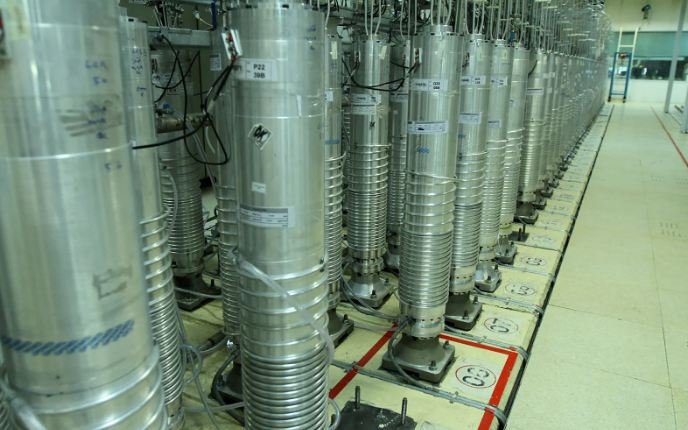
President Donald Trump made a bold claim from the White House on April 16, 2026. He told reporters that Iran has agreed to hand over its stockpile of enriched uranium, the material he described as “nuclear dust.”
This, according to Trump, marks a significant breakthrough in the negotiations aimed at ending the recent conflict. He added that the relationship with Tehran is now “very good” and that both sides are close to a broader peace agreement. It sounded like a major diplomatic win for the United States.
Yet, almost immediately, Iranian officials pushed back with a firm denial. Tehran made it clear: no agreement has been reached on transferring enriched uranium or any nuclear material to America or anywhere else. Iranian sources close to the leadership called the claim exaggerated and insisted that Iran’s right to enrich uranium remains indisputable.
While they hinted that the level of enrichment uranium could be open for discussion, they rejected any idea of surrendering the existing stockpile. This contradiction is not surprising. In high-stakes international talks, especially involving Iran, public statements often differ sharply from what happens behind closed doors.
Trump’s style has always been optimistic and forward-leaning. He speaks in terms of deals nearly done, applying pressure while projecting confidence. When he says Iran has “agreed to almost everything,” he is probably referring to private signals or proposals relayed through mediators. However, labelling it a confirmed “handover” of uranium when Iran publicly denies it risks crossing into overstatement.
The core issue has always been Iran’s nuclear programme. The United States pushed for a complete and permanent end to enrichment activities of uranium and the removal of the stockpile. Recently, Washington softened its stand slightly, proposing a 20-year suspension instead of an outright ban. Iran, on the other hand, had offered only a short pause of three to five years.
After weeks of military pressure, including strikes on nuclear sites and restrictions on the Strait of Hormuz, Tehran appears to have shown some movement. Reports suggest it may now be willing to ship out a portion of the highly enriched uranium — a step it had earlier refused outright.
That shift cannot be ignored. Just two months ago, such flexibility seemed impossible. Sustained pressure has forced Iran to reconsider positions it once held as non-negotiable. Yet, publicly, the Iranian regime cannot afford to look weak. Admitting a major concession on nuclear material would invite criticism from hardliners inside the country. Hence the quick and strong denial: no transfer of uranium has been negotiated.
Trump himself struck a cautious note even while sounding optimistic. He warned that if the talks fail, fighting will resume the moment the current ceasefire expires next week. That deadline adds real weight to the negotiations. Officials involved have observed that the mounting pressure has extracted concessions that were unthinkable earlier. The fact that the enriched uranium issue is even on the table now shows how the balance has tilted.
Pakistan has played a quiet but important role as mediator. Trump spoke warmly about Prime Minister Shehbaz Sharif and Army Chief General Asim Munir, even referring to the latter as the “field marshal” in a friendly tone. He indicated he might attend a signing ceremony in Islamabad if the deal is finalised, saying he would go because “they want me there.”
White House Press Secretary Karoline Leavitt later confirmed that talks are likely to return to the Pakistani capital. Pakistan’s position — with links to both Washington and Tehran — has made it a useful bridge in these difficult conversations.
Trump also brought in a wider angle. He urged Pope Leo XIV to acknowledge the danger of a nuclear-armed Iran, warning that ignoring it would put the world in “great danger.” This comment highlights a public difference of views with the Chicago-born Pope, who has consistently called for dialogue and restraint. For Trump, the issue is straightforward: preventing Iran from acquiring nuclear weapons is not just a regional matter but a global security concern.
Looking at the bigger picture, this episode reflects the realities of tough diplomacy. Trump’s approach of combining military and economic pressure with active mediation has clearly produced results. Iran is bending in ways it refused to do earlier. At the same time, Tehran’s public denials of handling uranium are part of its own political survival strategy. Regimes like Iran rarely admit concessions openly; they prefer to frame every step as a defence of sovereignty.
A realistic outcome, if it materialises, would likely involve Iran shipping out a verifiable part of its highly enriched stockpile, accepting a longer suspension of high-level enrichment, and allowing better international monitoring. In exchange, the US could offer phased sanctions relief and assurances against direct regime-change efforts. Pakistan and other parties could help build trust through verification mechanisms.
Such a compromise would not satisfy everyone. Hardliners on both sides would criticise it. Iran would still keep some enrichment capacity for civilian use, and doubts about full compliance would remain. Yet it would significantly lower the immediate risk of Iran moving closer to a nuclear weapon and help prevent a wider war that could disrupt global energy supplies.
The next few days will be decisive. With the ceasefire deadline approaching, mediators are working to arrange another round of talks. Trump has kept the military option open if Iran walks away. Iran, facing economic difficulties and isolation, has reasons to continue negotiating — even if it continues to deny major concessions in public.
In the end, the “uranium handover that Iran swears never happened” may turn out to be neither a complete fiction nor a fully sealed agreement. It could be a partial, negotiated transfer born out of pressure — something Tehran cannot admit openly but cannot fully reject either. Diplomacy in such cases rarely delivers clean victories. It delivers imperfect deals wrapped in competing narratives.
Trump’s confident tone keeps the pressure on and sends a message to allies and adversaries alike. But lasting success will depend on verifiable actions, not just statements from the White House or denials from Tehran.
The coming week will show whether this momentum leads to a real breakthrough or simply another round of claims and counter-claims in a long and dangerous game.