


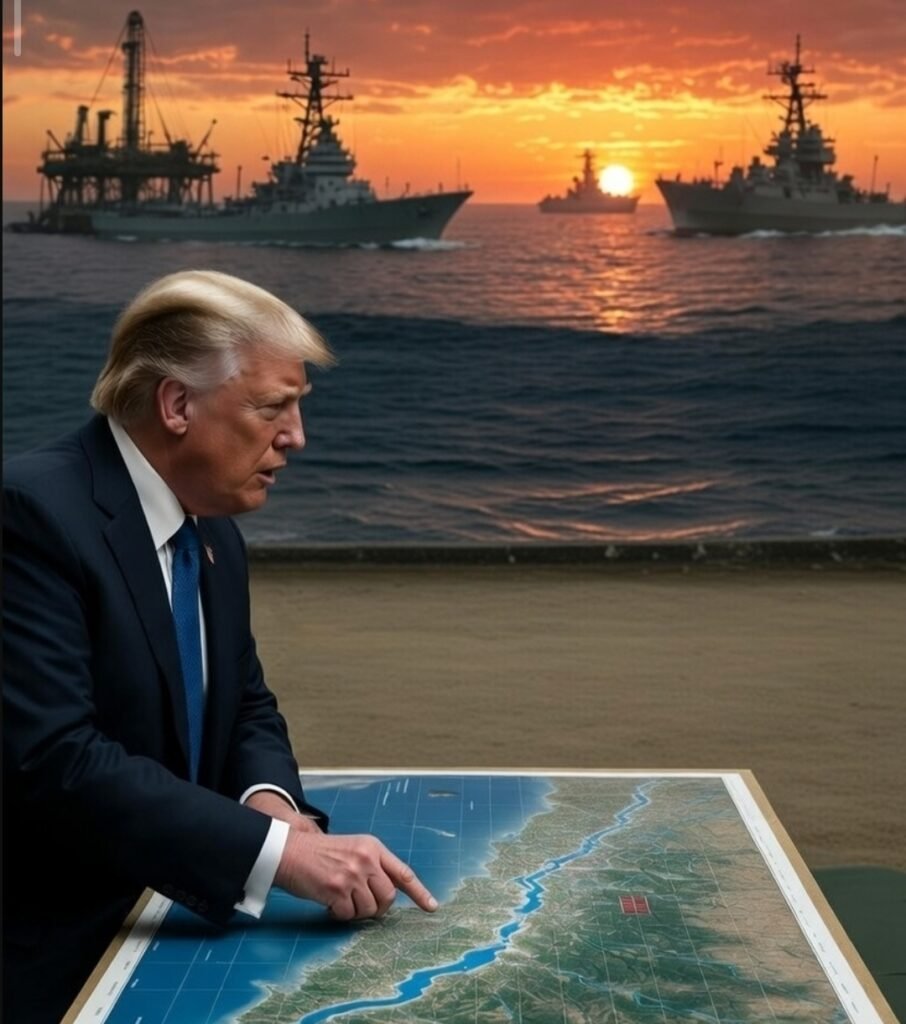
President Donald Trump indicated Friday that the United States may soon begin scaling back its military campaign against Iran, stating the US is “getting very close to meeting our objectives” even as the Pentagon deploys thousands of additional Marines and sailors to the region to protect the critical Strait of Hormuz.
In a Truth Social post, Trump wrote: “We are getting very close to meeting our objectives as we consider winding down our great Military efforts in the Middle East with respect to the Terrorist Regime of Iran.”
He outlined key goals achieved or nearing completion, including degrading Iran’s missile capabilities, destroying its defense industrial base, eliminating its navy and air force elements, preventing nuclear advancement, and safeguarding US allies.
The statement follows earlier remarks where Trump explicitly rejected an immediate ceasefire, saying “you don’t do a ceasefire when you’re literally obliterating the other side.” White House officials, including Press Secretary Karoline Leavitt, noted that the administration and Pentagon had anticipated the core mission would take 4–6 weeks.
Despite the de-escalation hint, military reinforcements continue. US officials confirmed the deployment of the USS Boxer amphibious assault ship, elements of the 11th Marine Expeditionary Unit (approximately 2,500 Marines), and supporting warships from California, adding to the roughly 50,000 US troops already in the Middle East.
These forces are positioned to secure the Strait of Hormuz, the chokepoint for about 20% of global oil trade, which Iran has partially disrupted or threatened to close amid retaliatory actions.
Trump criticized NATO allies for not contributing more to protect the strait, calling them “cowards” and a “paper tiger” in related comments, while emphasizing that other nations reliant on the route should step up.
The conflict, now in its fourth week since launching on February 28 with US-Israeli strikes that eliminated Supreme Leader Ali Khamenei and other senior figures, features intense airstrikes on Iranian nuclear facilities (including a reported strike on Natanz today, with no radiation release confirmed), energy sites like South Pars, and military infrastructure.
Iran has responded with missile and drone attacks on Israel, US bases (including a recent barrage toward the joint UK-US Diego Garcia base in the Indian Ocean), and Gulf energy targets, driving Brent crude prices above $110 per barrel and causing widespread market volatility.
Iran has rejected short-term ceasefires, insisting on a permanent end to hostilities, and has threatened to target additional sites, including recreational and tourist locations of adversaries.
Civilian casualties continue to rise regionally, with no immediate diplomatic off-ramp evident.Israeli officials have described Iran’s military as significantly weakened and indicated potential further operations, including against Hezbollah in Lebanon.
Defense Analysts view the troop movements as a precautionary measure to maintain pressure and secure maritime routes, even as Trump’s rhetoric suggests a possible shift toward reduced US involvement once objectives are met.