


US President Donald Trump struck sharply divergent notes on Sunday. He warned he could knock out every single power plant and bridge in Iran. At the same time he offered what he called a very fair and reasonable deal. This came ahead of fresh talks in Pakistan. He accused Tehran of violating the ceasefire. Iranian forces had fired in the Strait of Hormuz.
Trump made it clear. US representatives would travel to Islamabad for negotiations. Failure to reach an agreement would invite decisive military action. Last chance to sign a peace deal or face destruction. That was the blunt message from Trump. The US President confirmed the details on Sunday.
His special envoy Steve Witkoff and his son in law Jared Kushner would arrive in Pakistan on Monday night. They would hold the second round of face to face negotiations on Tuesday. Vice President JD Vance had led the first round in Islamabad earlier this month. Steve is going to be going there tomorrow night. Trump told reporters. He added that the talks offered Iran its last chance. Iran must sign a peace deal. Otherwise it would face destruction of its infrastructure. Trump explicitly threatened to knock out Iranian power plants and bridges. This would happen if no agreement was reached before the ceasefire expires on Wednesday.
This is not the language of a man on edge. This is classic Trump. He is loud. He is theatrical. He is calculated. He is deliberately positioning himself as the one who holds the stronger hand. He uses blunt threats to squeeze Tehran. He still keeps the door open for a deal. The deal would favour American interests. It would also support the broader stability that India needs.
The crisis sharpened dramatically over the weekend. Iran reversed a brief reopening of the Strait of Hormuz. It declared the waterway closed once again. This was in retaliation for the US naval blockade of Iranian ports. Tehran forces fired on vessels attempting to transit the strait. Two Indian flagged crude carriers were among the targets. India Ministry of External Affairs acted swiftly. It summoned Iran ambassador. It conveyed deep concern. Ships turned back. Iranian Revolutionary Guard gunboats had opened fire without warning. The Strait carries roughly one fifth of global seaborne oil. It also handles significant volumes of LNG. Traffic has now come to a virtual halt.
Iran parliamentary Speaker Mohammad Bagher Qalibaf was categorical. The waterway will remain closed until the US ends its blockade. It is impossible for others to pass through the Strait of Hormuz while we cannot. Qalibaf said this in a televised interview. He added that control rests with Iranian forces. Passage will follow only designated routes under Tehran authorisation.
This move by Iran is defiant. It also reveals weakness. Tehran is trying to project strength. It is holding the global energy chokepoint hostage. In reality prolonged closure hurts Iran as much as anyone else. Its own oil exports depend heavily on this route. Its economy is already battered by years of sanctions. The cost of multiple regional conflicts adds to the strain. Iran cannot afford indefinite self blockade.
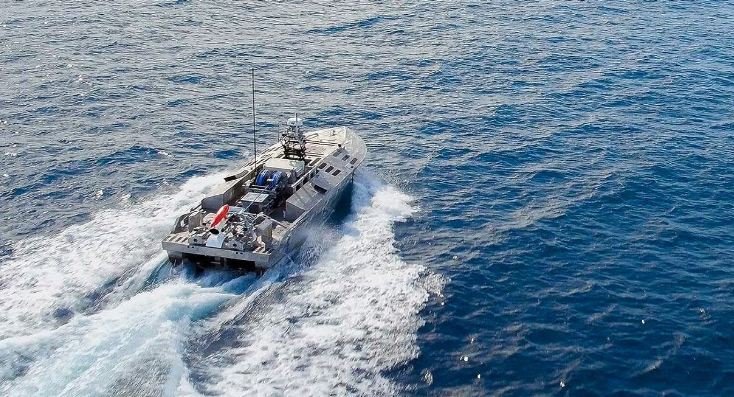
The US Navy has begun deploying unmanned sea drones. It is also using robotic systems. These tools detect and neutralise mines allegedly laid by Iran. Underwater vehicles will scan the seabed first. Explosive laden robots will then destroy threats. All this is designed to minimise risk to American sailors. Such technological superiority quietly underlines who holds the long term advantage in any war of attrition over the Strait.
For India the stakes are immediate and serious. Oil prices had already surged past 100 dollars a barrel earlier in the crisis. They remain highly volatile. Any prolonged closure of the Hormuz chokepoint could add between 0.1 and 0.2 percentage points to India inflation. It could shave a similar 0.1 to 0.2 points off GDP growth for every 10 dollar rise in crude prices. New Delhi has every reason to watch these developments with deep concern. The attacks on Indian flagged vessels only heighten the urgency.
On a related front Lebanon has begun the slow work of post truce recovery in the south. Its army has reopened key roads and bridges damaged during the recent Israel Hezbollah conflict. The military announced the full reopening of the Nabatieh Khardali road. It also announced partial reopening of the Burj Rahal Tyre bridge. Work continues on other routes under the current 10 day truce. These steps are modest. They mark an effort to reconnect war hit areas. They bring some normalcy back to an exhausted region.
The bigger story remains the fragile regional ceasefire. It is already showing clear signs of strain. Trump Sunday remarks were not those of a leader losing control. They were the words of a dealmaker. He believes sustained pressure will eventually force Iran to compromise. The pressure is military. It is economic. It is diplomatic. Iran must agree on core issues. It must fully reopen the Strait. It must accept verifiable limits on its nuclear programme. It must end actions that threaten global shipping lanes.
Some may see the sharply divergent notes as inconsistency. They may even call it desperation. I read it differently. This is how Trump has always operated. He begins with overwhelming leverage. He issues colourful warnings. He then shifts tone when the other side shows willingness to talk. He has used this approach before. He did it with North Korea. He did it with China on trade matters. He did it with Iran during his first term. The objective is never endless war. The objective is a transaction. The transaction leaves America in a visibly stronger position. It also benefits its partners.
The risks cannot be ignored. Iran has shown defiance. It has rejected the latest invitation for talks in Islamabad. Its decision to re close the Strait and fire on vessels is telling. Hardliners in Tehran still believe they can outlast American pressure. They hope to exploit divisions in the international community. A single miscalculation on either side could push the region back into open conflict. An Iranian attack might provoke a disproportionate US response. An American strike might unite Iranian factions.
Trump explicit threat to target civilian infrastructure is provocative. It raises serious humanitarian questions. Power plants and bridges fall in that category. Yet in cold strategic terms the message is unmistakable. The United States will not allow itself to be blackmailed. No single country can control a vital global chokepoint. The quiet deployment of robotic mine clearing systems further demonstrates Washington resolve. It keeps options open. It avoids rushing into high casualty naval battles.
From an Indian viewpoint the best possible outcome remains a negotiated settlement. The settlement must restore safe passage through the Strait of Hormuz. It must stabilise oil markets. It must prevent further escalation. Further escalation could drag in more actors. India has direct stakes in energy security. It also cares about the safety of its merchant vessels. New Delhi measured diplomatic response reflects a pragmatic approach. It expresses concern. It avoids inflammatory language.
Trump last chance warning does not prove that Iran is now the boss. It confirms something else. The United States backed by superior military capability and key alliances is still the side drawing the red lines. Tehran defiance may earn it some domestic political points. It may buy a little time. It cannot change the fundamental imbalance of power. Iran economy is strained. Its regional proxies are under pressure. Much of the world views the closure of the Strait as destabilising rather than justifiable.
Whether the talks in Pakistan produce a breakthrough remains to be seen. The talks may collapse into fresh military strikes. The answer will become clear in the next few days. The current ceasefire expires mid week. If Iran chooses even a partial compromise it may avoid destruction. The compromise would cover the Strait and nuclear issues. If it chooses to double down the consequences could be swift and severe.
Trump is not standing on the edge of panic. He is playing a high stakes hand. He has confidence that time will favour the stronger party. Technology also favours the stronger party. Economic pressure favours the stronger party. The rhetoric is loud because the stakes are genuinely high. Loud does not mean weak. For now America remains the one issuing ultimatums. It is not the one reacting desperately to them.
The coming days in Islamabad will be decisive. The waters of the Strait of Hormuz will also test the situation. These days will decide whether this approach delivers a durable deal. They may merely delay a more dangerous confrontation.
India like much of the watching world will follow every development closely. Energy security hangs in the balance. Regional stability hangs in the balance. The broader balance of power in West Asia hangs in a delicate balance.


Naorem Mohen is the Editor of Signpost News. Explore his views and opinion on X: @laimacha.