


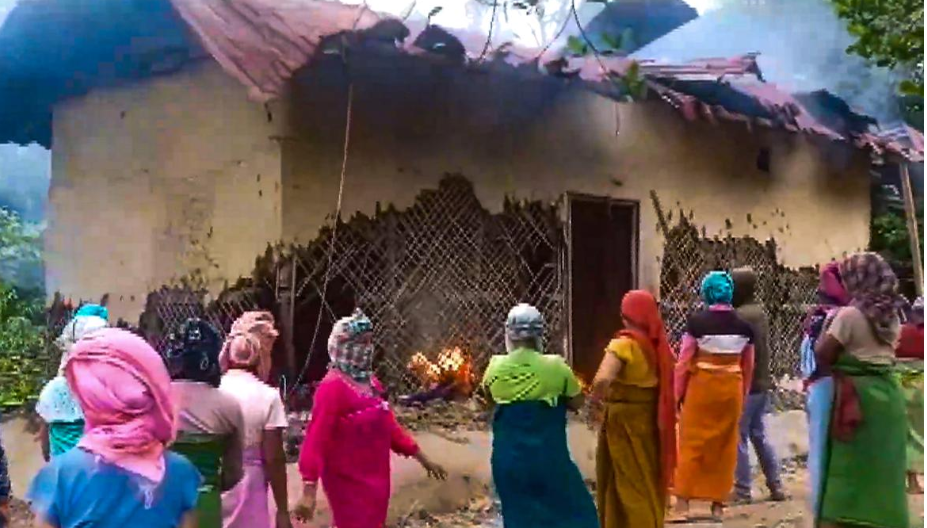
A woman stripped of her dignity by a mob is a national shame, regardless of where the horrific crimes takes place. It does not matter whether the setting is a conflict-torn state, a tribal village, a caste-ridden locality, or a remote settlement far from the national capital. The constitutional injury remains the same. Her dignity is violated. Her liberty is assaulted. Her equality before law is mocked. The rule of law is replaced by the cruelty of the crowd.
This simple moral principle should guide both the conscience of the nation and the conduct of its journalism. But recent events compel us to ask an uncomfortable question. Do all such crimes receive the same public attention, the same moral language, and the same national concern?
The alleged public humiliation of a tribal woman in Jharkhand’s Pakur district brings this question back with disturbing force. According to police accounts, the woman was allegedly paraded in a semi-naked condition through a village after she and a man were accused of having an extramarital relationship. Videos reportedly showed the two being forced to walk through the village in their undergarments while being assaulted, before police intervened, rescued them, and registered cases against several accused persons.
The incident is horrifying not only because of the physical humiliation inflicted upon the victims. It is horrifying because it shows how easily mob justice still operates in India. The accusation against the woman, whether true or false, has no legal relevance to the violence inflicted upon her. No allegation of adultery, no claim of protecting community honour, no village sentiment, and no customary practice can justify stripping a woman of dignity before a crowd. Such an act is not social correction. It is criminal violence.
The Pakur incident should have provoked serious national reflection. It should have led to sustained debate on mob justice, women’s dignity, horrific crimes, rural policing, local power structures, and the circulation of humiliating videos on social media. Instead, outside Jharkhand, it received comparatively modest attention.
The contrast with Manipur is difficult to ignore.
In July 2023, a video showing two women being paraded naked during the ethnic violence in Manipur shocked the nation. The footage triggered widespread public outrage. Prime Minister Narendra Modi described the incident as a shame for the country. The Supreme Court expressed deep concern. Parliament witnessed heated disruption and debate. National television channels gave the case extensive coverage. International media projected it as one of the defining images of the Manipur conflict.
That response was necessary. No civilised society could have remained silent before such brutality. The naked parading of women during communal violence represented a grave collapse of law, administration, and human restraint. The outrage reflected the seriousness of the offence and the failure of institutions to protect vulnerable citizens.
But recognising the legitimacy of that outrage also raises another question. Should every comparable assault on a woman’s dignity not command similar moral concern, even when the surrounding political circumstances are different?
This is not an attempt to compare suffering. It is not an attempt to reduce the gravity of what happened to the women in Manipur. Their ordeal remains one of the darkest episodes in recent Indian public life. Nor does it deny the larger context of prolonged ethnic violence, displacement, burning of homes, social segregation, and institutional failure that shaped national and international attention to Manipur.
Context matters. The Manipur incident occurred amid months of ethnic clashes and deep humanitarian distress. The video became symbolic of a larger crisis. These factors naturally increased the scale of public and media attention.
But context alone cannot decide whose suffering deserves sustained concern.
If violence against women becomes visible only when it intersects with a major political conflict, many victims will remain invisible. Horrific crimes committed in rural districts, remote villages, tribal settlements, and socially marginalised communities will pass with limited notice, even when the violation of dignity is equally brutal.
This is where journalism faces one of its most serious tests.
The media cannot report every crime with identical intensity. Editorial decisions depend on resources, timing, public interest, available information, and wider significance. No newspaper, news channel, or digital platform can give equal space to every incident in a country as vast as India.
But consistency of principle is different from equality of volume.
Every grave assault on a woman’s dignity must be recognised for what it is: an attack on constitutional values. The prominence of coverage may differ. The moral standard should not. A woman humiliated in Pakur is not less deserving of national concern than a woman humiliated in Manipur. A victim in a village is not less human because her suffering does not become the centre of a national political debate.
Selective visibility creates its own damage. Communities begin to feel that national outrage is not governed only by the severity of a crime, but also by political usefulness. Victims begin to fear that their suffering matters only when it fits an existing national narrative. Such perceptions weaken public trust in institutions expected to speak for the powerless.
This problem becomes even more dangerous during periods of social conflict.
The Manipur case demonstrated how quickly individual criminal acts can become associated with entire communities. While the accused must face prosecution under law, it is equally important to distinguish between criminal responsibility and collective identity. No democratic society should allow crimes committed by individuals or mobs to become permanent moral judgments upon an entire ethnic community.
That distinction is fundamental to justice. This is where public discourse failed Manipur. There were accounts that local women, including Meira Paibi members and club members, intervened and helped protect and move the victims to safety when they heard about the incident.
The Meitei community, already living through the pressures of violent ethnic conflict, found itself globally demonised through narratives that often moved from individual criminality to collective guilt. The crime was horrifying. The accused deserved arrest, investigation, trial, and punishment. But to convert the conduct of perpetrators into an indictment of an entire people was neither fair nor responsible.
There is another fact that received far less attention. After the accused in the Manipur naked parade case were identified and arrested, Meitei women’s groups, including Meira Paibi members, reportedly destroyed or set fire to the houses of some accused persons. Such actions cannot replace lawful prosecution, and justice must always remain within the authority of the courts. But the symbolism cannot be ignored. It showed that sections of Meitei society did not accept or defend the humiliation of women, even in the middle of an ethnic conflict. Their anger was directed at the alleged perpetrators, not at the victims. This does not erase the crime. It does challenge the sweeping claim that an entire community approved such conduct.
In every conflict zone, there are perpetrators, victims, bystanders, protectors, and those who oppose wrongdoing from within their own community. When only one category is highlighted and the rest are erased, truth becomes incomplete.
The same principle must apply across India. The accused in the Pakur case must face the full force of criminal law. But no one should infer from their actions that an entire tribal community, district, or state shares responsibility for the crime. Justice requires individual accountability, not collective blame.
India has repeatedly witnessed incidents in which women have been stripped, paraded, beaten, tied to trees, accused of witchcraft, punished over relationships, or publicly humiliated in the name of community anger. Some cases arise from caste oppression. Some from patriarchal control. Some from superstition. Some from local revenge. Some from communal tension. Some from village-level power struggles. The social settings may differ, but the underlying logic remains frighteningly similar.
A woman’s body becomes the site upon which society tries to assert authority.
That recurring pattern should concern the nation far more than the identity of either victims or perpetrators.
Rajasthan has seen such cases. West Bengal has seen such cases. Jharkhand has now seen this disturbing case from Pakur. Manipur witnessed one of the most horrifying examples during the 2023 conflict. These incidents cannot be treated as isolated acts of local cruelty alone. They reflect a larger failure of law, social conscience, gender justice, and public accountability.
The immediate response must always be legal. Police must act swiftly to rescue victims, preserve evidence, arrest offenders, and prevent retaliation. Prosecutors must pursue such cases with seriousness. Courts must ensure timely justice. Those who record and circulate videos of humiliation must also be held accountable, because the digital circulation of such content extends the assault on the victim.
But the response cannot end with the police station.
Community leaders have an obligation to reject informal systems of punishment that violate constitutional rights. Village elders, local bodies, civil society organisations, and political workers must not remain silent when mobs claim authority over women’s bodies. Social media users must understand that forwarding such videos is not awareness. It is often a second act of humiliation.
The media, meanwhile, must ask difficult questions not only of governments, but also of society itself. Why do mobs still believe they have the authority to punish women publicly? Why do village-level accusations so easily become public violence? Why do certain incidents become defining national moments while others pass with limited discussion? Why does outrage often follow political relevance rather than moral consistency?
These questions matter because they concern the health of India’s democracy.
A nation’s commitment to women’s dignity is not measured by the intensity of outrage over one incident. It is measured by the consistency of concern across all incidents.
The women of Manipur deserved the solidarity they received. The woman in Pakur deserves no less in principle. The victims in Rajasthan, West Bengal, and other states deserve the same moral recognition. The circumstances may differ. The political implications may differ. The constitutional principle does not.
A mob that strips a woman of dignity commits an offence not only against the victim, but against the Republic. It challenges the authority of law. It mocks the promise of equality. It diminishes the humanity that should bind citizens together.
India cannot afford different moral standards depending on geography, community, or political context.
Violence against women should never become visible only when it supports an existing political narrative. At the same time, no community should be condemned collectively for crimes committed by individuals. A mature democracy must be capable of holding both principles together: uncompromising accountability for perpetrators and unwavering fairness toward communities.
The Pakur incident should therefore not be remembered merely as another crime in another village. It should remind us that the defence of women’s dignity demands consistency from governments, courts, society, and above all, the media.
Justice does not become more meaningful because cameras are present. A woman’s dignity does not become more valuable because her suffering dominates headlines. Every act of public humiliation is a stain on the conscience of the nation.
The measure of a democratic society lies not in how loudly it condemns one atrocity, but in how faithfully it applies the same moral standard to all.
Only then can outrage become a force for justice rather than a reflection of circumstance.


Naorem Mohen is the Editor of Signpost News. Explore his views and opinion on X: @laimacha.