


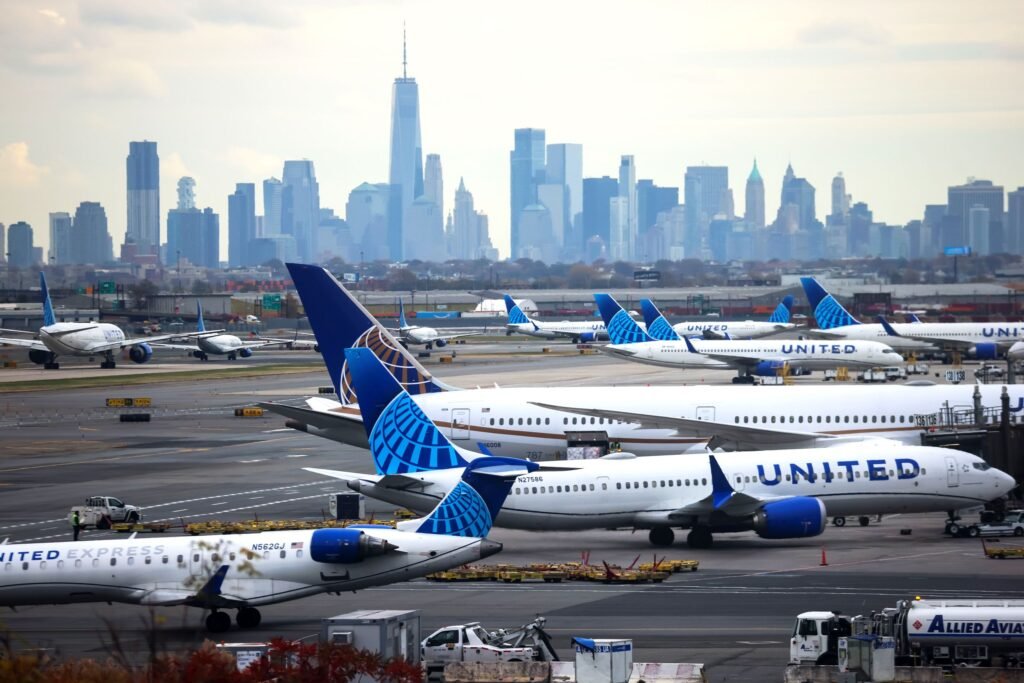
Air travel across the United States ground into chaos over the weekend, with airlines canceling 1,330 flights on November 8 amid a deepening government shutdown that has left air traffic controllers unpaid and exhausted. The disruptions followed a brutal Friday, when 1,025 flights were scrapped and more than 7,000 delayed, pushing the nation’s aviation system to the brink.
The Federal Aviation Administration (FAA) mandated the cuts, ordering airlines to trim 4% of daily operations starting November 7 at 40 major airports due to critical shortages in air traffic control staffing. The agency cited safety risks from overworked controllers, many of whom have gone weeks without paychecks during the record 39-day shutdown.”These are not optional reductions,” an FAA spokesperson said in a statement. “They’re necessary to maintain safe separation of aircraft in an increasingly strained system.”The pain is set to intensify.
Flight cuts will climb to 6% on Tuesday, November 11, and reach 10% by November 14, potentially stranding thousands more passengers during what is typically a busy travel period.
At the heart of the meltdown are the nation’s 13,000 air traffic controllers, alongside 50,000 Transportation Security Administration (TSA) screeners, who have been required to work without compensation. Absenteeism has surged as unpaid workers call out sick or seek alternative income, forcing the FAA to impose the unprecedented restrictions.
Senator Ted Cruz (R-TX), chair of the Senate Commerce Committee, highlighted the human toll during a heated floor debate on November 7. “I’ve been informed that pilots have submitted over 500 voluntary safety reports since the shutdown began,” Cruz said, attributing the errors to controller fatigue. “These are near-misses and mistakes that could have catastrophic consequences.”
Controllers received grim news on November 6: no pay for a second consecutive period starting next week. “It’s unsustainable,” said one anonymous controller at a major hub airport. “We’re running on fumes, and the system is one bad shift away from a serious incident.”U.S. Transportation Secretary Sean Duffy warned of even steeper measures if the situation worsens. “If more controllers don’t show up, I could mandate 20% cuts,” Duffy told reporters. “We assess the data in real time and make decisions to protect the airspace.”
The shutdown, now the longest in U.S. history, has become a flashpoint in Washington. The Trump administration and Republicans point to the aviation disruptions as leverage to push a “clean” funding bill without Democratic add-ons. They argue the bill would immediately restore pay and operations.Democrats counter that Republicans are refusing to negotiate over expiring health insurance subsidies, set to lapse at year’s end, which they say would leave millions vulnerable.
As delays rippled through hubs like Atlanta, Chicago, and New York, passengers bore the brunt. “We were delayed six hours, then canceled altogether,” said traveler Maria Lopez at Dallas-Fort Worth International. “No one knows when we’ll get home.”Airlines, already absorbing millions in losses, have urged swift resolution. “The longer this drags on, the harder it is to recover,” a spokesperson for a major carrier said.
With no end in sight and cuts escalating, the shutdown’s impact on the skies—and the economy—shows no signs of abating. For now, flyers are left checking boards, hoping their flight isn’t next on the chopping block.