


Recent US intelligence assessments indicate that Iran’s ruling regime remains stable and faces no imminent threat of collapse, despite nearly two weeks of sustained U.S. and Israeli military strikes that have targeted key infrastructure, military sites, and leadership figures.
According to sources, a series of classified reports consistently conclude that the Iranian leadership is largely intact. One source described a “multitude” of intelligence products providing uniform analysis: the regime is “not in danger” of falling and continues to maintain effective control over the Iranian population.
The assessments come amid an ongoing conflict that began in late February 2026, when U.S. and Israeli forces launched coordinated airstrikes across Iran. These operations, which have included strikes on nuclear facilities, missile bases, air defenses, and command centers, resulted in significant casualties, including the death of Supreme Leader Ayatollah Ali Khamenei in the early phases.
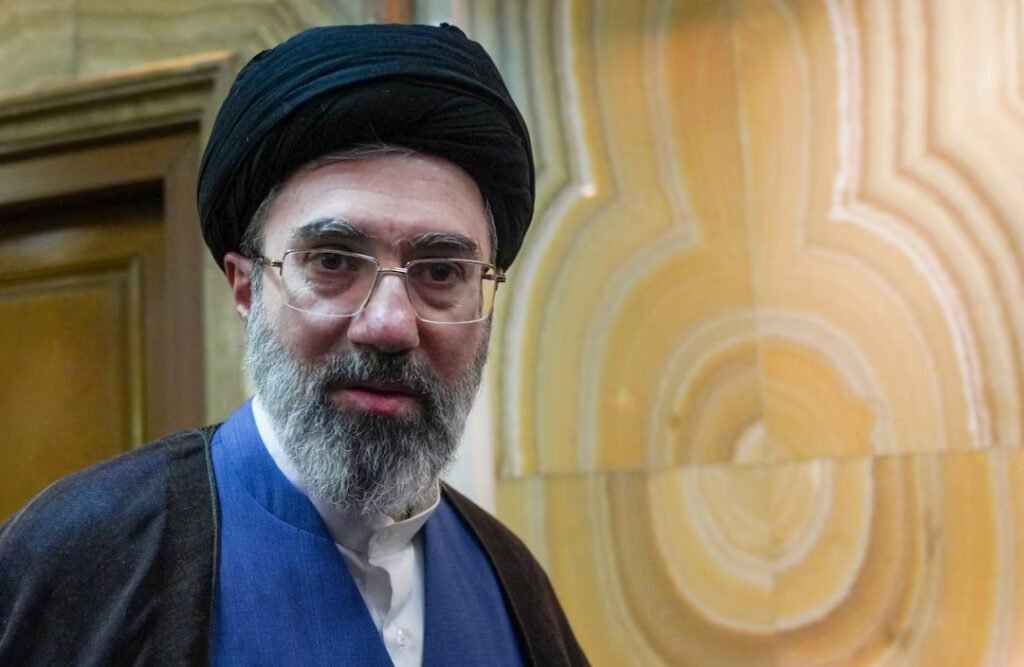
In response, Iran’s Assembly of Experts swiftly appointed Mojtaba Khamenei, the late supreme leader’s son, as the new supreme leader on March 8-9, 2026. This transition has been viewed by observers as a signal of institutional continuity rather than disruption.U.S. intelligence has tracked the regime’s response closely.
Reports highlight that the Islamic Revolutionary Guard Corps (IRGC), which plays a central role in both external defense and internal security, retains operational cohesion. Despite losses among senior officials and damage to military assets, the leadership structure has adapted through established succession mechanisms designed to preserve power continuity.
The IRGC and allied clerical networks continue to enforce order, with no widespread signs of fracturing or loss of authority over key population centers.This view aligns with a pre-war classified assessment from the National Intelligence Council (NIC), completed in late February 2026—roughly a week before the strikes intensified—according to reporting from
The Washington Post and other outlets. That document examined potential outcomes of U.S. military action, ranging from limited targeted strikes to a prolonged large-scale campaign. It concluded that neither scenario was likely to result in regime change. Even in cases of “decapitation” strikes eliminating top figures, Iran’s institutions were deemed resilient enough to trigger succession protocols and maintain the existing clerical-military framework.
Analysts noted the absence of a unified, powerful opposition coalition capable of capitalizing on leadership losses to seize control.The intelligence community has expressed skepticism about the prospects for a popular uprising or internal revolt leading to the regime’s downfall.
Iran’s security apparatus, including the Basij paramilitary force and various intelligence branches, has demonstrated the capacity to suppress dissent, as seen in past crackdowns. Recent developments, such as expanded arrests of alleged spies, media operatives, and individuals linked to anti-regime networks, reflect heightened internal vigilance rather than weakness.
These measures, reported in Iranian state media and monitored by U.S. analysts, aim to counter potential infiltration or unrest amid the conflict.On the military front, U.S. Central Command (CENTCOM) has reported progressive degradation of Iranian capabilities, including air defenses, missile stockpiles, and naval assets like minelayers in the Strait of Hormuz.
However, these setbacks have not translated into a breakdown of governance or public control. The regime continues to project defiance through official statements, state broadcasts, and mobilization efforts, framing the conflict as resistance against foreign aggression.
The assessments also touch on peripheral elements, such as Iranian Kurdish militias in border regions, which U.S. sources describe as lacking sufficient fighters, arms, or coordination to pose a meaningful challenge to central authority. This limits the potential for insurgent fronts to exploit the situation.
Broader implications emerge from these intelligence conclusions. For the U.S. administration under President Donald Trump, which has emphasized neutralizing Iran’s nuclear and missile programs while signaling an extended campaign, the reports underscore the challenges of achieving strategic goals through air power alone.
Officials have described the operations as ongoing, with aims focused on degradation rather than immediate overthrow. The findings temper expectations that military pressure would swiftly lead to internal collapse or a shift toward negotiations on Western terms.
Regionally, the stability assessment influences calculations among Iran’s adversaries and allies. Israel, a key partner in the strikes, continues operations aimed at long-term deterrence, while Gulf states monitor for spillover risks. Iran’s partners, including Russia and China, have interests in preventing a power vacuum that could alter regional dynamics.
Within Iran, the regime’s ability to retain control has implications for domestic resilience. Economic strains from sanctions, infrastructure damage, and disrupted energy exports persist, yet intelligence indicates no immediate erosion of public order or elite cohesion. Pro-government demonstrations have occurred in Tehran and other cities, though access to independent verification remains limited due to wartime restrictions.
As the conflict enters its third week, U.S. intelligence continues to monitor indicators of potential instability, such as defections, breakdowns in command chains, or surges in unrest. Current reporting, however, points to a regime that, while under severe pressure, maintains the core elements of power.
This evaluation draws from multiple streams of intelligence, including satellite imagery, signals intercepts, human sources, and open-source analysis, providing a consistent picture as of mid-March 2026.
The situation remains fluid, with daily developments in military engagements and diplomatic posturing. Yet the prevailing U.S. assessment offers a cautious view: Iran’s theocratic system, built over decades with layered redundancies in security and governance, shows no signs of imminent unraveling under the current campaign.