


The latest exchange of fire between the United States and Iran is not merely another incident in the long record of hostility between Washington and Tehran. It is a reminder that a ceasefire diplomacy, when unsupported by trust, verification, restraint, and political discipline, can become little more than a pause between two military actions.
On June 26, 2026, the United States conducted fresh strikes on Iranian targets after accusing Iran of carrying out a drone attack on a Singapore-flagged cargo ship transiting the Strait of Hormuz. US Central Command said American aircraft struck Iranian missile and drone storage locations and coastal radar sites. Iran, in turn, described the US action as a violation of commitments and claimed retaliatory action against targets linked to American forces in the region.
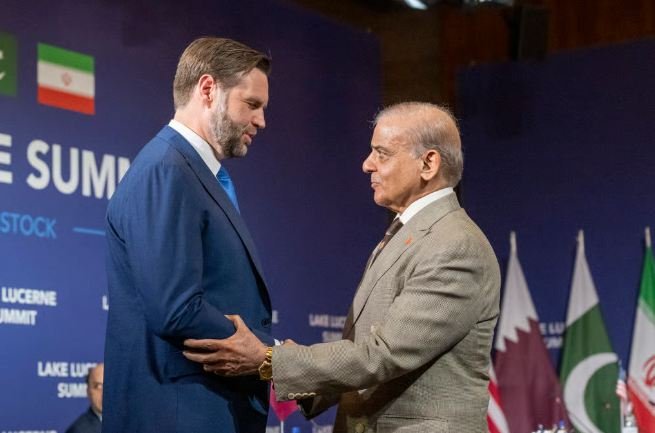
The diplomatic contradiction is striking. A memorandum of understanding or ceasefire diplomacy understanding was supposed to halt escalation. US Vice President JD Vance, who has been associated with the negotiations, insisted that Iran had signed a ceasefire agreement and that Washington had honoured it. His warning that “violence will be met with violence” captured the underlying logic of the moment. Peace is being discussed in diplomatic language, but enforced through military retaliation.
Iran’s position is equally uncompromising. The Islamic Revolutionary Guard Corps accused Washington of violating its commitments and warned that any further aggression would invite a more extensive and precise response. Ebrahim Azizi, head of the Iranian Parliament’s National Security Committee, accused President Donald Trump of having no commitment to the principles of negotiation or ceasefire. The competing claims are familiar: each side says it is responding, not initiating; defending, not escalating; enforcing peace, not breaking it. This is the grammar of the US-Iran conflict. Both sides speak of restraint while preparing for force.
The Strait of Hormuz makes this crisis especially dangerous. It is not a symbolic theatre of confrontation. It is one of the world’s most important maritime corridors, carrying a significant portion of global oil movement. Any attack on commercial shipping there immediately internationalises the dispute. It affects Gulf states, Asian energy importers, maritime insurers, global freight operators, and financial markets far beyond the Middle East. Reports after the drone attack indicated that commercial shipping had only cautiously resumed through the Strait, with traffic remaining below normal levels.
This is why the latest incident cannot be seen as a bilateral quarrel alone. When a cargo ship is attacked near Hormuz, the issue becomes maritime security. When coastal radar sites and missile storage facilities are struck, the issue becomes regional military stability. When both sides invoke a ceasefire while continuing armed action, the issue becomes the credibility of ceasefire diplomacy itself.
The US-Iran confrontation has always contained this contradiction. Negotiations take place because war is costly. Military action continues because neither side trusts the other’s intentions. Washington views Iran’s missile programme, drone capability, regional networks, and naval posture as direct threats to American forces and allies. Tehran views the US military presence in West Asia, sanctions pressure, and repeated use of force as evidence that Washington’s negotiations are tactical rather than sincere. The result is a diplomacy of suspicion. Agreements become temporary instruments, not durable settlements.
The Trump administration’s latest approach appears to rest on a familiar formula: negotiate from strength, retaliate swiftly, and frame military action as enforcement rather than escalation. That method may produce short-term deterrence. It may reassure allies. It may signal that attacks on shipping or US-linked assets will invite consequences. But it carries a serious risk. When every violation is answered by immediate force, the ceasefire mechanism becomes subordinate to battlefield logic.
Iran’s posture follows its own strategic pattern. Tehran often avoids direct full-scale war with the United States, but it uses calibrated pressure through drones, missiles, naval threats, and regional networks to contest American dominance. The IRGC’s language of “calculated attacks” reflects this doctrine. It seeks to show that Iran can impose costs without necessarily inviting total war. The danger lies in miscalculation. What one side calls calculated, the other may interpret as intolerable.
The deeper problem is that neither side has created a credible ladder of de-escalation. A functioning ceasefire requires more than public statements. It needs verification channels, direct military communication, agreed definitions of violation, maritime incident protocols, and third-party monitoring where necessary. Without these safeguards, every incident becomes open to interpretation. A drone strike becomes a ceasefire breach. A retaliatory airstrike becomes self-defence. A warning becomes preparation for the next strike.
This is how conflicts become self-sustaining. The political theatre around the ceasefire diplomacy also matters. When senior leaders make public statements on social media during active hostilities, they speak not only to the other side but also to domestic audiences, allies, armed forces, and political rivals. The space for compromise narrows. Each side becomes trapped by its own words. To step back appears weak. To respond appears necessary. Diplomacy then becomes performative, while military command structures carry the real weight of decision-making.
For the Middle East, the implications are serious. Gulf states do not want a prolonged US-Iran war, but they cannot ignore threats to shipping and energy security. Israel will read Iranian actions through the prism of its own security concerns. Armed groups aligned with Iran may interpret US strikes as grounds for wider mobilisation. Iraq, Syria, Lebanon, Yemen, Oman, and the wider Gulf region remain vulnerable to spillover. The conflict may begin in the Strait of Hormuz, but its consequences rarely remain confined there.
For Asia, including India, the issue is equally significant. Energy prices, shipping insurance, expatriate safety, and commercial routes through the Gulf all matter directly. India has millions of citizens working in West Asia and deep economic ties with Gulf states. Any deterioration around Hormuz affects oil import calculations, inflationary pressure, and maritime planning. New Delhi has traditionally maintained careful relations with both the United States and Iran. A renewed cycle of confrontation will test that balance again.
The larger lesson is that peace cannot be built through ambiguity. If the United States and Iran have signed a ceasefire or memorandum of understanding, the terms must be clear enough to survive the first serious incident. What constitutes a violation? Who verifies it? What are the permitted responses? Are commercial vessels covered under a maritime protection arrangement? Is Iran’s claim of control or influence over traffic in the Strait recognised in any form, or rejected outright? Are regional forces bound by the same framework? Without answers, the agreement remains vulnerable to collapse.
The moral burden is also significant. Every military exchange is framed in strategic language, but its consequences are borne by sailors, civilians, migrant workers, traders, port authorities, and ordinary citizens far removed from the rooms where decisions are made. A drone strike on a ship is not an abstract geopolitical move. A missile strike on radar sites is not a mere signal. Each act carries the possibility of casualties, economic disruption, and a wider military chain reaction.
The US-Iran faceoff has persisted for decades because it is not about one incident, one administration, or one negotiation round. It is rooted in revolutionary history, sanctions, security anxieties, regional rivalries, nuclear suspicion, maritime control, and incompatible visions of power in West Asia. A ceasefire can manage symptoms. It cannot by itself resolve the disease.
Still, ceasefires matter. Even imperfect agreements can prevent wider war if they are supported by discipline. The immediate need is not grand reconciliation. That may be politically impossible for now. The immediate need is crisis management. Washington and Tehran must establish direct communication on maritime incidents, avoid public ultimatums that leave no room for retreat, and define enforcement mechanisms before the next violation occurs. Regional intermediaries with credibility on both sides should be used more effectively.
The United States must recognise that overwhelming force does not automatically produce compliance. Iran must recognise that attacks on commercial shipping weaken its diplomatic standing and invite wider pressure. Both sides must accept that the Strait of Hormuz is too important to be used as a theatre for testing resolve.
The latest strikes show that the US-Iran conflict has entered a dangerous phase where ceasefire diplomacy and military action are moving together rather than in opposition. That is not peace. It is managed hostility. The trouble with managed hostility is that it depends on rational calculation by every actor, at every moment, under pressure. History offers little comfort that such calculation will always hold.
A ceasefire violated the next day is not merely a failed document. It is a warning that the architecture of negotiation is too weak for the weight of the conflict. Unless Washington and Tehran move from declarations to enforceable restraint, the Middle East will remain trapped in a cycle where every agreement contains the shadow of the next attack.