


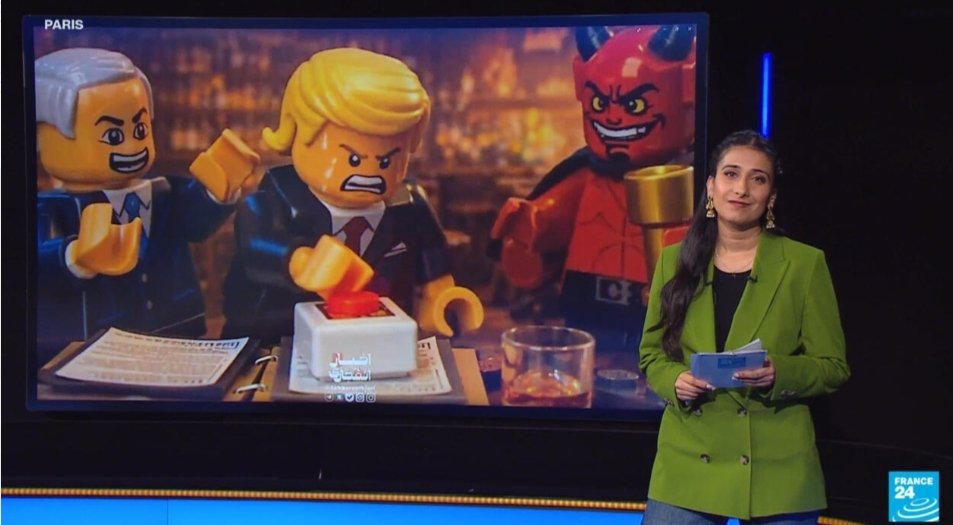
By the first week of March 2026, just days after the initial wave of US and Israeli airstrikes hammered Iranian military sites on February 28 — an operation that claimed high-profile targets including Supreme Leader Ali Khamenei himself — the information battlefield had already descended into something surreal.
The White House rolled out high-production videos that blended verified footage of precision strikes on missile bases and naval assets with flashy clips pulled straight from blockbuster movies, combat video games, and anime action sequences.
It was propaganda dressed up as entertainment, engineered to dominate feeds and shape perceptions among a global audience glued to their screens.
Iran and its network of online supporters fired back with equal intensity but different tactics. Social media platforms were inundated with repurposed clips from older regional conflicts, relabelled as fresh battlefield triumphs, alongside newly minted AI-generated scenes of devastating counterstrikes raining down on Tel Aviv and US installations across the Persian Gulf.
Then came the truly bizarre escalation. A flood of slick, AI-crafted videos featuring Lego-style figurines of Donald Trump, Benjamin Netanyahu, Pete Hegseth, Jeffrey Epstein, Ayatollah Khamenei (or his successors), Satan, and various other political players acting out petty, humiliating skits.
One series showed plastic Trump poring over “Epstein files” before greenlighting strikes, another depicted toy American soldiers marching into cartoonish defeat.This is not your grandfather’s state media broadcast.
This is slopaganda — low-effort, high-volume digital detritus powered by generative AI and aimed squarely at manipulating minds in real time during active warfare.
The term “slopaganda” was introduced in late 2025 by philosophers Michał Klincewicz, Mark Alfano, and Amir Ebrahimi Fard in a paper published in Filisofiska Notiser. They defined it as AI-generated “slop” — that cheap, abundant, often incoherent output flooding the internet — repurposed for classic propagandistic goals like shaping beliefs, triggering raw emotions, capturing fleeting attention, and rewriting collective memory to serve political or strategic ends.
What began as an academic warning has now become daily reality in the fog of the US-Iran conflict.We’ve seen glimpses before. Late in 2025, President Trump himself shared AI videos of him crowned like a monarch, piloting a fighter jet and dumping what appeared to be faeces on anti-administration protesters during the “No Kings” rallies.
Another depicted his envisioned presidential library as an over-the-top golden skyscraper. These were personal branding exercises wrapped in absurdity. But the war has scaled it up dramatically.
Both sides — and their proxies — are now competing not just with missiles and drones, but with memes, deepfakes, rap-infused animations, and toy-themed satire that racks up millions of views faster than any official briefing.
Why does this matter beyond the obvious weirdness? Slopaganda thrives because modern attention spans are fragmented. People aren’t sitting down for in-depth analysis; they’re doomscrolling between work tabs, notifications, and algorithm-fed recommendations.
Content that is visually striking, emotionally charged (usually through outrage, mockery, or righteous anger), and delivered in short, repeatable bursts slips past our critical filters with alarming ease.
It doesn’t need to convince viewers of literal truths. The Lego videos, for instance, aren’t fooling anyone into thinking physical plastic toys are directing foreign policy.
Instead, they forge sticky mental associations: Trump linked to Epstein and dark forces, the US painted as arrogant and doomed, Iranian resilience turned into heroic underdog folklore. These emotional shortcuts linger longer than facts, especially when repeated across platforms and echoed by influencers or state-affiliated accounts.
In a hot conflict like this one — where strikes have hit everything from underground missile facilities to steel plants tied to the IRGC, and where civilian sites have unfortunately been caught in the crossfire — reliable information is already scarce.
Authoritative reports lag behind the chaos. Into that vacuum pours slopaganda: old footage misrepresented as new victories, AI simulations of glorious counterattacks, or satirical clips that blur into perceived reality for casual viewers.
Scholars have long warned about “context collapse,” where a joke meant for one niche audience gets stripped of irony and treated as evidence by another.The scale amplifies the damage.
A single viral piece can reach hundreds of millions. Even if only a fraction of people internalise a false association or heightened sense of outrage, the cumulative effect can shift public opinion, fuel protests, harden support for (or against) military escalation, or influence political pressure back home.
In polarised societies already wrestling with economic strains, domestic divisions, and overlapping global crises, this erosion of shared reality acts like accelerant on dry tinder.Worse still is the secondary effect: generalised scepticism.
As audiences grow better at spotting obvious AI artefacts — weird hands in images, unnatural lighting in videos, repetitive phrasing in text — they risk over-correcting. Authentic combat footage, eyewitness testimony, or official statements get casually dismissed as “probably fake.”
Trust in journalists, governments, international organisations, and even ordinary people on the ground frays further. When everything looks potentially fabricated, many default to whatever narrative confirms their existing worldview, whether comforting, vindicating, or simply entertaining.
The result is epistemic nihilism: a quiet surrender where knowing what actually happened feels impossible, so feelings replace facts.In the context of the 2026 Iran war — with its strikes on nuclear-related sites, naval assets in the Gulf, and the delicate balance of regional alliances — this isn’t harmless noise.
It distorts strategic assessments, complicates diplomacy (ceasefire talks in places like Islamabad have already faced their own propaganda barrages), and makes it harder for citizens in involved nations to hold their leaders accountable based on reality rather than spectacle.
Slopaganda won’t disappear. The tools to generate it are cheap, widely available, and improving rapidly. State actors, non-state groups, and even lone operators have strong incentives to use it — virality brings influence without the costs of traditional media campaigns.
But adaptation is possible. On a personal level, cultivate sharper habits. Train yourself to pause before sharing: look for inconsistencies in lighting, physics, or details that don’t match known events.
Cross-check claims against multiple independent sources rather than reacting to the thumbnail or headline. Curate your information diet by muting or blocking repeat offenders who peddle low-quality content, while actively seeking outlets that demonstrate rigorous verification.
Digital literacy isn’t about becoming paranoid; it’s about staying grounded amid the flood. Platforms and governments have roles too. Technological solutions like robust watermarking, metadata tagging for AI-generated material, and transparent labelling can help without resorting to heavy-handed censorship.
In high-stakes environments — news feeds, emergency alerts, or wartime updates — aggressive moderation of clearly deceptive content may be necessary to protect the information commons.
Finally, the companies behind the generative AI revolution bear accountability. OpenAI, Google, Meta, X, and others have democratised creation but also unleashed tools that can be weaponised at scale. Regulatory frameworks — whether through targeted funding for education and oversight, incentives for better safety features, or mechanisms to internalise the societal costs — could encourage responsibility without stifling innovation.
The US-Iran war has already produced real human costs: destroyed infrastructure, lost lives on multiple sides, disrupted global energy flows, and heightened regional tensions. Layered on top is this parallel war of narratives, where Lego Trump trades barbs with cartoon Satan while actual strikes reshape maps and futures.
We are not doomed to a total “slopagandapocalypse,” but ignoring the trend guarantees deeper division. The antidote lies in stubborn curiosity, disciplined scepticism, and a collective refusal to let the feed replace reality.
In an age where wars unfold as much in timelines as on battlefields, keeping a clear head might be the most radical act left. Stay vigilant out there — the pixels are lying, but the stakes remain painfully real.


Naorem Mohen is the Editor of Signpost News. Explore his views and opinion on X: @laimacha.