


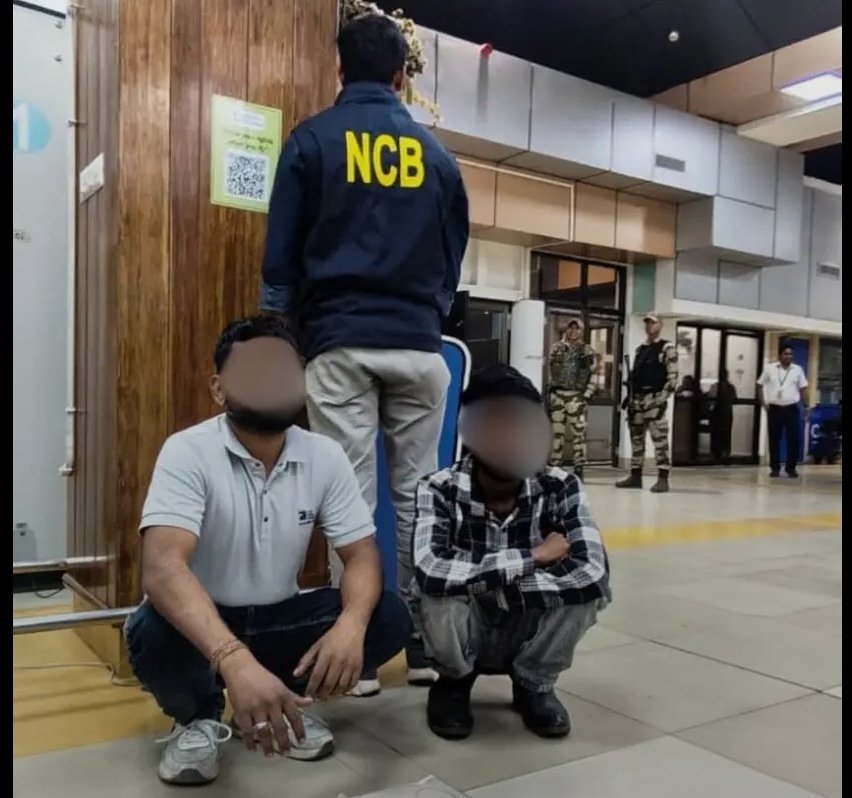
Today, on March 3, two kilograms of opium bound for New Delhi was detected at Bir Tikendrajit International Airport by security personnel. The parcel, originating from Babupara in Jiribam, was intercepted during screening, highlighting once more how Manipur’s airport continues to serve as a key node in the state’s persistent drug trafficking challenges.
This fresh incident comes just days after the interception of 4.8 kg of heroin at the same airport on February 27, 2026, highlighting the relentless pressure on security forces to stem the flow of narcotics. In that earlier case, two individuals from Madhya Pradesh, Suresh (son of Kanhaiyalal Prajapat, aged approximately 31) and Vijay Singh (son of Rajendra Singh, aged approximately 27) were detained by Central Industrial Security Force (CISF) personnel around 3:42 PM.
They were attempting to board Air India Express flight IX1038 bound for Guwahati when routine baggage screening, bolstered by behavioral profiling and detailed X-ray checks uncovered the heroin hidden in false compartments of their luggage.
The contraband and the accused were swiftly handed over to the Narcotics Control Bureau (NCB) Imphal Zonal Unit for investigation and prosecution under the Narcotic Drugs and Psychotropic Substances (NDPS) Act.This February seizure, one of the more substantial in recent memory, earned official commendations and reinforced the state’s “War on Drugs” efforts.
The prompt action by CISF prevented a large shipment from exiting Manipur, potentially curbing supply to wider markets and mitigating the societal harm of heroin addiction.
Yet the core question persists, when will those caught red-handed at Imphal Airport truly be booked under the law? “Booked” here transcends mere arrest, handover, and case filing—it requires swift, thorough prosecution, trial, conviction, and sentencing capable of disrupting the syndicates driving these operations.
The NDPS Act imposes harsh penalties for commercial quantities of heroin, a mandatory minimum of 10 years’ rigorous imprisonment, up to 20 years or life in serious cases, plus heavy fines. Similarly stringent provisions apply to opium. Couriers like the Madhya Pradesh pair or those behind today’s parcel are often low-level expendables, but their detection opens pathways to trace upstream sources, frequently tied to Myanmar’s Golden Triangle via vulnerable borders of Manipur and downstream networks, the Kingpins or drug lords.
Manipur’s record with airport drug cases, however, shows a pattern of delays and uneven follow-through. The 2013 seizure of unattended cartons of psychotropic cough syrup tablets (Robocoff, Seafied, Respified) smuggled from Kolkata resulted in arrests, exposure of false invoicing by Delhi pharmaceutical firms, and political links.
The matter shifted to the CBI after the disbandment of the Special Intelligence Unit involved, but outcomes have stayed protracted and largely non-transparent.
Following the February 27 bust, operations in Lilong targeted an associate linked to transporting the suspects. A joint NCB, commando, and police team detained a suspect, only for a mob to intervene around 7 PM, forcibly freeing him and surrounding the Lilong Police Station Officer-in-Charge before his release that evening.
This obstruction reveals how resistance, syndicate sway, or intimidation can stall progress post-arrest.These incidents expose a disconnect: seizures yield headlines and praise, but absent rapid supply-chain tracing, witness safeguards, and expedited trials in dedicated NDPS courts, cases often languish.
Procedural bail, backlog, evidence issues, or pressures enable networks to adapt and persist.
For Manipur, facing ethnic strife, economic woes, and rampant local drug abuse including poppy cultivation, the narcotics trade exacerbates violence, occasionally funds armed elements, and deepens divisions.
Unresolved cases signal low consequences to traffickers, sustaining the airport as a transit route.
In both recent cases, the February heroin bust and today’s opium parcel, the accused or consignments have entered formal legal channels under the NDPS Act.
But genuine “booking”, prosecution culminating in conviction and deterrence awaits. Until swift, consistent convictions become standard, these interceptions, though vital, remain tactical pauses in a broader struggle.
The NDPS Act is robust; its unwavering enforcement is essential. Only then will the question, “When will the accused caught at Imphal Airport finally be booked under the law?”, shift from doubt to decisive action: soon, and enduringly.


Naorem Mohen is the Editor of Signpost News. Explore his views and opinion on X: @laimacha.