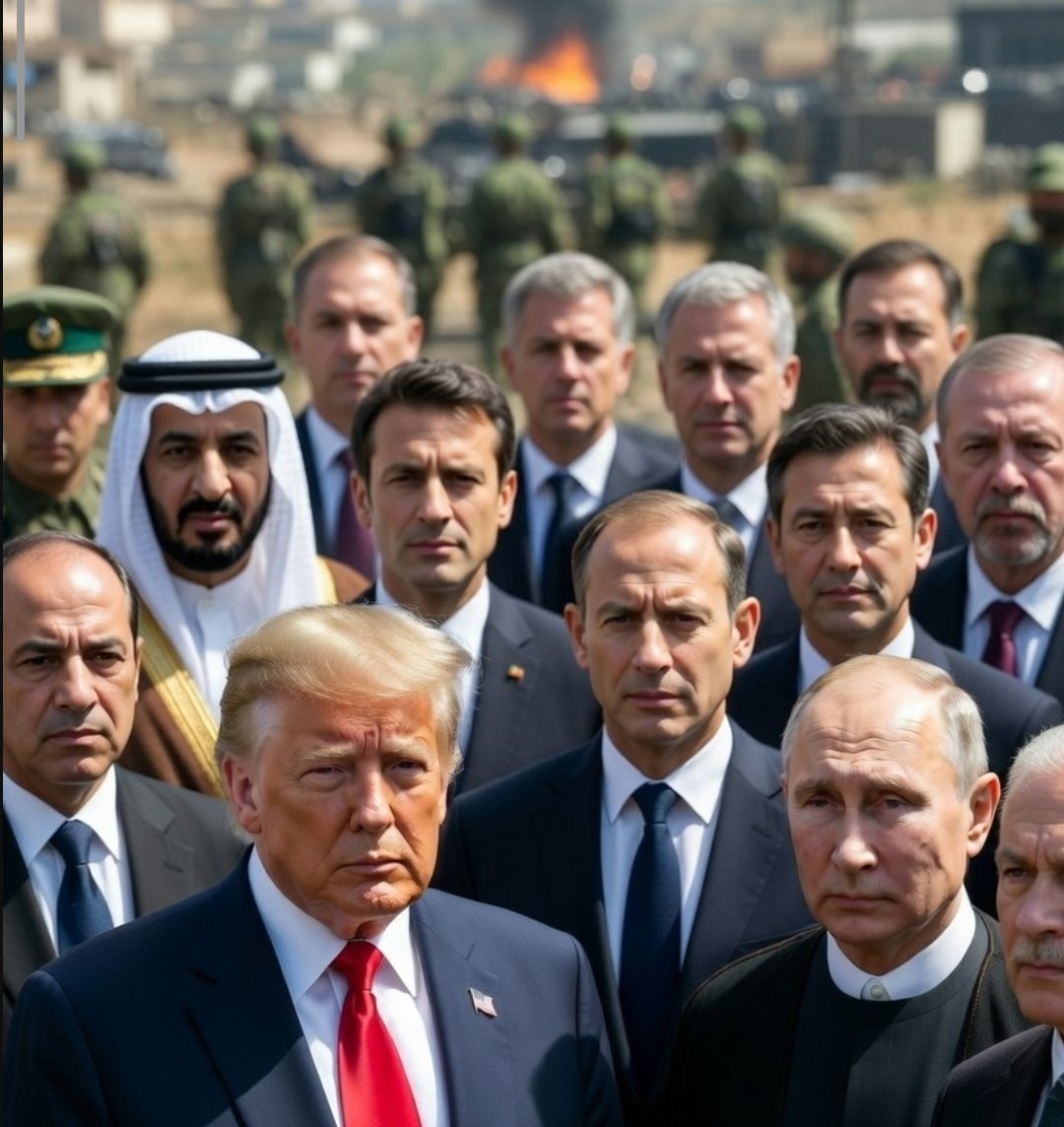
In the third week of March 2026, as the US -Israel war against Iran grinds on with no clear end in sight, one question looms over Washington’s foreign policy: Who is Donald Trump’s friend right now?
The conflict, launched on February 28 with coordinated strikes that killed Supreme Leader Ayatollah Ali Khamenei and targeted Iran’s nuclear and military infrastructure, has escalated into a regional crisis.
Iranian retaliations have disrupted the Strait of Hormuz, spiking global oil prices and stranding tankers. Donald Trump has repeatedly demanded a coalition to reopen the strait, urging allies to send warships and contribute forces.
However, the responses reveal a stark reality. Traditional partners hesitate, courted nations stay silent or hedge, and even those once warmed by Trump’s personal diplomacy offer little beyond words.
Europe, long America’s bedrock in NATO, has largely sat this one out. The UK under Keir Starmer refuses to be drawn into offensive operations, prioritizing de-escalation despite earlier trade deals with Trump.
France declares bluntly: “We didn’t choose this war. We’re not taking part.” Germany echoes that sentiment. “This is not our war; we did not start it”, while Spain denies basing rights for strikes.
Trump has fumed on Truth Social and in briefings, calling NATO’s refusal a “very foolish mistake” and warning of a “very bad future” for non-participants. He even claims the US “no longer needs, or desires” their help, after first pleading for it. European leaders, burned by tariffs, unilateral decisions, and lack of consultation, see no upside in joining an open-ended Middle East venture.
In Asia, Japan, bound by treaty and hosting U.S. forces, offers only limited logistical support. Prime Minister Sanae Takaichi’s government, constrained by its pacifist constitution and focused on China, balks at deploying warships to the Gulf.
Trump pressed her directly in recent meetings, invoking historical ties and even referencing Pearl Harbor in frustration, but Tokyo remains guarded. South Korea faces similar pressures but prioritizes the Korean Peninsula.
India, despite Trump’s rapport with Narendra Modi and shared anti-China goals, maintains humanitarian and economic channels to Iran, negotiating safe passage for its tankers through the strait rather than aligning fully against Tehran.
Even Pakistan, courted aggressively in Trump’s second term with White House visits for Prime Minister Shehbaz Sharif and Army Chief Asim Munir, praise for counterterrorism, and deals on minerals, has gone conspicuously silent or critical.
Islamabad condemns US -Israeli strikes as violations of sovereignty, calls for de-escalation, and balances ties with Gulf states (via a 2025 mutual defense pact with Saudi Arabia) against domestic sympathy for Iran among its Shi’ite population and border realities. No warships, no endorsements, no commitments, just neutrality that frustrates Washington.
Against this backdrop of reluctance, hedging, and outright refusal, Israel stands as the most active, operational partner. Joint strikes, shared intelligence, and alignment on degrading Iran’s capabilities make the US -Israel bond the war’s core. Netanyahu’s government delivers battlefield results, with strong domestic support for the campaign.
Trump praises Middle Eastern partners like Qatar, UAE, Saudi Arabia, and Bahrain for “great support,” but Israel’s role is uniquely deep and kinetic. However, is this true friendship, or transactional convenience?
Trump’s “America First” doctrine treats alliances as bargains: deliver military action, intelligence, and deference without heavy demands, and favor flows. Israel fits because it advances immediate goals in this theater—unlike others who see risks outweighing benefits.
But cracks appear even here. Reports of unilateral Israeli strikes (e.g., on South Pars gas fields) without full US coordination have irked Trump, and divergences over endgames (regime change vs. negotiated concessions) widen.
Domestic US support too wanes, polls show the war unpopular beyond Trump’s core base, with resignations like National Counterterrorism Center Director Joe Kent citing it as serving no American interest.
The pattern is very clear now. In Trump’s world, friends are those who join when called, without conditions. Few do. Europe and Asia prioritize self-preservation amid perceived coercion. Pakistan’s silence, despite prior courtship, shows how quickly favor fades when tested. Gulf states offer rhetorical backing but limited action against Iranian retaliation risks.
This leaves the US increasingly isolated in a war of choice. Trump’s approach yields short-term tactical gains but erodes strategic trust. Alienated allies accelerate hedging, stronger intra-European ties, Asian minilaterals, or outreach to China and Russia. When the next crisis hits, be it in Ukraine, Taiwan, or elsewhere, fewer may answer the call.
True friendship endures beyond convenience; it withstands tests of reciprocity and shared risk. Right now, Donald Trump’s friends appear few and conditional. Israel answers most readily, but even that bond shows strains.
The deeper question isn’t who stands with Trump today, it’s whether America, under this paradigm, will have reliable partners tomorrow when bargains inevitably fray.
In a multipolar world of self-interest, the US risks learning the hard way: transactional alliances buy compliance, not loyalty.
As oil prices soar and the Iran war drags, that lesson is unfolding in real time.