


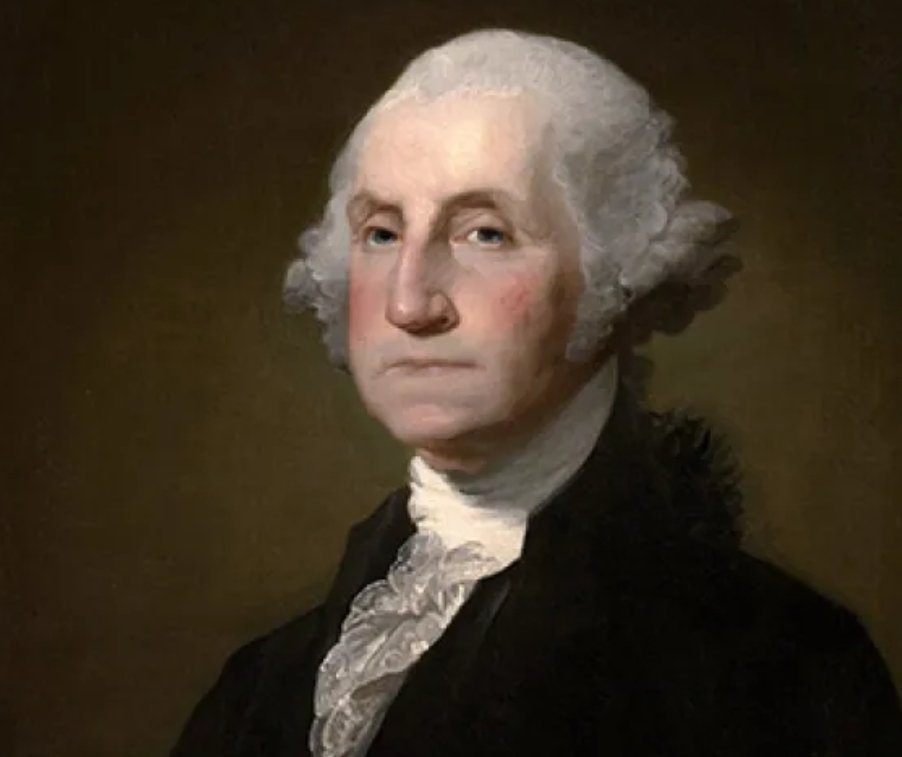
As America hurtles toward its Semiquincentennial on July 4, 2026, the 250th anniversary of the Declaration of Independence, George Washington, the “Father of His Country,” stands out not just as a historical icon but as the living blueprint for what this nation must reclaim right now.
No other founder so perfectly embodies the virtues we desperately need in this polarized, power-hungry era: restraint, humility, unity over faction, and the courage to walk away from absolute authority.
George Washington’s legacy isn’t a dusty relic to admire from afar; it’s a urgent corrective to our current democratic drift, making him the single most defining figure for America’s 250th anniversary moment.Consider the context of 2026. Nationwide, from Mount Vernon’s new exhibits on why Washington matters today to parades in Alexandria honoring him as “Virginia’s Son ~ America’s Founding Father,” to the U.S. Army’s tributes marching toward #Freedom250, the semiquincentennial has thrust Washington into the spotlight.
Events like free admission days at his estate, restored mansion tours, and immersive displays of his original clothing in red, white, and blue highlight his symbolic resonance. Yet amid the celebrations, the real power lies in reflection. Washington’s choices offer a stark contrast to today’s temptations of endless incumbency, partisan warfare, and institutional erosion.
Washington’s greatest act wasn’t winning the Revolution, though his daring Siege of Boston victory, hauling cannons over mountains to force British evacuation, proved his military genius, or even presiding over the Constitutional Convention.
It was his repeated refusal of unchecked power. After leading a ragtag army of farmers to victory against the world’s superpower, he could have claimed a crown or lifetime rule. Instead, he resigned his commission in 1783, shocking monarchs everywhere.
Eight years later, as president, he stepped down after two terms, establishing the peaceful transfer of power that has defined American democracy.
Former President George W. Bush captured this perfectly in a recent Presidents’ Day essay: Washington’s humility—choosing to relinquish power twice—inspires because it proved the presidency belongs to the people, not one man.
This precedent feels prophetic in 2026. With democratic norms tested by election challenges, executive overreach, and deepening division, Washington’s example reminds us that leadership is a trust, not a possession.
His Farewell Address of 1796, co-drafted with Madison and Hamilton, warned against the “baneful effects of the spirit of party,” cautioning that factions would promote misinformation, regional jealousies, and the destruction of republican government.
Nearly 230 years on, those words read like a diagnosis of our time: extreme polarization where opponents are viewed as immoral enemies, partisan media silos, and a politics where loyalty to party trumps principle or truth. Commentators across the spectrum, from op-eds in major papers to reflections on social platforms note how Washington’s fears of partisan extremism and moral decline have materialized, making his address more relevant than ever.
George Washington wasn’t flawless. He owned enslaved people, profited from their labor, and his policies toward Indigenous nations were harsh. Yet he evolved, freeing those he owned in his will—a late but meaningful reckoning—and his willingness to learn from early failures (like the blunders at Jumonville Glen and Fort Necessity) built the resilience that later defined him.
This honesty about his complexities, highlighted in Mount Vernon’s updated exhibits, enriches rather than diminishes his legacy. It teaches that great leaders grow, confront flaws, and prioritize the nation’s good over personal gain.
In an age when power often seems concentrated and voluntary limits rare, Washington’s restraint sets an unmatched standard. He viewed the republic as an “experiment” dependent on civic virtue and active citizenship—not inevitable success.
As we celebrate Presidents’ Day (still officially Washington’s Birthday to many) in this milestone year, the question isn’t whether he still matters; it’s whether we have the will to heed him.America’s 250th isn’t just about fireworks and parades—it’s a chance to recommit to the founding ideals Washington modeled: unity over division, humility in authority, and the courage to step aside for the greater good.
If we ignore his warnings about partisanship and moral decay, we risk squandering the experiment he helped launch. But if we embrace his example, learning from history without sanitizing it, leading with character, and choosing restraint we can ensure the next 250 years are as enduring as the first.
That’s why, more than any monument or myth, George Washington defines this anniversary moment: he shows us not just what America was founded to be, but what it must choose to become.


Naorem Mohen is the Editor of Signpost News. Explore his views and opinion on X: @laimacha.