


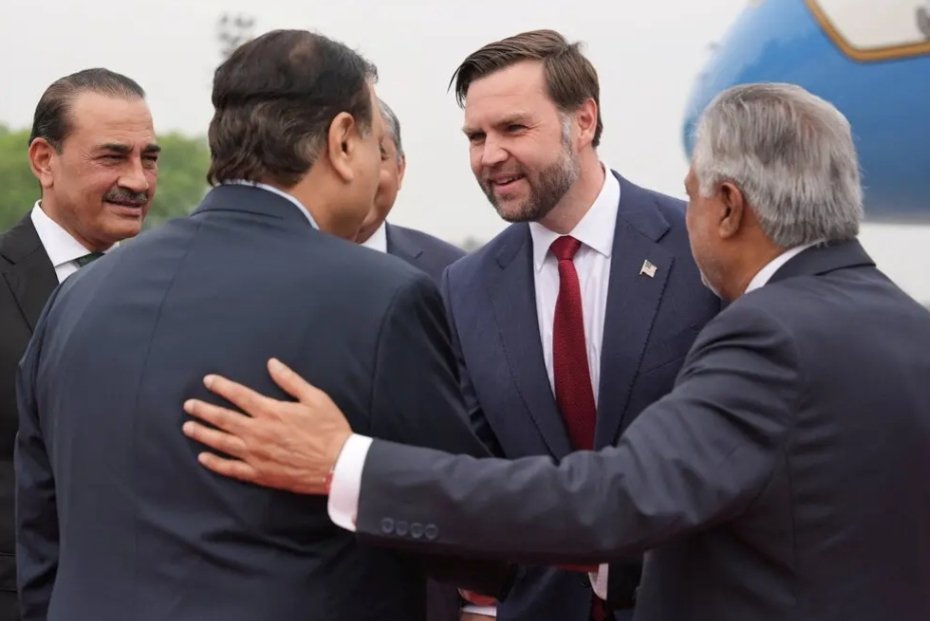
The marathon has ended, but the crisis has not. After more than 21 hours of intense, face-to-face negotiations in Islamabad, Pakistan, Vice President JD Vance delivered a blunt verdict on April 12, 2026. No agreement was reached between the United States and Iran.
“Iran chose not to accept our terms,” Vance stated, adding that the US had presented its “final and best offer.” The collapse leaves a fragile two-week ceasefire—already strained by disputes over the Strait of Hormuz and continued fighting in Lebanon—on the brink of unraveling.
For the world watching anxiously, this impasse is more than a diplomatic failure; it is a moment that could determine whether a regional conflict escalates into something far more dangerous.
At the heart of the breakdown lies a fundamental clash over Iran’s nuclear ambitions and regional behavior. The US delegation, led by Vance and including special envoy Steve Witkoff and Jared Kushner, insisted on verifiable commitments from Tehran to halt uranium enrichment and dismantle pathways to a nuclear weapon.
Halting Iran’s nuclear capabilities was described as a “core goal” that was not achieved. Iranian officials pushed back, accusing Washington of making “excessive demands and unlawful requests.” They sought sanctions relief, economic concessions, and influence over the Strait of Hormuz, while also demanding an end to Israeli strikes against Hezbollah in Lebanon.
Pakistani mediators, including Prime Minister Shehbaz Sharif, facilitated the talks and urged both sides to preserve the ceasefire. Yet even after marathon sessions stretching through the night, the gaps proved too wide.
The US viewed Iran’s refusal as a rejection of reasonable security guarantees following months of military pressure that had already degraded Iranian capabilities. Iran, for its part, saw the American position as an attempt to force capitulation rather than negotiate in good faith.
This outcome was not entirely surprising. The ceasefire itself, announced just days earlier, was always temporary—a two-week bridge designed to create space for diplomacy. Disagreements over the Strait of Hormuz emerged as a major sticking point even before the Islamabad sessions began.
Iran had restricted shipping through the vital chokepoint, leveraging its control to exert pressure. US naval forces, including destroyers, moved to assert freedom of navigation, with reports of mine-clearing operations underway.
Low traffic in the strait had already contributed to market jitters and rising energy concerns globally.
President Donald Trump offered his characteristic unfiltered assessment even as the talks unfolded. Speaking to reporters before heading to a UFC event, Trump declared that the lack of a deal “makes no difference” to the United States. “Whether we make a deal or not makes no difference to me,” he said. “And it’s because we’ve won. We totally defeated that country.”
Trump emphasized that US military actions had already “destroyed” much of Iran’s military infrastructure, including its navy and air force, and left its leadership severely weakened. “From the standpoint of America, we win,” he reiterated.
In the lead-up to the negotiations, Trump issued a clear ultimatum that if Iran failed to negotiate seriously, the US was “ready to go” and prepared to “reset” with renewed action.
He described the Iranian 10-point plan as initially “workable” but later expressed skepticism. His administration’s approach combined maximum military leverage with an open door for a deal—provided Tehran met non-negotiable red lines on nuclear weapons and regional destabilization.This stance reflects a broader America First realism: strength first, diplomacy second.
Vance reportedly consulted with Trump frequently—sometimes hourly—during the talks, underscoring coordinated strategy. While some critics may see Trump’s “we win anyway” rhetoric as overly triumphalist, it highlights a key reality that the US entered the negotiations from a position of significant advantage after months of conflict that had shifted the balance of power.
Even during the ceasefire, violence and economic pressure continued. Israeli operations in Lebanon persisted, targeting Hezbollah-linked sites and adding to the complexity of any broader de-escalation.
Casualty reports from recent strikes have raised humanitarian concerns and complicated efforts to extend the truce regionally.In the Strait of Hormuz, shipping remained slow despite the ceasefire agreement.
Iran insisted on “regulated passage” under its military coordination, while the US pushed for unrestricted access. US forces conducted operations to clear potential threats, signaling preparedness to keep the critical oil artery open by force if necessary.
These developments have already contributed to upward pressure on global energy prices and US inflation.
As Vance departed Islamabad, Pakistani officials called for calm and hinted at possible future indirect channels. No immediate resumption of direct hostilities was reported in the hours following the announcement, but the two-week ceasefire window is rapidly closing. Iranian media described the talks as “intensive” while criticizing American demands; US officials maintained they had negotiated in good faith but would not compromise on existential security issues.
The failure in Islamabad does not automatically mean immediate war, but it sharply increases the risks. Without a deal, the fragile truce could expire without extension, opening the door to renewed strikes.
Iran faces a stark choice: double down on resistance and risk further isolation and economic pain, or eventually return to the table with more realistic concessions.
The US, holding military and economic leverage, can afford to wait—but prolonged uncertainty carries its own costs.
For the fate of the world, the stakes are immense. The Middle East conflict has already disrupted global energy flows, with the Strait of Hormuz handling roughly one-fifth of the world’s oil trade.
Renewed closures or mining could trigger sharp spikes in fuel prices, exacerbating inflation from New York to New Delhi and slowing economic growth everywhere. Refugee flows, proxy conflicts involving groups like Hezbollah, and potential involvement of Russia or China as backers of Iran could widen the theater of instability.
Yet diplomacy is rarely a single event. The very fact that high-level US and Iranian delegations sat across the table in Pakistan—mediated by a neutral third party—represents a historic opening after decades of hostility since the 1979 revolution.
Backchannel communications, perhaps involving Oman or other regional actors, could keep lines open. Targeted incentives, such as phased sanctions relief tied to verifiable nuclear steps, might still bridge gaps in future rounds.
The collapse exposes the limits of wishful thinking in international relations. Iran’s nuclear program and support for regional militias have long posed genuine threats that cannot be wished away through vague assurances.
The Trump administration’s insistence on concrete, irreversible commitments is prudent realism, not warmongering. At the same time, over-reliance on military dominance without diplomatic patience risks miscalculation. True strength lies in knowing when to press the advantage and when to offer a face-saving off-ramp.
As of April 12, 2026, the immediate future remains uncertain. Vance’s plane left Pakistan without a breakthrough, but the door to renewed talks has not been slammed shut. Trump’s team projects confidence born of battlefield gains.
Iran must weigh ideology against survival. Global actors—from energy-dependent Europe and Asia to emerging powers—have a vested interest in urging restraint and creative compromise.
The collapse of the US-Iran deal in Islamabad is a setback, not the end of the story. What happens now will depend on whether leaders prioritize verifiable security and de-escalation over maximalist positions.
In an interconnected world, no one truly “wins” a wider war. The coming days and weeks will test whether this impasse becomes a prelude to renewed conflict or a hard-earned step toward a more stable, if imperfect, peace.
The fate of the region—and ripples far beyond—hangs on those choices.


Naorem Mohen is the Editor of Signpost News. Explore his views and opinion on X: @laimacha.