


Could Japan extend its emerging rare earth elements (REE) collaboration with India beyond Rajasthan’s hard rock deposits to the Northeast’s untapped frontier, particularly Manipur and other promising states like Assam and Arunachal Pradesh?
Japan continues to grapple with heavy dependence on China for REEs vital to its high-tech industries, including electric vehicle motors, wind turbines, defense systems, and permanent magnets. Amid ongoing supply vulnerabilities and China’s dominance in global processing (70-90%), Tokyo is actively pursuing diversification.
Therefore, Japan is actively engaging in discussions with India to jointly explore and develop rare earth element (REE) deposits in Rajasthan’s desert terrain, as reported by Reuters on March 3, 2026, citing sources directly involved in the talks.
This initiative stems from Japan’s long-standing effort to lessen its heavy dependence on China for these critical materials, which are indispensable for producing high-performance permanent magnets used in electric vehicles, wind turbines, defense equipment, and various advanced technologies.
Under the proposed arrangement, Japan is poised to contribute advanced extraction technology and financial support, areas where India currently faces limitations, particularly with complex hard rock formations in exchange for a secure, long-term supply of processed rare earths destined for Japanese industries.
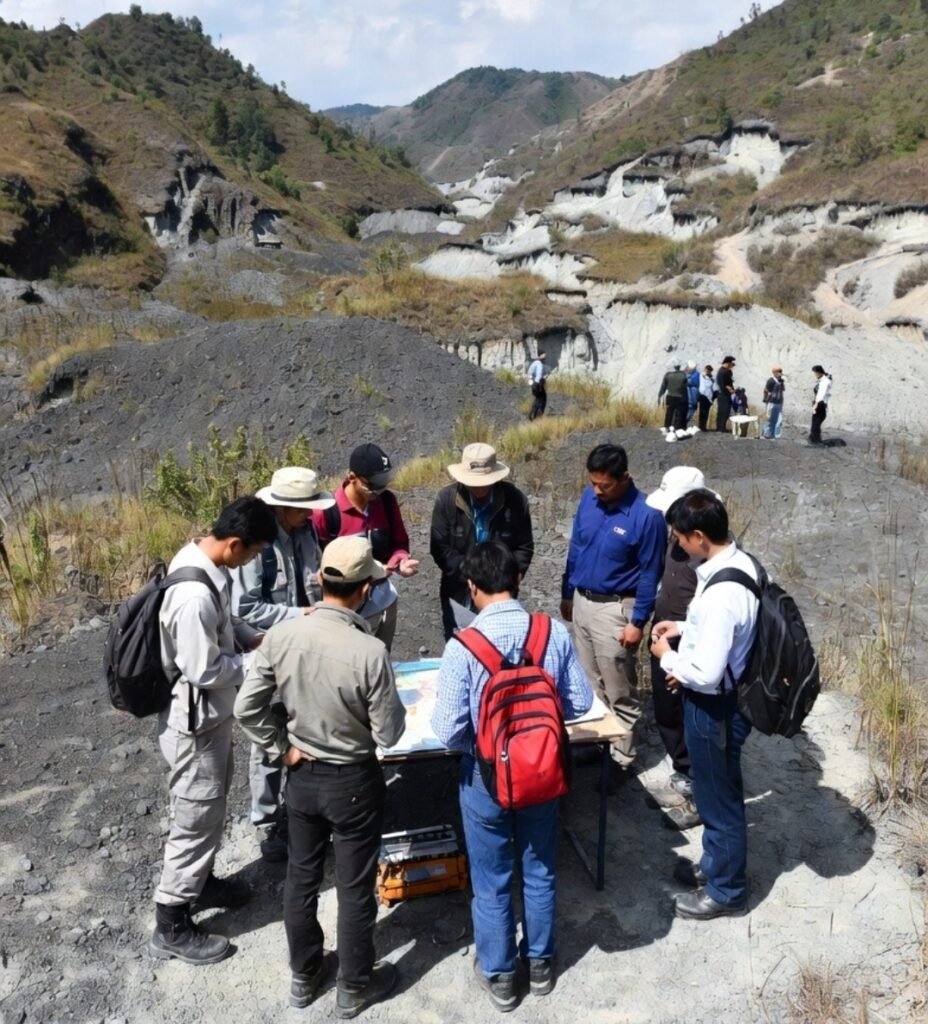
As part of the process, Tokyo intends to dispatch a team of technical experts to Rajasthan to conduct on-site assessments and evaluate the viability of the deposits, though no specific timeline for the visit has been disclosed amid the ongoing, non-public nature of the negotiations.
The momentum builds on a preliminary agreement on critical minerals signed between the two nations last year, which has paved the way for deeper cooperation.
This comes shortly after India’s Mines Minister G. Kishan Reddy announced in February 2026 the identification of three significant hard rock REE deposits across Rajasthan and Gujarat, collectively holding an estimated 1.29 million metric tons of rare earth oxides, a discovery that could markedly strengthen India’s position in global critical mineral supply chains while aligning with Japan’s strategic diversification priorities.
Following a preliminary critical minerals agreement last year and the August 2025 Memorandum of Cooperation (MoC) between India’s Ministry of Mines and Japan’s METI, Japan plans to send experts to assess sites, offering advanced extraction technology, investment, and funding for reliable offtake supplies.India possesses significant reserves but lacks full expertise in processing complex hard rock REEs.
The partnership delivers clear mutual benefits: Japan provides cutting-edge capabilities and capital, while India supplies resource access and a geopolitically aligned, non-China-dependent partner.
A successful Rajasthan phase could drive technology transfer, employment, and India’s push for self-reliance in critical minerals to support its growing EV, renewable energy, and defense sectors.
Rajasthan makes strategic sense as the entry point, Japan’s methods suit hard rock geology but the collaboration’s broader potential lies in scaling to other regions. India’s REE diversity includes traditional beach sand deposits in southern coastal states (Kerala, Tamil Nadu, Odisha, Andhra Pradesh) and emerging hard rock and alkaline complexes in other areas.
The Northeast represents a compelling strategic frontier. The Geological Survey of India (GSI) has identified over 70 million tonnes of untapped minerals and REEs across states like Assam, Arunachal Pradesh, Meghalaya, Manipur, and Nagaland.
In Assam’s Jashora Alkaline Complex, it is estimated at around 28.6 million tonnes of REE-bearing material, often rich in high-value neodymium for clean energy magnets. Similarly, in Arunachal Pradesh’s zones, such as Lodoso village with over 2 million tonnes of REE-bearing rock, plus vanadium and graphite resources.
Manipur offers unique promise through its geology in the Indo-Myanmar Range. Ophiolite complexes and alkaline intrusive rocks in hill districts like Ukhrul, Chandel, and Churachandpur display preliminary REE mineralization.
GSI’s ongoing Critical Mineral Assessment Programme (CMAP) surveys target REEs, nickel, cobalt, and associated elements in lateritic soils, carbonaceous rocks, and ophiolite belts.
While detailed reserves are still in early exploration (with samples showing 180–520 ppm total rare earth oxides in select zones), these indicate strong potential for elements crucial to batteries, semiconductors, and advanced alloys.
Japanese firms have increased Northeast engagement in recent years, largely through infrastructure and sustainable development under the Japan-India Act East Forum (2017) and JICA’s Official Development Assistance (ODA).
This includes road connectivity (e.g., North-East Road Network Improvement in Assam-Meghalaya), hydroelectric upgrades in Meghalaya, school construction in Manipur, and JBIC’s up-to-JPY 60 billion loan for bamboo-based bioethanol in Assam.
Direct Japanese investment in critical minerals or REE extraction in the Northeast (including Manipur) is limited so far, Japan’s main REE activity in India centers on Andhra Pradesh via Toyota Tsusho’s refining project, but the MoC and supply chain diversification priorities could encourage future mineral ventures in the region’s favorable geology.
Will Japan develop specific interest in Manipur for REE extraction? The Rajasthan focus prioritizes immediate hard rock synergies, but success in joint exploration, secure supplies, and shared gains could prompt expansion.
As India advances domestic self-reliance and Japan reduces China reliance, the Northeast, including Manipur’s emerging prospects becomes increasingly attractive strategically.
Challenges include infrastructure needs, environmental protections in sensitive ecosystems, logistics, and local community involvement. The geopolitical advantages, however, are substantial: the Northeast’s border location strengthens Indo-Pacific supply chain resilience, aligning with QUAD goals.
Economically, this could spark jobs, industrial development, and value addition in India’s REE sector. Geopolitically, it erodes China’s leverage while enhancing critical technology security for both countries.
Rajasthan is a prudent, timely launch. If effective, the partnership could grow into a wider alliance, potentially drawing Japan toward Manipur and the Northeast’s abundant REE opportunities for a more resilient global rare earth supply chain.


Naorem Mohen is the Editor of Signpost News. Explore his views and opinion on X: @laimacha.