


India’s growing engagement with Myanmar in the rare earths sector is not a distant diplomatic development. It is a move that could directly affect Manipur.
At one level, the issue is simple. India needs rare earths and critical minerals for electric vehicles, wind turbines, electronics, defence systems, clean energy technologies and advanced manufacturing. China controls a dominant share of the global rare earth supply chain, especially in processing and magnet production. New Delhi is therefore looking for alternative sources, and Myanmar has emerged as an important option.
At another level, the matter is deeply complex. Myanmar is not only a mineral source. It is a politically unstable neighbour with ethnic armed organisations, contested borderlands and overlapping foreign interests. Manipur is not only a border state. It is a conflict-affected society already struggling with ethnic division, territorial anxieties, armed networks, migration concerns and a fragile security environment.
This is where the question becomes unavoidable: will Manipur become a bargaining chip in India’s rare earth diplomacy with Myanmar? The question may sound uncomfortable. But it must be asked.
India’s Ambassador to Myanmar, Abhay Thakur, recently stated at a mining forum in Mandalay that cooperation between India and Myanmar in the mining sector had gained significant momentum over the last two years. He referred to Indian delegations on rare earths and critical minerals visiting Myanmar in December 2024 and February 2026. He also said the issue received high-level attention during Myanmar regime leader Min Aung Hlaing’s visit to India in May-June 2026.
The Indian companies reportedly present at the Mandalay forum included IREL, NTPC Mining, Himadri Specialty, Oceanic Sands, PrNd Metal & Magnets, Jai Puri Holdings and Midwest from India. This shows that the matter has moved beyond general diplomatic conversation. It is entering the domain of mineral access, business interest, strategic supply and long-term geopolitical positioning.
Rare earths have become one of the most important strategic resources of the present century. The term may sound technical, but its implications are political. These minerals are used in permanent magnets, batteries, electronics, defence equipment and renewable energy systems. Without them, industrial modernisation and military preparedness become vulnerable.
China has understood this for decades. It built processing capacity, secured supply chains and developed market dominance while many countries treated rare earths as ordinary commodities. Today, the world is paying the price for that complacency. India cannot afford to repeat the same mistake.
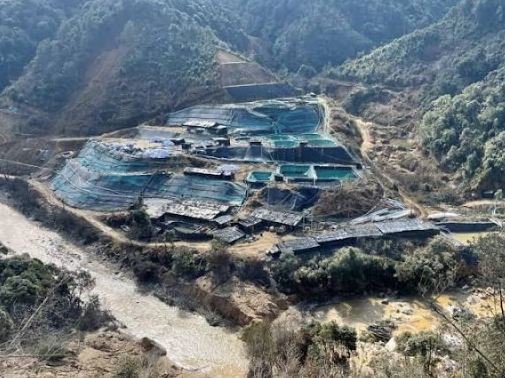
Myanmar becomes important because its Kachin State is one of the world’s key sources of heavy rare earths. Large quantities extracted from Kachin areas are sent to China for processing. Reports have also suggested that India explored the possibility of obtaining rare earth samples through the Kachin Independence Army, which controls major mining zones near the Chinese border.
This makes Myanmar both an opportunity and a risk for India. For New Delhi, cooperation with Myanmar offers a possible way to reduce dependence on China. It also gives India a foothold in a mineral sector that will shape future industries. But Myanmar’s mineral areas are not governed like ordinary mining zones. They are linked to ethnic conflict, insurgent control, military authority, Chinese influence and fragile local arrangements.
Manipur enters this picture because of geography and politics. The state shares a sensitive border with Myanmar. It is connected to the same frontier system where ethnic identities, trade routes, armed movements and state authority overlap. The ongoing crisis in Manipur since May 2023 has already demonstrated how quickly local tensions can acquire cross-border dimensions. Refugee movement, arms trafficking, narcotics networks and ethnic kinship across the border have all complicated the situation.
If India’s rare earth diplomacy with Myanmar grows stronger, Manipur’s strategic importance will increase. Roads, border infrastructure, security deployment, trade routes and intelligence networks in the state will become more important to New Delhi. This may bring investment and administrative attention. It may also bring pressure. That pressure is the heart of the concern.
In major geopolitical negotiations, small and troubled regions are often treated less as societies and more as strategic spaces. Their roads become corridors. Their hills become mineral zones. Their people become security variables. Their unresolved conflicts become matters to be managed, postponed or traded against larger national interests. Manipur must not be reduced to such a role.
There is already discussion that Manipur is part of India’s critical mineral and rare earth exploration map. This must be handled with great care. Exploration potential does not mean immediate mining. It does not mean commercial viability has been established. It does not mean local consent can be bypassed. It certainly does not mean the state should be pushed into mineral extraction while its social fabric remains deeply wounded.
Land in Manipur is not merely an economic asset. It is tied to history, identity, customary rights, political power and community survival. Any future mineral exploration in the hills or border areas will inevitably raise questions of ownership, consent, compensation, environmental protection and benefit sharing. If these questions are ignored, rare earths will not bring development. They will bring another layer of conflict.
The experience of Myanmar offers a warning. In Kachin State, rare earth mining has been associated with armed control, environmental damage, river contamination and dependence on Chinese processing networks. This is not a model Manipur can afford to follow. The state’s hills, forests, rivers and agricultural systems are ecologically fragile. Unregulated mining in such terrain can damage water sources, destroy livelihoods and deepen distrust between communities and the state. The security implications are equally serious.
Where minerals are valuable, armed actors often appear. Informal taxation, protection payments, smuggling, illegal extraction and political patronage can quickly follow. Manipur already has a history of armed groups, parallel levies and contested authority in several areas. If rare earth exploration or related logistics enter the state without strong safeguards, mineral interest may feed existing networks of conflict.
This is why India’s rare earth diplomacy with Myanmar cannot be separated from the Manipur crisis. For New Delhi, the temptation will be to view the matter through a national security lens. India needs rare earths. China dominates supply chains. Myanmar offers access. Manipur is geographically relevant. Therefore, stability must be ensured.
This logic is understandable, but incomplete. Stability cannot mean silence. It cannot mean postponing political questions. It cannot mean treating local grievances as irritants in a larger strategic plan. If Manipur is to support India’s eastern mineral and connectivity ambitions, the people of the state must be treated as participants, not obstacles.
This requires transparency from the very beginning. No one can say with confidence when normalcy will return to Manipur. Given the depth of mistrust created by the present crisis, it is unrealistic to expect Meiteis, Nagas and Kukis to sit together with ease in the immediate future. This is not a hypothetical concern. The situation has deteriorated to such an extent that even a Kuki Deputy Chief Minister finds it difficult to function from Imphal without political and security complications. Such realities must be acknowledged before any rare earth or critical mineral policy is framed for the state.
The Union government and the Manipur government must clarify whether any rare earth or critical mineral exploration activities are being planned or expanded in the state. They must identify the agencies involved, the areas under consideration, the legal framework, the environmental safeguards and the process for public consultation. In a conflict affected state, secrecy will only breed suspicion.
The state also needs a credible institutional mechanism to study the issue. Manipur University, environmental scientists, geologists, legal experts, customary land authorities, district bodies, tribal organisations, valley organisations and civil society groups should all be part of a serious public discussion. The matter is too important to be left to closed files and official briefings.
There must also be a clear distinction between three stages: exploration, extraction and industrial processing. Exploration is scientific assessment. Extraction is mining. Processing is industrial value addition. Each stage has different implications. Public debate often becomes confused because these stages are mixed together. The government must explain them clearly.
If commercially viable rare earth deposits are ever confirmed in Manipur, the state must insist on strict conditions. There should be no mining without prior environmental assessment. There should be no extraction without meaningful consultation with affected communities. There should be no project without local employment, revenue sharing, rehabilitation safeguards and transparent monitoring. There should be no security arrangement that allows private or armed actors to control access to mineral zones.
Above all, there should be no policy that turns Manipur into a bargaining instrument in the India-Myanmar relationship. This concern is not imaginary. India has major interests in Myanmar beyond rare earths. These include border security, the Kaladan project, connectivity to Southeast Asia, counter-insurgency cooperation, refugee management, trade routes and China’s growing influence. In such a situation, the interests of Manipur can easily become secondary unless they are firmly articulated.
The ongoing crisis in Manipur has already produced a painful sense of abandonment among many citizens. Communities feel insecure. Displaced families remain uncertain. Highways and border areas remain politically sensitive. Trust in institutions has weakened. Introducing rare earth geopolitics into this environment without first addressing peace, justice and administrative credibility would be unwise.
India needs rare earth security. But Manipur needs social security. India needs alternative supply chains. But Manipur needs accountable governance. India needs strategic depth along the Myanmar frontier. But Manipur needs protection from being treated as a frontier commodity.
The right approach is not to oppose India’s rare earth diplomacy. The problem arises only if national strategy advances without local accountability.
Manipur must therefore respond with maturity. Its political leadership should demand a formal briefing from the Centre on rare earth cooperation with Myanmar and its possible implications for the state. Its civil society organisations should move beyond emotional reactions and develop informed positions based on geology, environment, law and security. Its academic institutions should study the matter seriously. Its media must explain the issue to the public without exaggeration.
The question is not whether Manipur should benefit from mineral exploration. It should, if such resources are scientifically proven and responsibly developed. The question is whether the state will have a voice in deciding the terms.
If rare earths become another instrument through which external powers, central agencies, business interests or armed networks negotiate over Manipur’s future, the consequences will be dangerous. But if handled transparently, the issue could become an opportunity to build better infrastructure, strengthen institutions, improve border governance and create economic value with safeguards.
The choice lies in policy design. Manipur stands at a difficult moment. Its internal wounds are still open. Its border is more sensitive than ever. Its strategic value is rising. Its mineral potential is drawing attention. These realities cannot be ignored.
India’s rare earth diplomacy with Myanmar may be necessary for national interest. But national interest must not be defined in a way that reduces Manipur to a bargaining chip. The state is not merely a border, a corridor or a mineral map. It is a society with history, rights, anxieties and aspirations.
Rare earths may shape the future of technology and strategic power. But in Manipur, the first test will be political wisdom. Without transparency, consent and justice, even the most valuable mineral can become another source of instability.
New Delhi must therefore proceed carefully. It must secure minerals without weakening trust. It must engage Myanmar without overlooking Manipur. It must counter China without repeating the old mistake of treating the North East as a distant frontier.
Manipur should not become a bargaining chip in India’s rare earth diplomacy with Myanmar. It should become a respected partner in shaping how India secures its strategic future in the eastern frontier.