



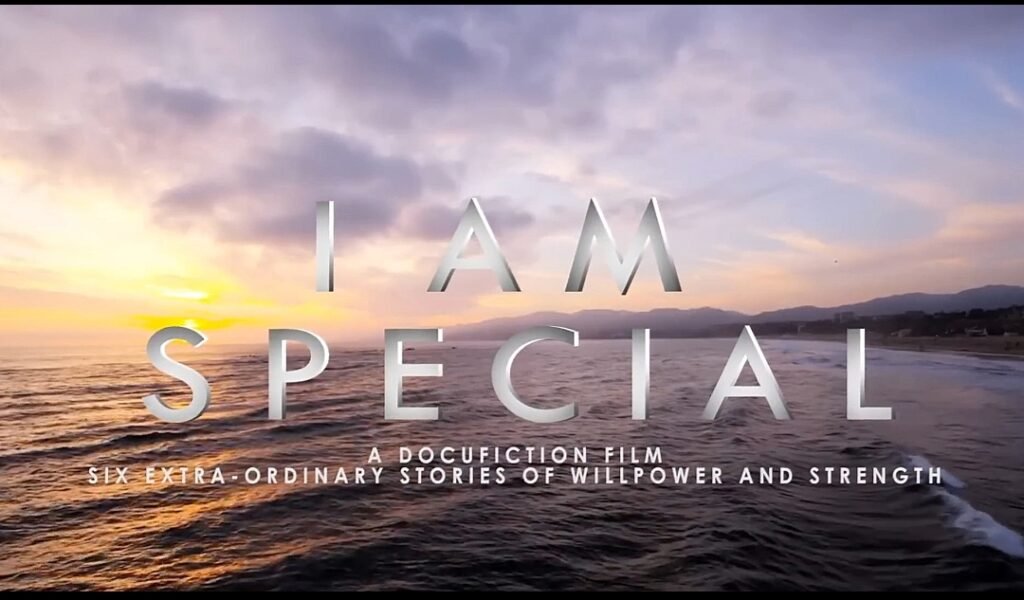
I AM SPECIAL (2017), a 47-minute English-language docufiction written, edited, and directed by Priyakanta Laishram, and produced by Harendra Laishram under the banner of Priyakanta Productions, confronts one of the most persistent problems in disability representation: not invisibility, but the way disability is seen.
For decades, cinema has framed disabled lives as tragedies to be mourned, obstacles to be overcome, or inspirational stories designed to reassure non-disabled audiences. Rarely are disabled individuals allowed the complexity routinely granted to everyone else. Laishram’s film challenges this tradition by assembling a mosaic of lived experiences that resist simplification and sentimentality.
The film’s most striking contribution lies in its exploration of care. Long before it introduces its fictional narratives or broader social concerns, I AM SPECIAL opens with the progressive deterioration of the filmmaker’s mother, Jibanlata Laishram, who lived with Amyotrophic Lateral Sclerosis (ALS). These sequences are difficult to watch, not because they are graphic, but because they are profoundly intimate. The camera occupies a position rarely seen in documentary cinema: that of a son witnessing gradual loss.
What emerges from these moments is a meditation on dependency that contemporary society often struggles to acknowledge. Modern culture celebrates independence as the ultimate measure of human worth, while dependency is frequently viewed as failure. Yet disability scholars have long argued that dependency is not an exception to human existence but one of its most fundamental realities. By documenting the realities of long-term care, I AM SPECIAL exposes the illusion that autonomy is the default human condition.

Importantly, the film avoids reducing Jibanlata to her illness. Her presence lingers not because of ALS itself, but because of the relationships surrounding it. As her physical abilities diminish, viewers become increasingly aware of the emotional labour undertaken by family members. The focus subtly shifts away from disability as a medical issue and toward disability as a social experience. The central question becomes not what is happening to her body, but what happens to the people around her when confronted with vulnerability.
This concern with social response runs throughout the film. One of its most compelling observations is that disability often reveals the limits of society’s compassion. Friends disappear. Acquaintances become distant. Invitations stop arriving. The film never stages these moments as dramatic betrayals. Instead, it presents them as ordinary occurrences, which arguably makes them more unsettling. Exclusion rarely arrives through overt hostility; more often, it emerges through silence, discomfort, and absence.
The documentary becomes particularly powerful when it shifts its focus to Girish Asotra, a young boy from Chandigarh living with Duchenne Muscular Dystrophy. In many disability narratives, such a subject would be positioned as inspirational. I AM SPECIAL largely resists that temptation. Girish’s significance lies not in overcoming disability but in possessing aspirations that society often refuses to imagine for disabled people. His dream of joining the Indian Administrative Service quietly challenges assumptions about who is permitted to occupy positions of authority, leadership, and public responsibility.
The film is at its strongest when it allows these ambitions to exist without explanation. Rather than presenting them as extraordinary, it treats them as ordinary. This subtle shift has profound implications. It encourages viewers to question why disabled ambitions are so often perceived as remarkable in the first place.
The film’s docufiction structure expands the conversation further. Through fictional characters portrayed by Bhani Khamnam, Ruchika Sahani, Tanishka Gujral, and Nirav Purohit, Laishram broadens the discussion beyond physical disability alone. A deaf and mute dancer, a woman living with bipolar disorder, an autistic archer, and a visually impaired singer each inhabit stories that resist reduction to diagnosis. Their identities emerge through art, relationships, ambition, and self-expression rather than through medical labels.
What distinguishes these segments is their refusal to seek validation from non-disabled audiences. The characters are neither objects of pity nor symbols of triumph. They are allowed to exist as people first. This approach reflects a growing shift within disability discourse, which increasingly rejects narratives centred on cure, rehabilitation, or normalisation. Again and again, the film asks whether society’s desire to “fix” disabled people reveals more about disability itself or about society’s discomfort with difference.
At the same time, I AM SPECIAL is not without limitations. Its ambition occasionally exceeds the constraints of its runtime. By attempting to encompass multiple disabilities, geographic locations, and narrative forms within 47 minutes, the film leaves certain stories and perspectives deserving of further exploration. Yet this breadth is also central to the film’s purpose. Rather than presenting disability as a singular experience, it insists upon its diversity and complexity.
Perhaps the most significant achievement of I AM SPECIAL is that it challenges audiences to reconsider what disability cinema can be. It does not ask viewers to admire disabled people. It does not seek sympathy. It does not offer redemption. Instead, it invites reflection on the social systems, cultural assumptions, and everyday attitudes that shape disabled lives.
The title itself acquires an ironic resonance by the film’s conclusion. The individuals presented are not remarkable because they are disabled. They are remarkable because they are human – creative, ambitious, frustrated, vulnerable, joyful, and resilient in ways that extend far beyond disability. The film’s ultimate argument is not that disabled people are exceptional. It is that they should not have to be exceptional to be valued.
As the first English-language docufiction by a Manipuri filmmaker, I AM SPECIAL also occupies an important place within Indian independent cinema. Emerging from a region that has historically remained on the margins of national film discourse, the work expands conversations around disability beyond metropolitan centres and challenges the assumption that accessibility, care, and representation are concerns limited to urban spaces. In doing so, it broadens both the geographical and cultural scope of disability cinema in India.
Nearly a decade after its release, many of the questions raised by I AM SPECIAL remain unresolved. Accessibility continues to lag behind policy. Representation remains inconsistent. Social attitudes often trail behind institutional progress. The film does not pretend to solve these problems. Its contribution is more fundamental. It asks audiences to look directly at disability, not as inspiration, tragedy, or spectacle, but as an ordinary part of human existence. That act of looking, and continuing to look, is where I AM SPECIAL derives its enduring power.
I AM SPECIAL is a thoughtful and sincere exploration of disability, care, and representation that challenges audiences to move beyond familiar narratives of pity and inspiration. Priyakanta Laishram’s commitment to centring lived experiences gives the film emotional resonance and social relevance. While its ambitious attempt to engage with multiple disabilities and perspectives within a 47-minute runtime means that certain stories could have benefited from deeper exploration, its compassion, honesty, and commitment to authentic representation remain its greatest strengths. As one of the earliest English-language docufictions from Manipur to address disability in such a direct manner, I AM SPECIAL continues to hold significance both as a cinematic work and as a contribution to broader conversations on inclusion, visibility, and human dignity.
Final Rating: ★★★½☆ (3.5/5)