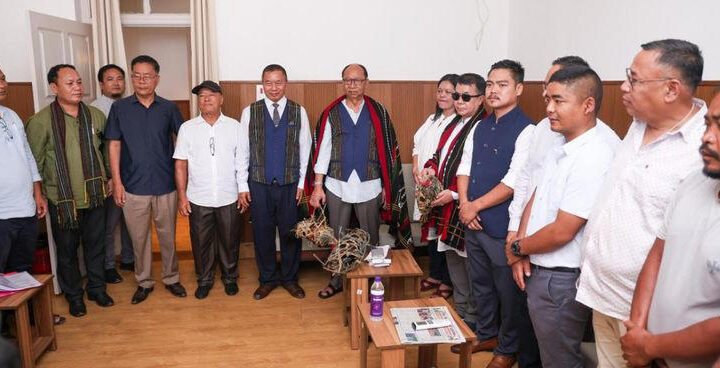
Five years after the 2021 political upheaval that threw Myanmar into chaos, President Min Aung Hlaing has taken a bold and timely step. In his first cabinet meeting as President, he has invited all rebel groups and opposition forces that have stayed away from dialogue to come forward for peace talks within the next 100 days, with a clear deadline of July 31. He specifically mentioned major ethnic armed organizations such as the Karen National Union (KNU), the Chin National Front (CNF), and the All Burma Students’ Democratic Front (ABSDF).
The message from the President is straightforward and sincere: “We also desire peace.” He wants groups not yet part of any ceasefire to join discussions aimed at restoring stability, reducing violence, and focusing on development for the people who have suffered the most.
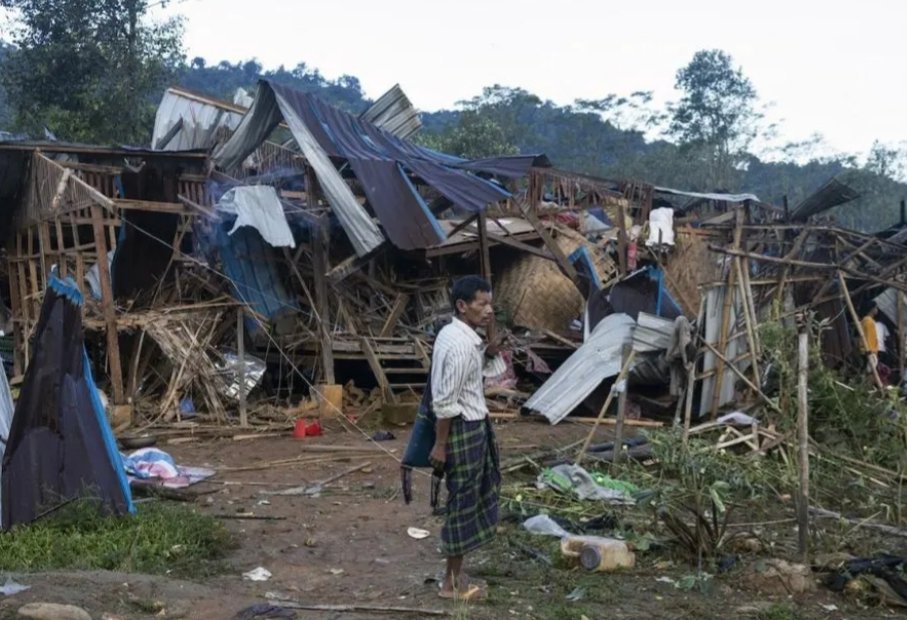
This is not empty talk. It comes as part of the new government’s 100-day plan, showing that leadership is serious about delivering results quickly. After years of fighting, airstrikes, displacement, and economic hardship, ordinary families in villages across Sagaing, Magway, Rakhine, Shan, and Kayah states are exhausted. Millions have been forced from their homes. Children have missed years of schooling. Farmers cannot tend their fields safely. Traders fear checkpoints and sudden clashes. The humanitarian crisis is real, and only peace can begin to heal these deep wounds.
President Min Aung Hlaing, who has shouldered the heavy responsibility of guiding the country through this difficult period, is now offering a practical path forward. He is not demanding immediate surrender. He is inviting negotiation. He has opened the door to both signatories and non-signatories of the old Nationwide Ceasefire Agreement (NCA). He has also urged People’s Defense Forces to enter the legal fold so that differences can be resolved through politics rather than guns.
This approach makes sense. Continued armed struggle has brought immense pain but no final victory for any side. The military has shown it can defend key areas and push back in several regions. At the same time, prolonged conflict drains resources that could go toward roads, hospitals, schools, and jobs. Myanmar’s people — whether Bamar, Karen, Chin, Shan, Kachin, or others — all want the same basic things: safety for their families, food on the table, and a chance to build a better future.
War stands in the way of all that.Some rebel groups have quickly rejected the offer. The KNU and CNF have said they see no point in talking under the current framework. They speak of fighting for a “federal democratic union” free of military influence. While their aspirations for greater autonomy and rights deserve respect, outright rejection without even testing the talks raises serious questions.
Is the goal genuine federalism through negotiation, or is it simply to weaken the central authority at any cost?
History shows that endless fighting rarely delivers the perfect outcome rebels dream of. Ethnic armed groups have legitimate grievances going back decades — issues of resource sharing, cultural rights, and political participation. But the way to address them is around the table, not on the battlefield where civilians always pay the highest price.
President Min Aung Hlaing’s invitation includes space for discussing these concerns within a framework that protects national sovereignty and unity. Unrealistic demands that seek to dismantle the state or ignore security realities will only lead to more stalemate.
Look at the human cost. Reports indicate over 3.6 million people are internally displaced. Many live in fear of sudden attacks, landmines, or forced recruitment. The economy has suffered badly — inflation is high, businesses have closed, and foreign investment has dried up.
Young people are leaving the country in search of safety and opportunity. Every extra month of war deepens this tragedy. President Min Aung Hlaing’s 100-day peace initiative is a concrete timeline that forces all sides to decide: continue the suffering or start the difficult but necessary work of compromise.
Dissidents outside Myanmar, and some voices in the resistance, like to paint the President as the sole villain. They forget the complexity of the situation. The 2021 events happened amid deep political divisions and concerns over stability. Since then, the leadership has worked to maintain order in the areas it controls while facing attacks on multiple fronts. Transitioning from military administration to a presidential system with a new parliament is itself a step toward institutionalizing governance. Holding talks now, early in this new phase, shows foresight and a desire to reduce violence rather than escalate it.
True leadership is not about pleasing every faction. It is about making hard choices for the greater good. President Min Aung Hlaing could have chosen to ignore the rebels and focus only on military operations. Instead, he is extending his hand. He has warned against unrealistic demands and said necessary actions will be taken if talks fail, but the priority is clearly dialogue first.
The rebel groups now face a moral responsibility. Rejecting the offer outright sends a message that they prefer fighting over talking. That stance may sound principled to their supporters, but it prolongs the pain for millions of innocent civilians who have no say in these decisions. The Karen, Chin, and other communities have brave fighters, but they also have mothers, farmers, teachers, and children who desperately need peace. Engaging in the proposed discussions by July 31 would allow them to present their concerns, seek guarantees on ceasefire, humanitarian access, and political participation.
Myanmar does not need more heroes of the battlefield. It needs statesmen who can sit down, negotiate in good faith, and deliver results. President Min Aung Hlaing has shown he is willing to be that leader. He has moved from heading the State Administration Council to the presidency through a constitutional process. He is now using that position to prioritize peace and development.
Of course, talks alone are not enough. They must be followed by sincere implementation — verifiable ceasefires, release of detainees where possible, economic recovery programs in conflict zones, and inclusive political reforms that respect Myanmar’s diversity while keeping the Union intact. The military has a vital role in safeguarding sovereignty, but lasting stability will require broader participation.
The international community should also take note. Instead of endless condemnation and sanctions that hurt ordinary people, it should encourage all parties to seize this window for dialogue. ASEAN neighbors, China, and India have stakes in a stable Myanmar. A peaceful resolution benefits the entire region.
President Min Aung Hlaing’s peace offer within 100 days is a pragmatic, forward-looking move at a critical time. It deserves support from all who genuinely care about ending Myanmar’s nightmare. The suffering has gone on long enough. The people of Myanmar — across every ethnicity and region — have waited too many years for normal life to return.
The choice is clear: embrace dialogue and start rebuilding, or reject it and let the cycle of violence continue. President Min Aung Hlaing has chosen the first path. The ball is now in the court of the rebel groups.
For the sake of the mothers burying their sons, the children growing up without schools, and the families living in fear, let us hope wisdom prevails and they choose peace over pride.Myanmar’s future depends on it.