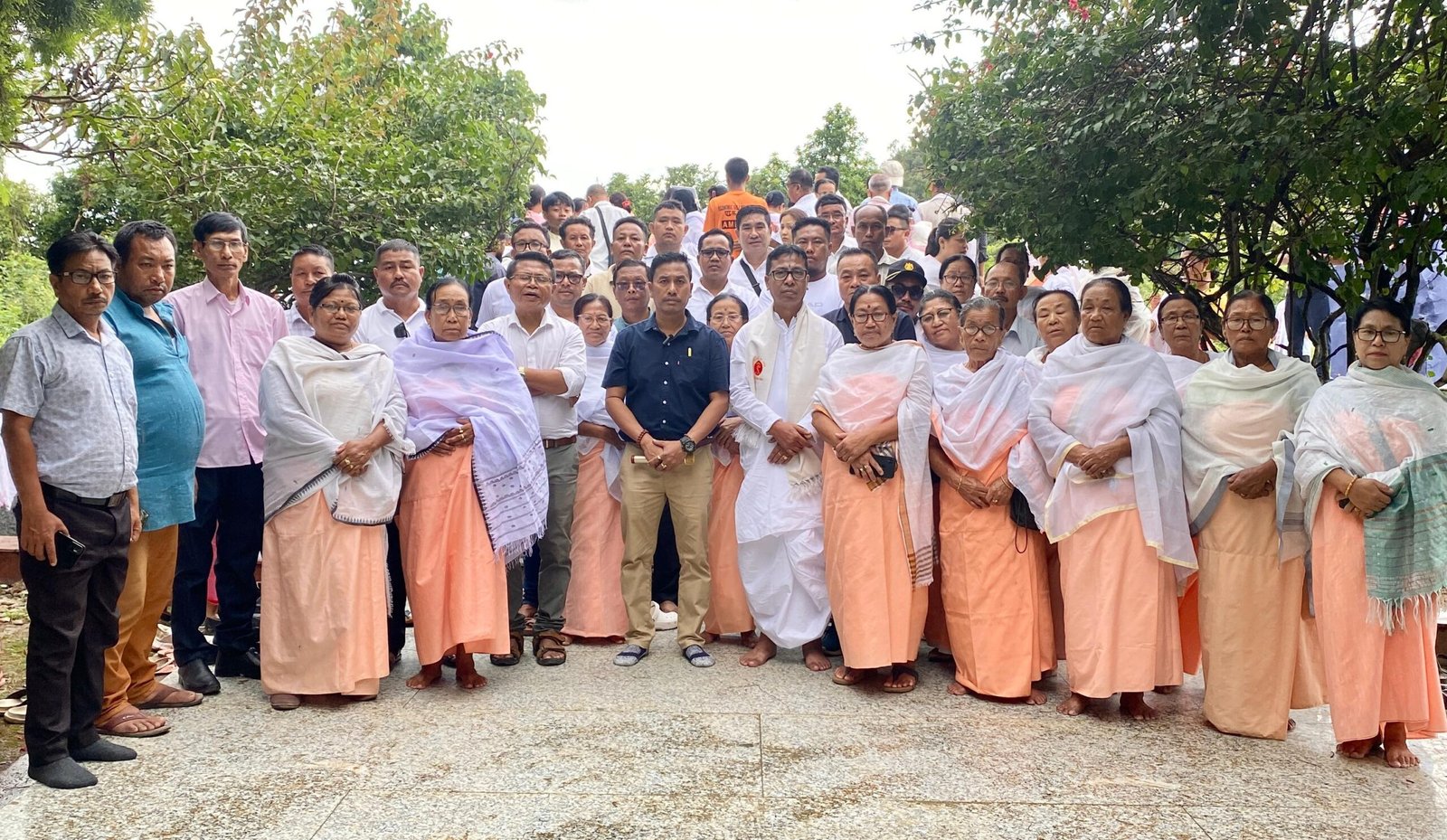
The All Manipur United Clubs’ Organisation (AMUCO) and Thangmeiband United Clubs’ Organisation (TUC) solemnly observed the 134th Athoubasinggi Ningsing Numit (Martyrs’ Memorial Day) at the martyrs’ memorial in Thangmeiband Cheiraoching. The event, marked by floral tributes to the statues of martyrs, honored the heroes of the Anglo-Manipuri War of 1891.
Among the attendees were AMUCO President Pheiroijam Nando Luwang, leaders of civil society organizations, and notable figures from Tripura, including Khoisnam Ongbi Birala, a Board Member of the Sahitya Akademi, New Delhi, and Advisor of the Manipuri Literary and Cultural Forum, Tripura, alongside Hijam Ongbi Babli and Hijam Ongbi Sarita.
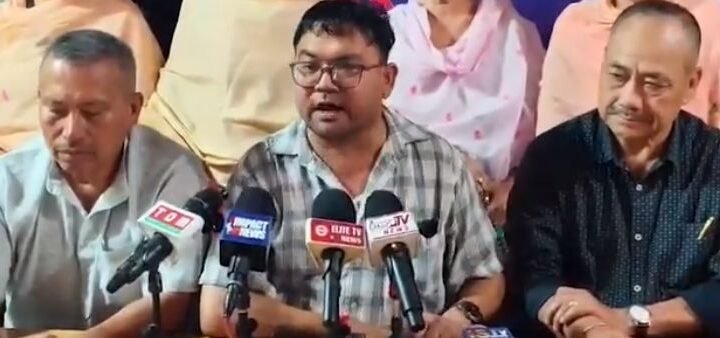
In a powerful address, AMUCO President Pheiroijam Nando Luwang delivered a stirring reflection on the Anglo-Manipuri War, often regarded as Manipur’s last stand at Khongjom. He challenged the misconception that Manipuri warriors fought with foreknowledge of defeat, asserting, “No one enters a battle expecting to lose. Our warriors fought with unwavering faith, courage, and determination to defend their homeland.” Nando described the martyrs as resolute heroes who battled to their last breath, refusing to surrender.
Nando highlighted internal betrayal as a critical factor in Manipur’s defeat. He noted that after the British executed Thangal General and Yuvraj Tikendrajit, Surchandra, the dethroned king, or his descendants, were reinstated with the support of his allies, who collaborated with the British to regain power. This internal division, coupled with the British advancing from three fronts—Silchar, Kohima, and Tamu—overwhelmed the Manipuri resistance, despite their fierce opposition to superior British firepower.
Drawing from British records, Nando emphasized the resilience of Manipuri forces, who skillfully engaged the enemy on multiple fronts and even burned their own armory to prevent it from falling into British hands. He underscored that wars are fought with preparation and a will to win, qualities the Manipuri warriors exemplified.
Reflecting on Manipur’s historical struggles, Nando recalled the seven-year Burmese occupation (1819–1825), known as Chahi Taret Khuntakpa, during which Meitei kings, princes, and soldiers fought relentlessly to reclaim their land. However, 66 years after regaining freedom, Manipur lost its sovereignty to the British in 1891. After 56 years of colonial rule, the state merged with India in 1949.
Nando expressed concern over the erosion of Manipur’s territorial integrity post-merger. He noted that areas historically under Meitei control, such as present-day Nagaland (once called Thibomei), the Doyong forest in Assam, and parts of Cachar, are no longer part of Manipur. He described pre-merger Manipur as a formidable “golden land,” likened to an unbreakable mountain, with robust administrative, military, and diplomatic systems. However, he lamented that political disunity among the Meitei community since 1949 has weakened the state’s ability to protect its boundaries.
In a pointed warning, Nando addressed contemporary challenges, alleging that demands for a “Separate Administration” for the Kuki-Zo community threaten Manipur’s unity. He cautioned that such moves could have severe consequences for the state’s territorial integrity, urging vigilance to preserve Manipur’s historical and cultural legacy.
The event also featured speeches by AMUCO’s Secretary (Organisation) Laishram Krishnachandra, Secretary General Pratap Leishangthem, Vice-President Sorokhibam Sanjoy, and Koijam Helen Meitei, reinforcing the significance of honoring the martyrs and their sacrifices for Manipur’s sovereignty.