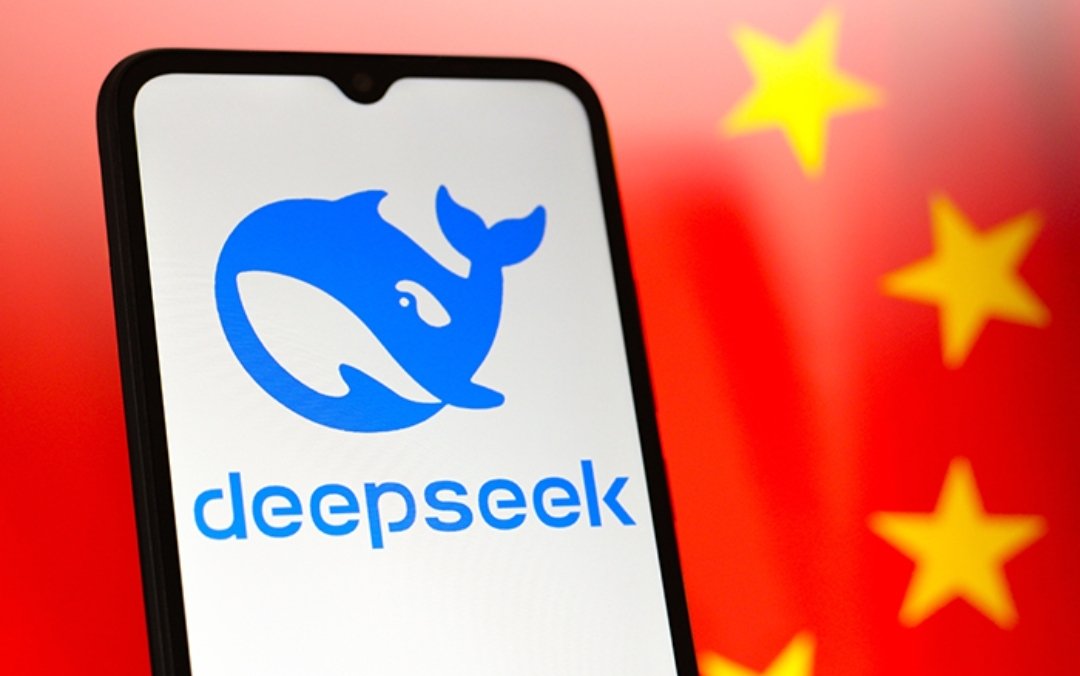
In a bold stride for China’s AI ambitions, Beijing-based DeepSeek AI has unveiled what it’s calling the nation’s most cutting-edge large language model yet, positioning it as a direct challenger to American frontrunners like OpenAI’s GPT-5 and Anthropic’s Claude. The release, timed amid escalating U.S.-China tech tensions, has ignited fierce global debate over whether the Middle Kingdom is on the cusp of dominating the artificial intelligence race.
Dubbed DeepSeek-V3.2-Exp – an experimental upgrade to the firm’s V3.1-Terminus architecture – the model shines in advanced reasoning and multimodal processing, handling everything from complex logical puzzles to integrated text-image analysis with near-seamless proficiency.
According to DeepSeek’s technical report, it achieves approximately 90% of the performance benchmarks set by top U.S. systems, all while slashing operational demands.What sets this release apart? Cost. Trained on a shoestring budget of under $5 million – a stark contrast to the hundreds of millions funneled into Western counterparts – the model leverages innovative “DeepSeek Sparse Attention” (DSA), a fine-grained mechanism that optimizes long-context handling without compromising output quality.
This allows it to thrive in low-compute setups, making high-caliber AI accessible to resource-strapped developers in emerging markets and beyond. Released as fully open-source under the MIT License, it’s already downloadable via Hugging Face, fueling rapid adoption worldwide.
“DeepSeek isn’t throwing money at the problem; they’re rewriting the playbook,” said Dr. Li Wei, an AI researcher at Tsinghua University, who reviewed early benchmarks. “By prioritizing algorithmic elegance over raw scale, they’ve turned constraints into superpowers – processing vast documents with vision tokens that outpace traditional text methods by orders of magnitude.”
The launch arrives on the heels of DeepSeek’s earlier 2025 triumphs, including the V3 series in March and R1-0528 in May, which briefly dethroned ChatGPT as the top free app on the U.S. iOS App Store and triggered a multibillion-dollar Nvidia stock plunge.
Yet, it’s not without controversy: The model has drawn scrutiny for embedding subtle alignments with Chinese regulatory guidelines, including content filters on sensitive topics – a point highlighted in recent quantum-inspired “de-censoring” experiments by independent physicists.
Enter Nvidia CEO Jensen Huang, whose stark warning at a recent tech summit has amplified the buzz: “China’s optimization edge is real – they’re not just catching up; in efficiency, they could pull ahead.” Huang’s comments, echoed in boardrooms from Silicon Valley to Shenzhen, highlight fears that DeepSeek’s frugality could erode U.S. leads, especially as export curbs on advanced chips force Beijing’s innovators to innovate harder.
Industry watchers predict ripple effects: U.S. startups like those in Airbnb’s ecosystem are already eyeing integrations for cost savings, while European regulators mull security bans akin to those in Italy and South Korea.
As one anonymous venture capitalist quipped, “This isn’t a model release; it’s a manifesto for affordable AI supremacy.”DeepSeek’s team, backed by High-Flyer hedge fund, promises further iterations soon, hinting at a full V3.2 rollout by year’s end. For now, the message from Beijing is clear: In the AI arms race, brains – and bytes – may trump bucks.