


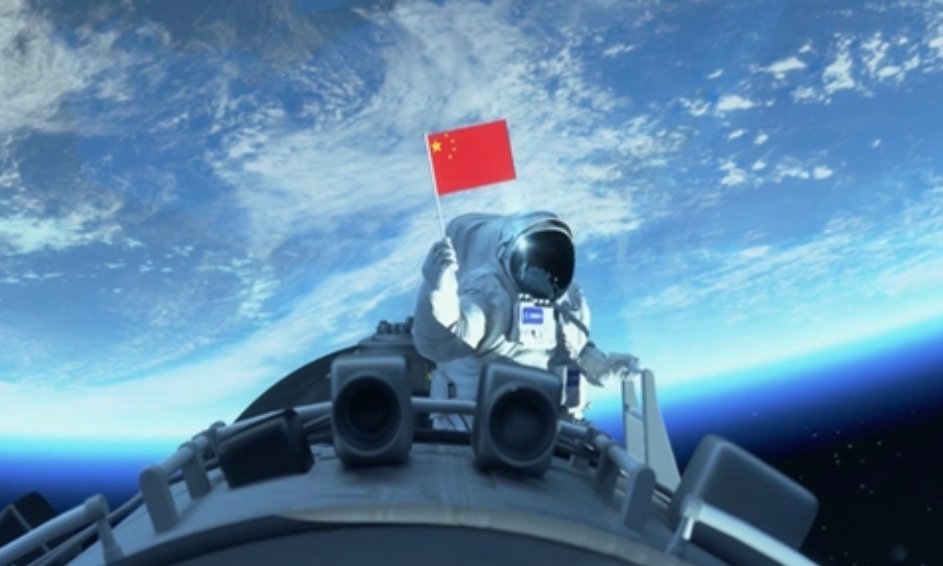
China’s commercial space industry has crossed a symbolic milestone: more than 600 private enterprises are now registered and actively operating in the sector, according to the latest figures released by the China National Space Administration (CNSA) and the State Administration for Science, Technology and Industry for National Defense (SASTIND).
The rapid growth—up from fewer than 100 companies in 2019—has been turbocharged by a sweeping new policy framework that formally integrates private players into the country’s aerospace master plan for the next three years.
The “2025–2027 Development Plan for Integration of Commercial Space into National Strategic Capabilities,” jointly issued by the China National Space Administration (CNSA), the Central Military Commission’s Equipment Development Department, and the National Development and Reform Commission, lays out a series of bold, measurable targets designed to catapult the country’s private space sector into global leadership by the end of the decade.
By 2027, Beijing expects at least 1,000 registered commercial space enterprises to be operating domestically. Private rockets are mandated to conduct more than 50 successful orbital launches annually. The plan calls for the deployment of operational low-Earth-orbit broadband megaconstellations totaling more than 20,000 satellites, rivaling or surpassing Western networks in scale.
Perhaps most critically, it demands complete domestic supply-chain independence in key next-generation technologies, including liquid oxygen-methane propulsion engines, reusable first stages, and high-precision attitude control systems—areas where China currently still relies on a mix of imported components and reverse-engineered designs.
To achieve this, the central government has opened previously restricted domains to private capital. For the first time, commercial firms are explicitly permitted to bid for national civil-space projects, including lunar sample-return missions, planetary exploration payloads, and even elements of the Chinese Space Station’s cargo resupply chain.
State-owned giants such as CASC and CASIC are now required to allocate at least 20 % of certain procurement contracts to private subcontractors.Funding is following policy. The National Integrated Circuit Industry Investment Fund—better known as the “Big Fund”—announced a new 50-billion-yuan (≈US$7 billion) sub-fund dedicated exclusively to space technology.
Provincial governments are piling on: Jiangsu, Shandong, and Guangdong have each pledged dedicated commercial spaceports capable of supporting more than 50 liquid-propellant launches annually by 2028. The Hainan Wenchang expansion, already under construction, will add two new pads exclusively for commercial operators by mid-2026.
On the ground, the ecosystem is maturing fast. Beijing-based Galactic Energy completed its 18th consecutive successful Ceres-1 solid rocket launch last month, while LandSpace’s Zhuque-2 methalox rocket became the world’s first liquid oxygen-methane vehicle to reach orbit in 2023 and is now flying roughly once every six weeks.
iSpace, CAS Space, and Space Pioneer have all conducted orbital attempts in 2025, with varying degrees of success. At the reusable frontier, both LandSpace and the Tencent-backed Blue Arrow Aerospace are targeting sub-orbital hop tests of recoverable first stages before mid-2026.Satellite manufacturing is exploding in parallel. Changguang Satellite Technology in Changchun has launched more than 120 Jilin-1 high-resolution optical satellites this year alone and is moving toward daily global revisit imaging.
Spacety and MinoSpace are shipping standardized 50–200 kg platforms by the hundreds, while Guowang (the state-backed answer to Starlink) and the fully private Hongqing Technology constellation are racing to deploy thousands of broadband satellites each.
Perhaps the most symbolic breakthrough came in October when the privately built Tianlong-3 rocket—developed by Beijing’s Space Pioneer—was selected to loft a payload for the Asia-Pacific Space Cooperation Organization (APSCO), marking the first time a purely commercial Chinese vehicle has been entrusted with an intergovernmental mission.
Industry analysts say the new three-year plan removes the final psychological barrier for institutional capital. “Before 2024, most Chinese venture funds treated space as too risky and too dependent on unpredictable government approval,” said Dr. Chen Lan, an independent analyst.
“Now the central government has essentially de-risked the policy environment. We’re seeing term sheets signed in weeks instead of years.”Western observers note that the speed and scale of China’s commercial pivot bear striking resemblance to the United States’ post-2010 embrace of SpaceX and Blue Origin—only compressed into a far shorter timeline and executed with characteristic top-down coordination.
Unlike the U.S., where NASA acts primarily as an anchor customer, China’s model blends massive state procurement with direct equity stakes and military-civil fusion requirements.
For now, the momentum appears unstoppable. At the Zhuhai air show, more than 120 commercial space companies exhibited—triple the number from just four years ago. When the new policy window formally opens on 1 January 2026, industry insiders predict another wave of mergers, IPOs on the Beijing Stock Exchange’s STAR Market, and at least a dozen new reusable rocket programmes breaking ground.
In the words of CNSA Deputy Administrator Wu Yanhua at last week’s press conference: “The era when space belonged only to a few big institutes is over. From 2025 to 2027, China’s commercial space industry will leap from catching up to leading in select domains.”
Whether that leap also intensifies geopolitical competition in orbit remains one of the most closely watched questions of the coming decade. For now, the rockets are stacking higher, the order books are filling, and China’s private space fleet is preparing for lift-off on a scale the world has never seen.


Signpost News is an independent digital platform renowned for its bold geopolitics opinions, incisive editorials, and balanced ethical journalism, while delivering sharp, timely insights on AI, finance, education, tech, and automobiles.