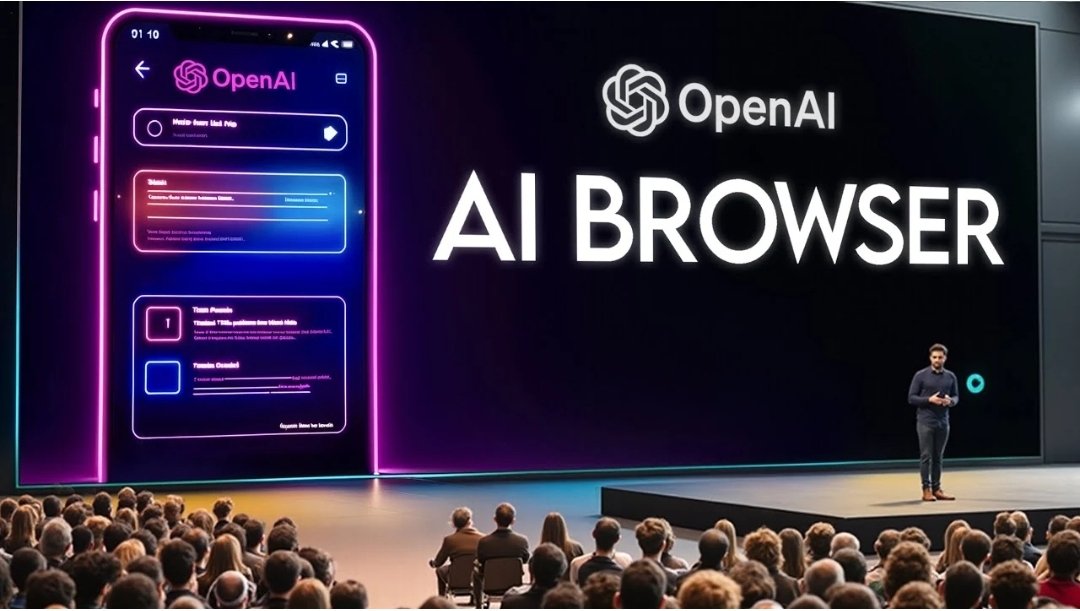
OpenAI, the pioneering artificial intelligence research organization behind ChatGPT, is reportedly preparing to launch its first AI browser, tentatively named Aura, according to industry insiders. This ambitious venture marks a significant expansion for OpenAI, moving beyond its core AI model development to challenge tech giants in the highly competitive browser market.
Sources familiar with the project indicate that Aura will integrate OpenAI’s cutting-edge AI technologies to deliver a browsing experience unlike any other. Built from the ground up, the browser is expected to leverage advanced natural language processing (NLP) and machine learning capabilities to offer users unprecedented levels of personalization, efficiency, and interactivity. While OpenAI has yet to confirm the launch officially, anticipation is building as the tech world awaits further details.
AI Browser Aura is rumored to introduce a suite of innovative features designed to set it apart from established players like Google Chrome, Mozilla Firefox, and Microsoft Edge. At its core, the browser is expected to incorporate a conversational AI assistant, powered by a derivative of OpenAI’s GPT architecture, enabling users to interact with the web in novel ways. For instance, users may be able to ask Aura to summarize lengthy articles, translate web content in real time, or even generate tailored search results based on conversational queries rather than traditional keyword searches.
“Aura could redefine how we interact with the internet,” said tech analyst Sarah Lin of TechTrend Insights. “By embedding AI directly into the browsing experience, OpenAI is positioning Aura as a tool that not only retrieves information but also understands and anticipates user needs.”
The AI browser is also expected to feature intelligent content filtering, which could prioritize credible sources and flag misinformation using OpenAI’s expertise in content analysis. This could appeal to users increasingly concerned about the reliability of online information. Additionally, early reports suggest Aura will offer seamless integration with OpenAI’s existing ecosystem, allowing users to access tools like ChatGPT directly within the browser for tasks such as drafting emails, generating creative content, or analyzing web-based data.
In an era where data privacy is a growing concern, OpenAI is reportedly prioritizing robust privacy features for Aura. Unlike some competitors that rely heavily on user data for targeted advertising, Aura is said to adopt a privacy-first approach, with options for end-to-end encryption and minimal data collection. OpenAI’s commitment to ethical AI use could give Aura an edge among privacy-conscious consumers, though details on how the browser will balance AI functionality with data protection remain under wraps.
OpenAI’s entry into the browser market is a bold move, given the dominance of Chrome, which holds over 60% of global market share, and other entrenched players like Safari and Firefox. However, OpenAI’s reputation for innovation could give Aura a unique foothold. The browser may appeal to early adopters, tech enthusiasts, and professionals who already rely on OpenAI’s tools for productivity and research.
“OpenAI is taking a risk by entering such a mature market, but their AI expertise could be a game-changer,” said Michael Torres, a senior analyst at WebTech Solutions. “If Aura delivers on its promise of a smarter, more intuitive browsing experience, it could carve out a niche, especially among users who value AI-driven insights.”
The launch of Aura signals OpenAI’s broader ambition to expand its influence beyond AI model development. By creating a browser, OpenAI could position itself as a direct competitor to tech giants like Google and Microsoft, both of which have heavily invested in AI and browser technologies. This move also aligns with OpenAI’s reported efforts to diversify its product offerings, which already include API services and enterprise solutions.
Industry observers speculate that Aura could serve as a platform to showcase OpenAI’s latest AI advancements, potentially driving adoption of its subscription-based services. While pricing details for Aura remain undisclosed, some reports suggest it may follow a freemium model, with basic features available for free and premium AI functionalities offered through a subscription.
OpenAI has remained tight-lipped about Aura’s development, with no official release date confirmed. However, sources indicate that a public announcement could come as early as this fall, possibly alongside a beta release for select users. The tech community is buzzing with speculation about how Aura will stack up against its rivals and whether it can deliver on the hype surrounding its AI-driven capabilities.
As the launch approaches, questions remain about how OpenAI will navigate the technical and competitive challenges of the browser market. Will Aura be a revolutionary tool that transforms how we interact with the web, or will it struggle to gain traction in a crowded field? Only time will tell, but OpenAI’s track record of innovation suggests that Aura is a project worth watching.
For now, users eager to learn more about Aura can stay tuned to OpenAI’s official channels for updates. As the tech world awaits the AI browser’s debut, one thing is clear: OpenAI is poised to make waves in yet another corner of the digital world.