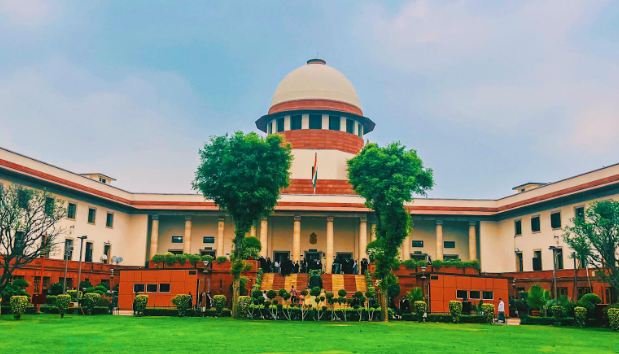
This Supreme Court verdict stands as a resounding triumph for the common man in India — a clarion call that pierces through the thick veil of bureaucratic indifference and corporate greed.
In a nation where the ordinary citizen has long been treated as a silent milch cow for utilities and service providers, the apex court has spoken with unflinching clarity: “The consumers cannot be required to pay for a service which they no longer received.”
Delivered on May 8, 2026, by Justices P.S. Narasimha and Alok Aradhe, this Supreme Court judgment strikes at the heart of an unjust system that has burdened households for far too long. It sets aside the Appellate Tribunal for Electricity’s order and upholds the consumer-friendly stance of the Delhi Electricity Regulatory Commission in the long-running saga of the Rithala Combined Cycle Power Plant.
Imagine that the Electricity supply from the Rithala plant in Delhi stopped flowing to consumers after March 2018. Yet, for years, attempts persisted to squeeze out remaining capital costs — depreciation and fixed charges — through monthly power bills paid by families in Delhi. The discom and generators argued for full recovery of their investments, as if the absence of actual power delivery was a mere technicality. The Appellate Tribunal leaned towards them. The Delhi regulator pushed back. And now, the Supreme Court has drawn a firm, principled line in the sand.
This is not mere accounting. Tariff fixation under the Electricity Act, 2003, the Court emphasised, is a delicate regulatory balance where the interest of the aam aadmi must remain supreme — not a mechanical exercise to guarantee every rupee of corporate or utility investment. Once the service ceases, the consumer cannot be saddled with the ghost of a non-functional asset, even if the plant still stands or the operator can sell power elsewhere.
From the bustling lanes of Imphal to the high-rises of Delhi and Mumbai, this verdict resonates deeply. In Manipur, where power cuts remain a painful daily reality amid hills and valleys scarred by neglect, ordinary families know too well the sting of paying for promises unkept. This ruling feels like a rare ray of justice breaking through the clouds.
For too long, Indian consumers have endured a culture of “pay first, question never.” Electricity bills arrive with mysterious fixed charges even during prolonged outages. DTH operators continue deducting money for channels you never tuned into. Gyms, OTT platforms, housing societies, and banks auto-renew subscriptions with clinical precision, treating cancellation as an act of rebellion. In the Northeast, where economic hardships bite harder and essential services often falter, such practices compound the sense of abandonment.
The Supreme Court has now declared, loud and clear, that this era of quiet exploitation must end. No service, no charge. This principle cuts across sectors like a much-needed knife through the fog of regulatory capture. It echoes the pain of a mother in a remote Manipuri village paying for a transformer that never worked, or a Delhi salaried employee subsidising a power plant that went silent years ago.
Let us look beyond electricity. In telecom, consumers battle phantom charges for services discontinued in practice. In real estate, housing societies levy maintenance fees for lifts that remain perpetually broken and parks that exist only in brochures. Insurance companies and banks quietly debit premiums and fees long after policies lapse or accounts turn dormant. The list is endless, and the victims are almost always the middle class and the poor — those least equipped to fight back.
This recent Supreme Court verdict breathes new life into the Consumer Protection Act, 2019. It empowers regulators like the Central Consumer Protection Authority, TRAI, and State Electricity Regulatory Commissions to move from passive observers to active defenders. “Pay for what you use” must become the default, not an exception granted through tedious battles in tribunals and courts.
In Manipur and the wider Northeast, where development often feels like a distant afterthought dictated from the mainland, this Supreme Court judgment carries even greater emotional and practical weight. Here, the common man is not only forced to pay for ghost electricity but is routinely robbed in broad daylight in the name of “digital India.”
For years now, Manipur has suffered frequent internet and mobile data shutdowns — some lasting just a few days, others stretching into weeks and even months. During these blackouts, prepaid customers watch helplessly as their data packs, voice calling balances, and validity periods evaporate into thin air.
You buy a 4G plan with high hopes, only to be served internet slower than 3G — often crawling at 2G speeds — even as you pay premium 4G/5G charges. At the time of writing this opinion, despite purchasing a 4G plan, the internet speed in many parts of Imphal and the valley remains painfully worse than what we experienced a decade ago.
Why should the common citizen bear this double loss? Why must a student preparing for competitive exams, a small trader relying on UPI payments, a journalist trying to file reports, or a mother trying to speak to her children working outside the state lose their hard-earned money when the service is deliberately shut down by the authorities?
Where is the accountability of telecom companies, who continue to deduct daily data without delivering even basic connectivity? Do they refund the unused data? Do they automatically extend the validity of the pack by the number of days the service was unavailable? Do they offer compensatory top-ups? The answer, almost always, is a cruel silence.
This is nothing short of looting of the customer’s money in the name of law and order. While the Supreme Court has clearly ruled that consumers cannot be forced to pay for services they no longer receive, telecom operators in Manipur and the Northeast continue this exploitative practice without fear. They enjoy the protection of the state when they throttle speeds or when networks are shut down, but they show zero responsibility when it comes to compensating the powerless subscriber.
The Supreme Court’s principle in the Rithala power plant case — “No Service, No Charge” — must now echo loudly in the telecom sector as well. If electricity companies cannot recover fixed charges for a plant that supplies no power, how can telecom giants be allowed to swallow customers’ money during prolonged internet bans and sub-standard service?
Regulators like TRAI and the CCPA cannot afford to remain mute spectators anymore. They must issue clear guidelines: automatic refunds or validity extensions proportional to shutdown periods, minimum speed guarantees with compensation for failure, and strict penalties for deliberate under-delivery of promised 4G/5G services.
In the hills and valleys of Manipur, where economic opportunities are already scarce and distances are vast, reliable internet is no longer a luxury — it is a lifeline for education, healthcare, banking, and survival itself. Forcing people to pay for non-existent or crippled service is not just unfair; it is an assault on dignity and development.
The Supreme Court has shown the way. It has declared that the aam aadmi is not a milch cow for utilities and corporations. Now it is the duty of TRAI, the state government, and the telecom companies to implement this principle in letter and spirit — especially in the Northeast, where the feeling of being second-class citizens is already deep and painful.
Utilities and generators must share risks in power projects. Similarly, telecom operators must bear the cost of shutdowns and poor service delivery — not pass it on to the powerless subscriber. Prudent investment, transparent policy, and genuine respect for the consumer should drive both sectors — not guaranteed bailouts from the pockets of the suffering people of Manipur and the Northeast.
Some may whisper that this Supreme Court verdict could discourage fresh investments. That utilities will now hesitate, fearing incomplete cost recovery. But such fears ring hollow. A system that socialises losses onto consumers while privatising profits breeds inefficiency, not confidence. True investment thrives on accountability, competitive markets, and consumer trust — not on regulatory guarantees that treat the public as collateral.
The real test now lies with implementation. Regulators must translate this precedent into clear guidelines: easy cancellation processes, usage-based billing, penalties for continued charging of discontinued services, and swift grievance redressal. Service providers should reform voluntarily before being forced to. Technology — digital consent, AI monitoring, one-tap exits — can bridge the gap.
For civil society, consumer forums, and the media, this is a call to vigilance. Armed with this judgment, citizens should challenge unjust charges more boldly. PILs and class actions invoking this principle can multiply. Parliament, too, must consider statutory reinforcement so that “no service, no charge” becomes the unbreakable norm across sectors.
In the end, this Supreme Court decision transcends a single power plant dispute. It reaffirms a fundamental truth often forgotten in our rush for growth: the economy exists for the people, not the other way around. It draws from the constitutional ethos — equality before the law, the right to life with dignity — and applies it to the mundane yet vital arena of monthly bills.
From the fertile Imphal Valley to the concrete jungles of metropolitan India, ordinary citizens deserve relief from this invisible tax on their survival. The Court has stood with the aam aadmi — the housewife budgeting her expenses, the small trader fighting rising costs, the student in a rented room watching every rupee.
This is consumer jurisprudence at its finest: practical, empathetic, and fiercely protective of the weak. In a time of economic pressures and widening inequalities, it restores a measure of faith that the system can still deliver for those who quietly keep India running.
Let this Supreme Court verdict mark the beginning of a new chapter — one where service providers think twice before sending that unjust bill, and where regulators remember their true mandate: to shield, not to enable exploitation.
The Supreme Court has spoken. Now, it is time for the rest of the system to listen — and act. Manipur, India, and every consumer fighting silent battles deserve nothing less.