President Donald Trump has vowed to unleash military strikes on Nigeria over escalating violence against Christians, directing the newly rechristened Department of War to ready contingency plans.In a blistering Saturday post on Truth Social, Trump declared that all U.S. aid to the West African nation would be severed “effective immediately” unless Abuja halts what he branded the “genocide” of its Christian population.
On a crisp autumn afternoon in Palm Beach, Florida, those distant pleas collided with the unyielding rhetoric of U.S. President Donald Trump, transforming a simmering humanitarian crisis into a geopolitical powder keg. “If we attack, it will be fast, vicious, and sweet,” Trump thundered in a Truth Social post late Saturday, his words slicing through the digital ether like a drone strike in the night.
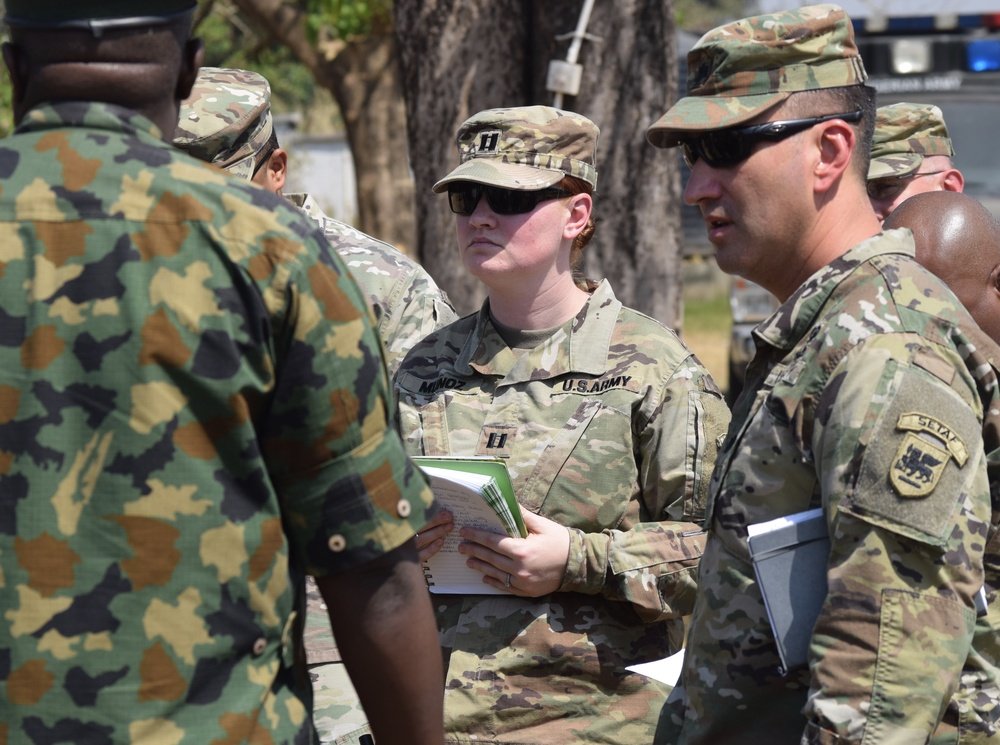
The target: Nigeria, accused of tolerating a “genocide” against its Christian minority.It was a declaration that reverberated from the White House to Abuja’s marbled halls of power, halting U.S. aid flows worth hundreds of millions and ordering the Pentagon—rechristened the “Department of War” under Trump’s second-term whims—to draft contingency plans for intervention.
As markets jittered and diplomats scrambled, the world watched in stunned silence: Was this the dawn of a new era of American saber-rattling in Africa’s heart, or a blunt instrument in Trump’s evangelical outreach?
Nigeria, Africa’s most populous nation and a patchwork quilt of 250 ethnic groups, has long been a tinderbox. Its 220 million souls are roughly split between Muslims in the arid north and Christians in the lush south, a divide exacerbated by insurgencies like Boko Haram, whose 15-year reign of terror has claimed over 35,000 lives—most of them Muslim, by human rights tallies.
Yet in recent months, attacks on Christian farming communities have surged, with radical Islamists torching churches and villages in a cycle of vengeance tied to land disputes, resource scarcity, and ideological fervor.Enter Trump, whose Friday announcement designating Nigeria a “Country of Particular Concern” for religious freedom violations marked the first such label since 2020.
Flanked by evangelical allies like Sen. Ted Cruz, who earlier decried a “massacre” of Christians, Trump framed the violence as an “existential threat” to the faith, vowing to “wipe out the Islamic Terrorists” if Abuja fails to act. The rhetoric, raw and unfiltered, evoked memories of Trump’s first-term travel bans and “America First” isolationism—now twisted into a crusade for global believers.But on the ground, the story is messier.
In Kaduna state, where herder-farmer clashes claim hundreds yearly, victims like 52-year-old widow Aisha Musa—a Muslim herder whose son was gunned down in a retaliatory raid—paint a portrait of indiscriminate horror. “It’s not just churches burning,” she told Reuters from a displacement camp, her voice cracking over the wail of malnourished children. “Our mosques are ash too. This is survival, not jihad.”
Human rights monitors echo this nuance, noting persecution cuts across faiths, with Boko Haram’s ideology weaponizing poverty and weak governance against all.
Nigerian President Bola Tinubu, a seasoned operator in the corridors of power, wasted no time in rebuttal. In a measured X post early Saturday, he invoked the constitution’s safeguards for all faiths: “Religious freedom and tolerance have been a core tenet of our collective identity and shall always remain so. Nigeria opposes religious persecution and does not encourage it.”
By Sunday, the presidency confirmed Tinubu’s intent to meet Trump “in the coming days,” a diplomatic olive branch amid whispers of economic fallout—U.S. aid underpins health and security programs, and oil giant Nigeria’s exports to America could face tariffs.Critics at home, like activist Omoyele Sowore, lambasted the threats as “imperialist bluster,” urging Nigeria to reject foreign meddling while bolstering internal security.
Senate leader Ali Ndume called for “seasoned diplomats” to counter the “genocide” narrative, arguing it overshadows the shared fight against extremism. Even in the U.S., voices like Rep. Riley Moore’s warning to Abuja—”We will not allow the gates of hell to prevail”—drew fire for erasing Muslim suffering.
The fallout has been swift and global. In Washington, hawkish Republicans like Rep. Tom Cole praised Trump’s resolve, while Democrats decried it as “reckless interventionism” risking another quagmire akin to Iraq.
Abroad, the UN and African Union issued cautious calls for dialogue, wary of destabilizing West Africa’s fragile peace. Analysts like Olufemi Obadare, a scholar at the Council on Foreign Relations, see opportunity amid peril: “This is precisely the moment when Nigeria needs assistance, especially military assistance,” he told Al Jazeera, but only in partnership against the “common enemy” of terror.
Yet whispers of ulterior motives persist—Trump’s base, energized ahead of midterms, laps up the tough talk, even as oil markets twitch at the specter of disrupted Nigerian crude flows.On X, the pulse of public fury beats raw: Nigerian users decry colonial echoes (“Trump’s ‘guns-a-blazing’ is just the new scramble for Africa,” one viral thread fumed), while American conservatives hail a “moral stand” against “radical Islam.” French philosopher Bernard-Henri Lévy, ever the interventionist, tweeted support: “Better a swift storm than endless silence.” (Or, as one satirical post quipped: “Trump’s turning Truth Social into the Book of Revelations—chapter: Nigeria.”)
As the sun sets over the Niger Delta, where oil rigs pierce the horizon like defiant crosses, the question lingers: Will Trump’s firebrand ultimatum forge peace or fan the flames? For families like the Okafors in Plateau State—whose church was razed last month, leaving pastor Emmanuel nursing shrapnel wounds—it’s a desperate gamble. “We pray for deliverance,” he whispers from a makeshift shelter, “but whose sword will it be?”
In this transatlantic tango of faith and force, Nigeria stands at a crossroads, its sovereignty tested by a superpower’s zeal. Trump, ever the showman, has lit the fuse. Whether it leads to diplomacy’s steady hand or the thunder of jets remains the world’s anxious watch. For now, in the quiet villages where persecution festers, one truth endures: The faithful wait, not for vengeance, but for justice.