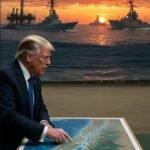
US President Donald Trump’s dramatic 48-hour ultimatum, delivered in classic all-caps style on Truth Social, demands that Iran fully open, without threat, the Strait of Hormuz, or face the “obliteration” of its power plants, starting with the largest.
The clock is ticking toward roughly Monday evening GMT, with the US-Israel war on Iran now in its fourth grueling week. Oil prices are already surging from the effective choke on 20% of global flows, energy markets are in turmoil, and the world watches for the next move.
As per my calculation, Iran will not comply in the way Trump demands. Tehran will largely ignore the core ultimatum, full, unrestricted reopening without any perceived threat, and instead lean toward escalation or calculated defiance.
Partial concessions may appear (as they’ve already signaled openings for “neutral” vessels), but capitulation under public pressure? Unlikely. Here’s why, broken down across regime psychology, historical patterns, strategic realities, and the risks of miscalculation.
First, Iran’s regime is built on never bowing to ultimatums from the “arrogant” West. The Islamic Republic frames its entire identity around resistance to American and Israeli dominance. Supreme Leader Khamenei, the IRGC hardliners, and even more pragmatic figures like President Pezeshkian view surrender as regime suicide.
Folding now, especially after weeks of enduring strikes, missile exchanges, and attacks near nuclear sites like Natanz, would signal weakness to domestic hardliners, regional proxies (Houthis, Hezbollah, Iraqi militias), and rivals like Saudi Arabia.
Prestige and deterrence trump short-term economic relief every time. Iran’s response has already been mirror-image. The IRGC vows to completely close the Strait if power plants are hit, and target US-linked energy, IT, desalination, and other infrastructure across the Gulf (Saudi, UAE, Bahrain facilities tied to American interests).
This isn’t bluff; it’s symmetric escalation doctrine. Historically, Iran has repeatedly used the Strait as leverage without full retreat. During the 1980s Tanker War, it mined waters and attacked vessels despite US naval presence.
In 2019, tanker seizures and drone strikes on Saudi facilities followed US “maximum pressure.” Each time Washington threatened or sanctioned, Tehran doubled down on asymmetric tools—proxies, missiles, naval harassment—rather than yield. The current partial easing (allowing non-enemy/neutral shipping) fits this pattern. Optics management to avoid total isolation while maintaining control.
Full compliance “without threat” would require Iran to disarm its posture entirely, which the regime sees as inviting more strikes on leadership, nuclear remnants, or even regime-change efforts.
Strategically, Iran calculates endurance over quick surrender. Officials claim stockpiles for essentials up to a year, and its missile arsenal can reach Gulf targets reliably. Closing or restricting the Strait raises costs for everyone—especially Asia (China, India, Japan depend heavily on Hormuz oil)—but Iran bets it can outlast US domestic pressure.
Trump faces voter backlash from high energy prices, bond market jitters (10Y yields nearing danger zones), and refinancing trillions in debt. Iran knows prolonged disruption hurts the US economy more politically than its own sanctioned, resilient system.
Proxies add deniability. Houthis in the Red Sea, militias in Iraq, escalation can spread without direct full-war commitment.Trump’s approach makes compliance even less likely.
The public, bombastic ultimatum, via Truth Social from Mar-a-Lago, offers no face-saving off-ramp. It plays to his base (“strongman” optics) but hardens Tehran’s stance. Ultimatums rarely bend ideological regimes; they provoke defiance.
If Trump strikes power infrastructure post-deadline, expect retaliation: symmetric hits on Gulf energy assets, potentially blackouts, supply shocks, oil beyond $150/barrel, and broader proxy activation.
Neither side wants permanent closure, but both prioritize survival calculus, Iran endures pain to preserve leverage; Trump must deliver lower prices without endless war.
Partial gestures could emerge before the clock expires: more “neutral” traffic, a lull in attacks, back-channel signals via Oman or Qatar. But these won’t meet Trump’s “fully open, without threat” bar. Expect continued selective restriction, harassment of “enemy” vessels, mine/ drone threats, to keep pressure without total suicide.
The Strait stays a contested chokepoint.This standoff exposes limits of bluster in active conflict. Trump’s first-term “maximum pressure” worked somewhat pre-war; now, amid grinding escalation, it risks overreach.
Iran isn’t folding, it’s responding on its terms: defiance, mirrors threats, endurance. The next 24-36 hours (as of late March 22 IST) likely see posturing, not obedience. If strikes follow, tit-for-tat energy war ensues, spiking global volatility.
Exhaustion or quiet diplomacy may eventually de-escalate—not a 48-hour red line in all caps.
Iran ignores because it must: regime survival demands it. Escalation becomes the rational path when obedience equals weakness. The world pays the price in energy chaos until reality forces recalibration.

Naorem Mohen is the Editor of Signpost News. Explore his views and opinion on X: @laimacha.

Naorem Mohen
View More PostsNaorem Mohen is the Editor of Signpost News. Explore his views and opinion on X: @laimacha.