Democracy does not begin on polling day. It begins much earlier, with the preparation of an electoral roll that every citizen can trust.
An electoral roll is not merely a database of names and addresses. It is the legal foundation upon which every vote rests. Every election, every government, and every democratic mandate ultimately derives its legitimacy from the confidence that only eligible citizens are voting and that every eligible citizen has an equal opportunity to participate.
It is for this reason that any serious concern regarding the electoral roll deserves careful attention, irrespective of who raises it or which political narrative it may appear to support.
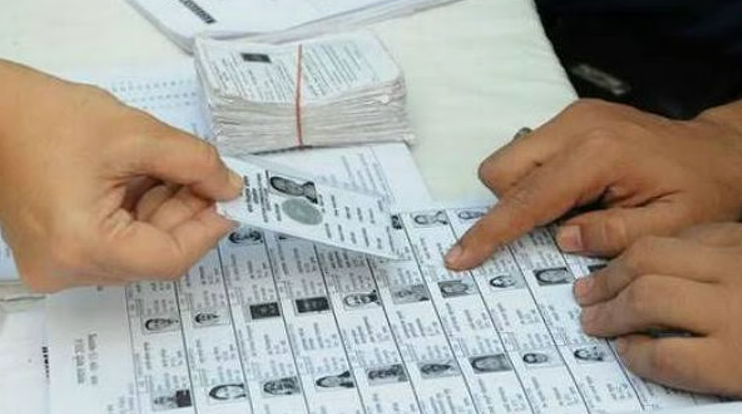
A recent representation submitted to the Chief Electoral Officer, Manipur, by former State Planning Authority member Thoudam Jagat Singh has raised a series of concerns regarding the draft Special Intensive Revision (SIR) 2026 electoral roll. The complaint points to alleged inconsistencies in nomenclature, unclear identifiers, overlapping house numbers, extensive use of the “Others” relationship category, and a preliminary analysis suggesting a significant number of electors in three constituencies could not be linked to the 2005 electoral roll. The representation calls for transparent scrutiny and an independent examination of these observations.
In the three constituencies analysed, the complaint claims that 236 such entries were found in Kangpokpi, 281 in Tengnoupal, and 581 in Saikot, raising questions about the quality of data validation and verification.
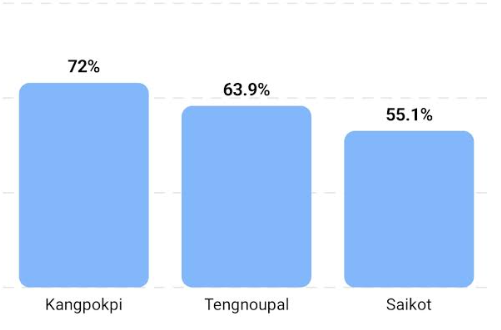
The complaint further presents a preliminary analysis of three constituencies—Kangpokpi, Tengnoupal, and Saikot—while acknowledging that the exercise remains incomplete because a statewide electoral database was not available. Despite these limitations, it alleges that 72 per cent of the records examined in Kangpokpi, 63.9 per cent in Tengnoupal, and 55.1 per cent in Saikot could not be linked to the 2005 electoral roll. The representation argues that these unmatched records are too significant to be explained solely by migration, clerical errors, or the constraints of the analysis, and therefore deserve a comprehensive examination by the Election Commission.
Whether every allegation ultimately withstands detailed scrutiny is a matter for the Election Commission to determine. Neither allegations nor denials should substitute for evidence. That is precisely why transparency becomes indispensable.
In a democracy governed by the rule of law, institutions earn public confidence not by expecting unquestioning trust but by demonstrating that every legitimate concern is examined fairly. Electoral authorities have a constitutional responsibility that extends beyond conducting polling. They must also ensure that citizens remain confident that the electoral process itself is impartial, accurate, and professionally administered. The quality of an electoral roll determines far more than the logistics of an election.
An inaccurate roll may wrongly exclude eligible voters. Equally, it may inadvertently include persons who are not entitled to vote. Both situations undermine democratic equality. The objective, therefore, is not to support one political narrative against another but to protect the constitutional principle that every legitimate vote carries equal value.
India’s Election Commission enjoys enormous constitutional credibility precisely because it has historically relied upon rigorous procedures, verification, and institutional independence. That credibility should never be taken for granted. It must be reinforced continuously through openness, professionalism, and accountability.
The concerns raised in the present representation should therefore be viewed through this institutional lens rather than through the prism of partisan politics.
If the alleged discrepancies are found to be administrative errors, they should be corrected swiftly and transparently. If they are shown to be statistically insignificant, the Election Commission should communicate the findings publicly and comprehensively. If, however, any systemic shortcomings are identified, corrective action must follow without hesitation.
In every possible scenario, transparency strengthens democracy. Silence, on the other hand, creates a vacuum that rumours quickly occupy.
Manipur has already endured years of political uncertainty, ethnic tensions, and declining public trust in institutions. The State can ill afford fresh controversies over the credibility of electoral processes. Elections must unite citizens under constitutional procedures, not deepen divisions through competing suspicions.
This is why independent verification should never be viewed as an admission of institutional weakness.
On the contrary, independent scrutiny often strengthens institutional legitimacy. Across mature democracies, electoral audits, public verification exercises, and transparent grievance mechanisms reinforce confidence because they demonstrate that institutions have nothing to hide. Confidence grows when verification is visible.
The representation also refers to reports that Booth Level Officers may have faced external pressure while collecting data. Such assertions are serious and remain allegations unless established through investigation. Precisely because they are serious, they deserve careful examination rather than premature acceptance or outright dismissal. Institutions exist to determine facts through evidence, not through public speculation.
Electoral integrity cannot become a casualty of political convenience. Every political party, every community, and every citizen shares the same interest in maintaining an electoral roll that is beyond reproach. Today’s beneficiary of opacity may become tomorrow’s victim. Democratic institutions cannot function on selective trust.
The constitutional principle is remarkably simple. Every eligible citizen must be included. Every ineligible entry must be removed. Every objection deserves a fair hearing. Every correction must be evidence-based. This principle protects everyone equally.
The Election Commission has repeatedly demonstrated its ability to conduct elections under extraordinarily difficult circumstances across India. That same institutional commitment must now be reflected in responding to concerns surrounding the draft electoral roll. Professional verification, transparent communication, and timely correction are not concessions to criticism. They are obligations arising from constitutional responsibility.
Ultimately, democracy is sustained not merely because elections are held, but because citizens believe those elections are fair.
That belief begins with the electoral roll. When questions arise, transparency is not optional. It is the strongest answer a democracy can give.