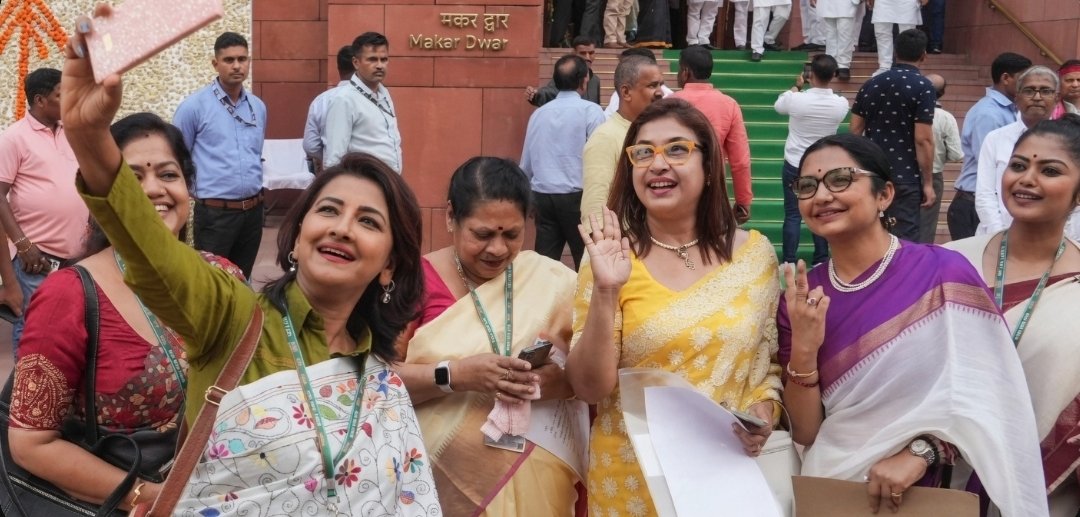
The recent defeat of the Constitution (131st Amendment) Bill, 2026, along with the linked Delimitation Bill in Parliament, is a historic reminder for Indian democracy. Major structural changes cannot be rushed without genuine consensus, especially when they touch the delicate federal balance and long-term power-sharing in our republic.
By cunningly linking the Women’s Reservation Bill with the Delimitation exercise, the government tried to push a time-sensitive social reform into an uncertain administrative timeline.
The entire debate shifted from the clear urgency of gender justice to the messy politics of redrawing India’s electoral map. That was completely unnecessary. It must be separated. Delimitation must stay away from Women Reservation.
The Women’s Reservation Bill was already passed in 2023 with near-unanimous support. Every political party claims to support women’s empowerment. Then why the unnecessary delay? Why tie it with Delimitation and seat increase?
If parties are truly serious, they should start reserving 33% seats for women in their own party tickets right now — in every election, from Panchayat to Parliament. That is real empowerment. No need to wait for 2029 or some magical delimitation.
The failure of the 131st Amendment Bill in Lok Sabha is not a rejection of women’s reservation. It is a loud message that even popular reforms fail when mixed with hidden political calculations and structural uncertainty.
The Nari Shakti Vandan Adhiniyam of 2023 is already law. It has been notified. Instead of implementing 33% reservation in the existing 543 Lok Sabha seats, the government bundled it with a massive delimitation and plan to expand the House to nearly 850 seats.
This linkage was the real problem.Women’s reservation is overdue and welcome. At the local level, more than 1.4 million women have already shown their strength through Panchayati Raj quotas. But in Parliament, women are still stuck at around 15%.
That gap is unacceptable in a democracy like India. The clean and honest way was simple: implement 33% reservation immediately by rotating constituencies in the current House — just like it has been successfully done in local bodies for decades. Nothing in the Constitution stops this.
Sub-quotas for SC/ST women could also be included. No need for new census, no need for seat expansion drama.
But instead, the move was to first expand the Lok Sabha dramatically using 2011 Census data and only then implement the women’s quota. On the surface, it looked like a smart way to avoid direct conflict with sitting male MPs.
In an 850-member House, roughly 280 seats could go to women without shrinking the general pool too much. Here is where the deeper concern lies.Delimitation based purely on population heavily favours states with higher population growth — mostly in the Hindi heartland like Uttar Pradesh, Bihar, Rajasthan, and Madhya Pradesh.
Southern states, which have done excellent work in family planning, education, and development, will see their relative political voice reduced. From around 24% to 20-21% share. This feels like punishing states for responsible governance. Southern leaders are right to raise their voice. They contribute hugely to India’s GDP, taxes, and progress. Political power cannot be decided only by headcount. This risks hurting cooperative federalism.
The defeat of the bundled bill by the opposition shows democracy is still working. They supported women’s reservation but refused to let it become a vehicle for controversial delimitation without proper consultation and a fresh census.
A bigger Parliament of 800+ seats also brings practical headaches — more disruption, higher costs to taxpayers, infrastructure strain, and risk of more criminal elements entering without serious electoral reforms.
The wiser path is clear now:
- Delink Women’s Reservation from Delimitation completely.
- Implement 33% quota in the existing 543 seats without further delay.
- Let parties start giving more winnable tickets to capable women candidates right away.
- Take up delimitation separately, after proper census, with full consensus, keeping in mind not just population but also economic contribution, fiscal discipline, and federal equity.
Nari Shakti should not be used as political camouflage for other agendas. Women’s empowerment and delimitation are both important issues, but they deserve honest, separate debates.Indian democracy has shown maturity by rejecting this mixed package.
Now is the time for clean implementation of women’s reservation in the current House. Let us focus on making Parliament more effective, less noisy, less criminalised, and truly representative — North, South, East, and West.
Only then can we say we are moving towards a genuinely inclusive and balanced democracy. Delimitation must stay away from Women Reservation Bill. Full stop.