In a functioning democracy, a National Highway is more than asphalt and signage — it is a declaration of central authority, economic lifeline, and equal access for all citizens. Yet in Manipur, particularly along stretches like NH-202 (Imphal-Ukhrul road) passing through Kuki-dominated areas, this declaration has been reduced to a mocking formality.
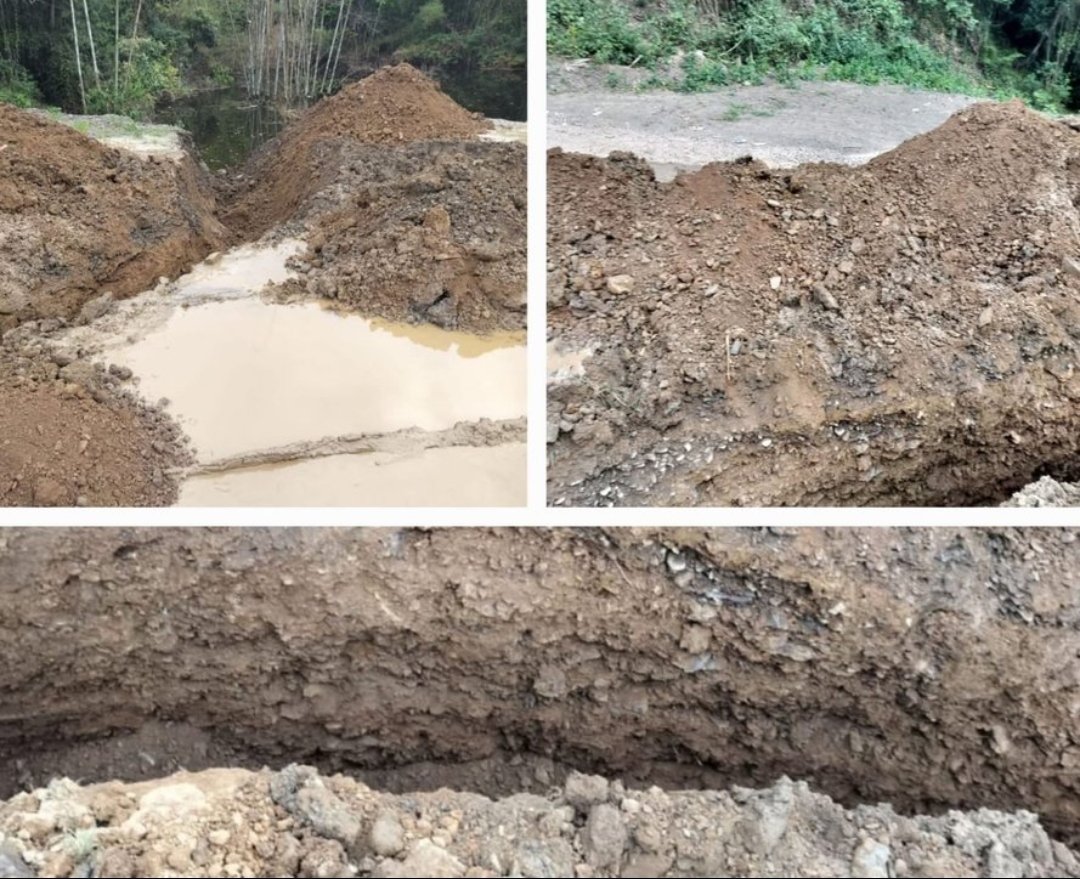
The brazen digging of the highway near Shangkai Kuki village on May 30, 2026, using heavy machinery like a JCB, is not an isolated act of vandalism. It is a stark symptom of eroded state control, selective impunity, and the dangerous ethnic fragmentation that continues to plague the state three years after the 2023 violence erupted.
Reports confirm that sections of NH-202 were deliberately excavated overnight, disrupting traffic in the wake of tensions involving blockades, ambushes, and the killing of a Bengali FCI truck driver by Kuki militants.
Kuki groups have enforced shutdowns, blocked movements, and dictated terms on who or what can traverse these routes. Villagers have allegedly stopped convoys, pelted security personnel, and treated public infrastructure as leverage in community disputes. No prompt FIRs, no visible arrests, and no restoration of unhindered access — the pattern repeats.
This raises fundamental questions: What is the purpose of designating a road as a “National Highway” or “Rajmarg” if the Centre and state apparatus cannot guarantee its neutrality and security? National highways fall under the Union Ministry of Road Transport and Highways. They are built and maintained with central funds precisely to transcend local fiefdoms and bind the nation.
When one community can call indefinite shutdowns, dig up carriageways, collect informal “taxes,” or selectively bar travellers based on ethnicity, the very concept of national sovereignty frays.
These are not private village paths; they are supposed to be arteries of the Indian Union.
Particularly egregious is the near-total prevention of Meitei travel along the critical Imphal-Dimapur National Highway (NH-2) for the past three years. In Kuki-dominated stretches such as Kangpokpi, some Kuki CSOs have effectively warned and barred Meiteis from free passage, with vehicles turned back and even emergency movements restricted.
Despite multiple Public Interest Litigations (PILs), memorandums to the Centre, and repeated assurances from Delhi, meaningful enforcement remains absent — lending credence to the perception that these national arteries function under the shadow of Kuki CSO rather than constitutional authority.
The liberty extended — or at least the apparent inability to curb it — in certain hill areas stands in sharp contrast to how the Indian state responds elsewhere.
In other states, blocking a national highway or damaging critical infrastructure invites swift police action, arrests, and restoration by authorities. Here, despite security forces manning the routes, repeated incidents of blockade and excavation occur with minimal deterrence.
This selective restraint fuels perceptions of appeasement in one community and heavy-handedness in others, deepening distrust across Meitei, Kuki, and Naga lines.
The ongoing ethnic conflict, which has already partitioned the state ethnically, now risks normalising parallel governance where armed groups and village bodies override constitutional order.
The cycle — protest, blockade, ambush, counter-allegations — sustains a climate of fear that strangles commerce, isolates hill districts, and turns essential supplies into bargaining chips. Truckers suspending operations for security is not mere inconvenience; it signals systemic failure that hurts ordinary citizens across ethnic lines.
No community anywhere in India should wield veto power over national infrastructure as “private property.” Rule of law demands impartial enforcement: immediate repair of damaged sections, prosecution of those using excavators on public roads, and clear accountability for security lapses.
Political leadership — both in Imphal and Delhi — must move beyond managing symptoms to addressing root causes: unresolved territorial anxieties, proliferation of armed groups, and the breakdown of trust that allows ethnic militias to function with impunity.
The highways in Manipur should symbolise connectivity and integration, not division and defiance. Until the Centre reasserts unambiguous control over these arteries — through decisive action rather than prolonged tolerance — the label “National Highway” remains an empty honorific.