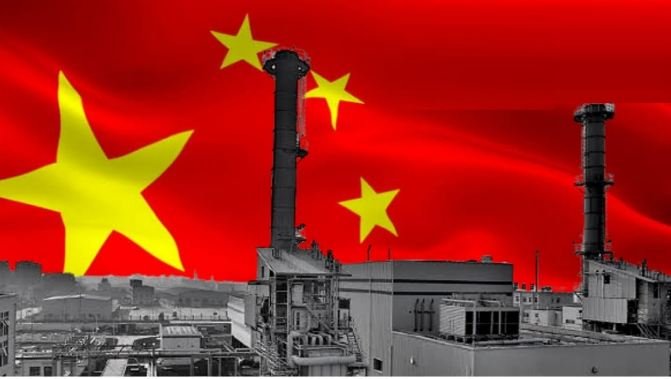
While the world fixated on glittering narratives of green energy transitions, AI revolutions, and semiconductor supremacy, Beijing quietly built a stranglehold over the very arteries that feed these technologies. China has quietly secured a commanding position in this domain, leading the refining of 19 out of 20 critical refined minerals essential to contemporary innovation and security.
This dominance—extending to 99% of gallium, 96% of graphite, 95% of manganese, 91% of rare earths, and substantial shares across lithium, cobalt, silicon, and titanium—represents far more than industrial efficiency. It constitutes a structural threat to global autonomy, creating dependencies that allow a single actor to influence the technological, economic, and strategic trajectories of nations worldwide.
The refining bottleneck, more concentrated than mining itself, transforms supply chains into instruments of leverage, undermining the independence that free societies assume as a given.The data, drawn from World Economic Forum visualizations and International Energy Agency figures as of 2025, lays bare the asymmetry.
While raw extraction occurs across continents, the high-purity processing that turns ores into functional materials for chips, batteries, and alloys is overwhelmingly centralized in Chinese facilities. This concentration did not emerge by chance. It reflects decades of deliberate state planning, subsidies, vertical integration, and tolerance for the environmental and capital demands that deter many competitors.
The outcome is a world where technological progress, energy transitions, and defense capabilities operate under implicit permission from Beijing. Autonomy erodes when the basic materials enabling progress flow through a single chokepoint.
The global energy transition, heralded as a pathway to sustainability and independence from fossil fuels, has instead forged new vulnerabilities. China’s refining dominance in battery and electrification materials—graphite at 96%, manganese at 95%, rare earths at 91%, cobalt at 78%, and lithium at 70%—positions it as the gatekeeper of the electrified future.
These refined minerals are indispensable: graphite for battery anodes, manganese and cobalt for cathode stability, lithium for energy density, and rare earths for the magnets that power electric motors and wind turbines.
Governments across the United States, Europe, and beyond have committed trillions to EV mandates, renewable grids, and storage systems. Yet these ambitions rest on fragile foundations. Even copper, with China at 44%, and nickel (where Indonesia leads at 43% but Chinese entities control much of the refining capacity) reveal the pattern.
Diversification in mining often funnels back into Chinese processing networks, illustrating how nominal geographic spread masks persistent influence.This setup threatens autonomy on multiple levels. First, economic autonomy suffers as industries become price-takers in a market shaped by Beijing’s priorities. Export restrictions on gallium and germanium have already demonstrated the mechanism: calibrated responses to external pressures that ripple through global manufacturing.
In a future crisis—perhaps heightened tensions over trade, technology, or territorial disputes—such levers could disrupt battery production, delay renewable deployments, and inflate costs for consumers and industries alike. Nations pursuing net-zero targets find their timelines and feasibility dictated externally, eroding policy sovereignty.Moreover, the environmental narrative unravels under scrutiny.
While Western regulations impose strict standards on domestic processing, outsourcing refining to China shifts the ecological burden elsewhere, creating moral and strategic inconsistencies. True autonomy requires control over the full value chain, not selective celebration of downstream assembly while depending on upstream dominance. Without diversified refining, the green transition risks becoming a vector for external influence rather than a source of resilience.
The artificial intelligence revolution amplifies these threats exponentially. Modern AI systems, data centers, and advanced semiconductors rely on minerals where China holds overwhelming refining leads: gallium at 99%, silicon at 85%, germanium at 74%, indium at 70%, tellurium at 77%, and antimony at 74%. Gallium, in particular, enables gallium nitride and gallium arsenide technologies critical for high-power, high-frequency applications in AI accelerators, 5G/6G infrastructure, fiber optics, and radar systems.
As nations invest heavily in domestic chip fabrication—through initiatives like the CHIPS Act and European semiconductor strategies—the upstream reality undermines these efforts. Building foundries and developing algorithms means little if access to refined materials remains precarious.
China’s control over these inputs allows it to modulate supply in response to geopolitical developments, such as restrictions on advanced Western technologies. This asymmetry inverts traditional power dynamics: while some powers excel in design and software, the physical enablers of computation are concentrated elsewhere.
Autonomy in the digital age thus becomes illusory. Data centers powering AI training consume vast resources; without secure mineral flows, innovation plateaus or shifts toward actors with reliable access. Smaller nations and even major economies face the prospect of self-censorship in foreign policy to avoid supply disruptions. The threat extends to dual-use technologies, where civilian AI advancements feed military applications.
When refined minerals for sensors, power electronics, and interconnects are bottlenecked, strategic decision-making narrows. Global autonomy fractures as technological independence—long prized as a pillar of national strength—depends on the strategic calculations of a centralized authority.
The implications for security are perhaps most acute. Minerals tied to aerospace, defense, and heavy industry show pronounced Chinese leads: molybdenum at 81%, titanium at 69%, vanadium at 59%, tungsten at 44%, chromium at 42%, and zirconium at 38%.
These materials form the backbone of jet engines, armored systems, missile components, high-strength alloys, and nuclear applications.In an age of great power rivalry, control over these refined inputs translates into indirect influence over military readiness. Prolonged conflicts or sustained tensions could expose vulnerabilities in production tempos, as adversaries grapple with potential shortages while the dominant player benefits from secure, integrated supply lines.
Modern defense systems—hypersonics, stealth aircraft, advanced submarines—demand these specialized materials in precise specifications. Disruptions cascade from factories to field capabilities, undermining deterrence and operational autonomy.
This dynamic challenges alliance structures as well. Collective defense pacts assume reliable industrial bases, yet concentrated refining introduces single points of failure. Even stockpiling offers limited relief against long-term dependencies. The result is diminished strategic autonomy: nations may hesitate in crises, recalibrate alliances, or moderate responses to avoid material reprisals.
Industrial sovereignty, the ability to manufacture core capabilities independently, erodes when foundational chemistry lies outside national or allied control. History shows that resource dependencies have long shaped conflicts; in the 21st century, refined minerals play the role once held by oil or rare commodities.
Refining’s persistence as a chokepoint stems from its inherent difficulties. Unlike mining, which responds relatively quickly to capital inflows, processing requires specialized expertise, massive infrastructure, tolerance for byproducts, and integration across complex logistics.
Facilities take years or decades to build, face regulatory and community hurdles in many democracies, and demand sustained investment irrespective of short-term market fluctuations. China’s model—state-backed, vertically integrated, and strategically prioritized—has created a self-reinforcing advantage.Efforts at diversification encounter the same barrier.
New mines in Australia, Africa, or the Americas often rely on Chinese processing capacity. Indonesia’s nickel case exemplifies proxy control, where ownership and technology sustain influence despite local leadership claims. This endurance threatens autonomy by locking in dependencies: even as awareness grows, implementation lags.
Technological alternatives like enhanced recycling or novel chemistries offer hope but require time to scale without compromising performance. In the interim, global actors operate within constraints set by Beijing’s capacity and willingness to supply.
China’s refining hegemony reshapes the international landscape. It complicates climate agendas, technology competitions, and security architectures. Europe’s green ambitions, America’s innovation edge, and manufacturing powers in East Asia all navigate these vulnerabilities.
Developing nations encounter stark choices between infrastructure financing and long-term independence. Alliances evolve—witness initiatives focused on mineral security—but rhetoric frequently outpaces tangible progress in building alternative refining hubs.This concentration embodies realist principles: interdependence becomes a tool of influence when power is asymmetrically distributed. It heightens risks around flashpoints, from maritime disputes to technology decoupling.
Environmental and governance concerns add layers, as expanding capacity elsewhere demands balancing sustainability with urgency. Ultimately, the threat to autonomy manifests as constrained policy space, reduced innovation freedom, and heightened crisis fragility. Nations lose the ability to chart independent courses when core enablers of progress are externally gated.
Restoring balance requires deliberate, coordinated action. Governments must treat critical minerals as core national security issues, mobilizing public-private investments in refining with de-risking tools and streamlined processes. Innovation in recycling, material substitution, and alternative technologies should receive sustained funding to reduce primary dependencies.
Diplomatic frameworks must foster transparent partnerships with resource-rich states, emphasizing mutual benefits over one-sided arrangements.Stockpiling, redundancy in suppliers, and integrated policy across defense, energy, and technology sectors form essential pillars. Success hinges on blending market dynamism with strategic direction—overcoming the laissez-faire inertia that enabled current concentrations. While challenges persist, windows of opportunity exist through technological disruption, domestic pressures in China, and growing international consensus.
China’s control over refined minerals is not merely an economic statistic but a profound challenge to the autonomy that underpins stable global order. From AI-driven progress to secure defense and sustainable energy, the ability of nations to pursue their visions independently hangs in the balance.
This silent architecture of influence demands recognition and response. In the mineral-defined geopolitics of the 21st century, autonomy is not inherited—it must be actively constructed through foresight, investment, and cooperation.
The alternative is a world where technological and strategic destinies are shaped not by collective will, but by concentrated control. The stakes could scarcely be higher for the future of independent powers and open societies.