Let me tell you something that keeps me tossing at night: the world as we know it is slipping away, one silent, humming factory at a time. I’ve spent years covering AI tech, chasing the next big disruption from Silicon Valley to Shenzhen. But nothing—nothing—prepared me for the reports pouring in from Western CEOs who’ve just returned from China.
These aren’t your garden-variety business travelers swapping war stories over dim sum. These are titans: Ford’s Jim Farley, Fortescue’s Andrew Forrest, Octopus Energy’s Greg Jackson. They went in cocky, armed with PowerPoints and preconceptions, and came out looking like they’d seen the ghost of industries past. Not because of what China might do to us—no, it’s what they’re already doing.
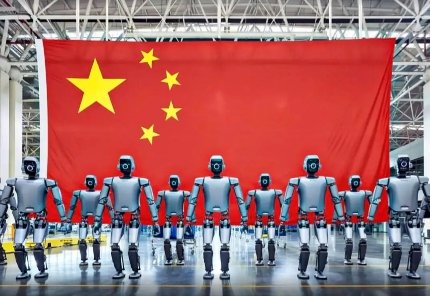
And in this AI-fueled fever dream, the West isn’t just playing catch-up; we’re staring down the barrel of irrelevance.Picture this: Farley, the guy who’s steered Ford through pandemics and chip shortages, steps off a plane from Shanghai and drops this bomb: “The most humbling thing I’ve ever seen.” Humbling? From a man who’s rubbed elbows with billionaires and presidents? He’s not exaggerating. What he saw—AI-choreographed robots dancing across assembly lines, spitting out electric vehicles (EVs) that are cheaper, smarter, and better than anything Detroit’s churning out—flipped his entire worldview.
“We are in a global competition with China,” he said, his voice steady but his eyes betraying the panic, “and it’s not just about EVs. If we lose this, we do not have a future at Ford.” It’s the kind of line that sounds like corporate hyperbole until you realize he’s test-driving a Xiaomi EV back home and refusing to give it up. That’s not admiration; that’s surrender.
Then there’s Forrest, the Aussie mining maverick whose Fortescue empire is betting big on green steel and hydrogen dreams. He tours a Chinese plant and emerges pale: “There are no people—everything is robotic.” No people. Just conveyor belts birthing trucks from the floor like some industrial mitosis, 800 meters of automated alchemy. He scrapped a $2.8 billion deal to build EV motors in the UK and Australia because, well, why bother when Beijing can do it faster, cheaper, and without a single coffee break?
And Jackson? The energy whiz from Octopus wanders into a “dark factory” making solar panels and batteries—lights off, humans absent, machines grinding away in the gloom like vampires afraid of the sun. “Some of them didn’t even have lights,” he marveled, or maybe shuddered. These aren’t anomalies; they’re the new normal in a country that’s turned AI into its secret sauce for world domination.
Look, I get it—China’s been the world’s factory for decades, churning out iPhones and sneakers on the backs of cheap labor and lax rules. But this? This is different. Brutally, exhilaratingly different. We’re talking about a revolution where AI doesn’t just optimize; it orchestrates. Factories that scale in months, not years. Robotics and machine learning deployed with the precision of a surgeon and the speed of a sprinter. In 2024, China installed nearly 300,000 industrial robots—more than the rest of the planet combined.
By 2025, they’re on track for over half of the global total, pushing 575,000 units worldwide. Robot density? China’s at 392 per 10,000 workers; the U.S. limps along at 285. Europe? A measly 219. The numbers scream it: Beijing isn’t building faster. It’s building a parallel universe where humans are optional.And it’s not confined to flashy EVs or gadgets. This AI beast is devouring heavy industry, logistics, even the guts of national infrastructure.
One exec I chat to—off the record, naturally—summed it up: “Robotics has catapulted Beijing into a dominant position in many industries.” He’s right, and it terrifies me. Because what these Western leaders are confronting isn’t just superior tech. It’s a system—a tightly woven tapestry of government muscle, tech wizardry, and manufacturing might—that feels rigged from the start. While we in the West bicker over regulations and ethics, China’s charging ahead, no brakes, no apologies.
Let’s zero in on autos, because that’s where the rubber really meets the road—or doesn’t, in the case of those eerily efficient Chinese lines. Farley’s tour wasn’t a joyride; it was a reckoning. He gawked at vehicles with self-driving brains that read your mood via facial scans, cabins that morph to your whims, all at costs that make Tesla look like a luxury splurge. “Their cost and the quality of their vehicles is far superior to what I see in the West,” he admitted, a gut-punch from the mouth of Blue Oval royalty. BYD’s factories
Over 10,000 robots strong, AI simulating entire builds in digital twins before a wrench even turns. Result: $10,000 EVs with ranges that mock Western rivals, defect rates slashed 90%, production halved in time.This isn’t fair play; it’s checkmate. China’s EV imports have clawed 20% of Europe’s market this year, forcing BMW to hack prices by 15%. In the U.S., tariffs are our flimsy shield, but even Farley’s pumping $11 billion into batteries feels like plugging a dam with chewing gum. GM and VW? They’re quietly sourcing from China just to survive.
And here’s the kicker: these cars aren’t static hunks of metal. AI keeps them evolving—over-the-air updates turning your ride into a perpetual beta test. Lose this race, and it’s not lost sales. It’s lost souls: assembly workers, engineers, entire towns hollowed out like rust-belt relics.I’ve driven those legacy lines in Michigan, heard the clank of human hands on steel. There’s dignity in it, sweat equity. But dignity doesn’t pay bills when robots do it better. Farley’s fear isn’t abstract; it’s prophetic. Without our own AI infusion, Ford—and by extension, America’s auto dream—fades to footnote.
Swing over to energy and mining, and the plot thickens into nightmare fuel. Forrest’s about-face on those EV motors? It axed hundreds of Aussie jobs overnight. “You’ll basically be alongside a big conveyor,” he described, “and the machines come out of the floor… There are no people.” That’s not progress; that’s poetry for the machines. In solar and battery plants, Jackson saw the same void: AI juggling loads for 99.9% uptime, workers relegated to oversight—or obsolescence. “China’s competitiveness has gone from subsidies and low wages,” he noted, “to a tremendous number of highly skilled engineers innovating like mad.”Mining’s even grimmer.
China controls 80% of rare earth processing, thanks to AI drones and haulers that mine with surgical strikes, halving eco-damage. Rio Tinto and peers are scrambling, but McKinsey warns: by 2030, AI could automate 45% of tasks—if we invest. Fortescue’s pivot says we’re not. Green energy, our supposed salvation, risks becoming Beijing’s fiefdom. Imagine: the wind turbines spinning our renewables, forged in Chinese dark factories, their AI souls whispering secrets back home. It’s poetic injustice.
None of this happens without AI as the beating heart. China’s “AI + Manufacturing” push isn’t a slogan; it’s scripture. Predictive maintenance nips breakdowns in the bud; generative AI spits out custom designs like candy. Foxconn’s Kunshan? 60,000 jobs gone, replaced by neural nets tweaking iPhone lines for 40% efficiency gains.
Their AI market? $70 billion strong, 4,300 firms deep. Logistics? Unitree’s dog-bots swarm warehouses, owning 60% of the global pie. Steel? AI alloys save 15% on energy.By 2027, 70% penetration in key sectors—that’s the goal, and they’re lapping it. We? Fragmented, fearful of the ethics. I admire the caution, but admiration won’t build robots.
Here’s the rub: tech alone doesn’t win wars. Systems do. “Made in China 2025” isn’t a plan; it’s a prophecy, with AI as the engine. State nods, subsidies flow (smarter now, innovation over wages), Huawei and Alibaba weave in. Projects greenlit in months; ours mired in years of red tape. Rian Whitton calls it preemptive genius against aging pops. We’re siloed; they’re symphonic.
Panic’s setting in—and rightly so. U.S. chip bans and EV walls buy time, but humanoids? China’s eyeing 1 billion by mid-century; our Optimus is a toddler. Over-automation could tank jobs, spark recessions. Europe’s Sander Tordoir begs for robotics to fight demographics. Protectionism? A Band-Aid on a bullet wound.
My take? Emulate, don’t envy. Deregulate wisely, pour cash into public-private moonshots, make AI augment humans—not erase them. Humanize the machine, or it humanizes us out of existence.China shocked the world, alright. But shocks fade; action endures. Will we reinvent, or relinquish? The factories hum on, indifferent. Your move, West.