When revolutionary outfits who took arms to protect the identity, culture and land become the ecological warriors by going on destruction of poppy plantation in the hills, the Zeliangrong United Front (ZUF) shows everyone has a role to safeguard the earth.
On January 8, 2026, the ZUF Kamson faction, has once again exemplified this profound truth. Cadres from ZUF (S. Kamson group) ventured into Kharam Vaiphei village near Leimakhong in Kangpokpi district of Manipur state in India to destroy persistent illegal poppy plantations.
Around 7 AM, they were met with fierce resistance—gunfire and bombs from armed Kuki militants allegedly guarding the poison fields.
The group conducted an operation to eradicate alleged illicit poppy cultivation and unauthorized Kuki Suspension of Operations (SoO) camps in what they claim as ancestral Zeliangrong-Inpui territory. The action triggered a brief exchange of fire with armed Kuki groups, with no confirmed casualties, though ZUF suggested 2-3 Kuki militants may have been injured, and their cadres returned safely.
ZUF’s statement framed the raid as essential defense against unlawful activities—poppy farms along routes like German Road and Tiger Road, plus encroachments via topographical maps allegedly supporting separate administration demands. They stressed that no Kuki land exists within their traditional boundaries and reaffirmed non-opposition to legitimate Kuki aspirations in native areas.
However, Kuki bodies like the Committee on Tribal Unity (CoTU), Sadar Hills Kangpokpi, condemned it as an unprovoked assault on a recognized Kuki village, portraying poppy eradication as a pretext for ethnic aggression.
This confrontation follows earlier actions, such as the destruction of a poppy plantation and makeshift hut in Poringlong Sadar Hills, and multiple operations in Waphong region of Kangchup Range, Sapermeina Subdivision, where unauthorized poppy fields, farm shelters, and structures were dismantled despite repeated warnings to cultivators.
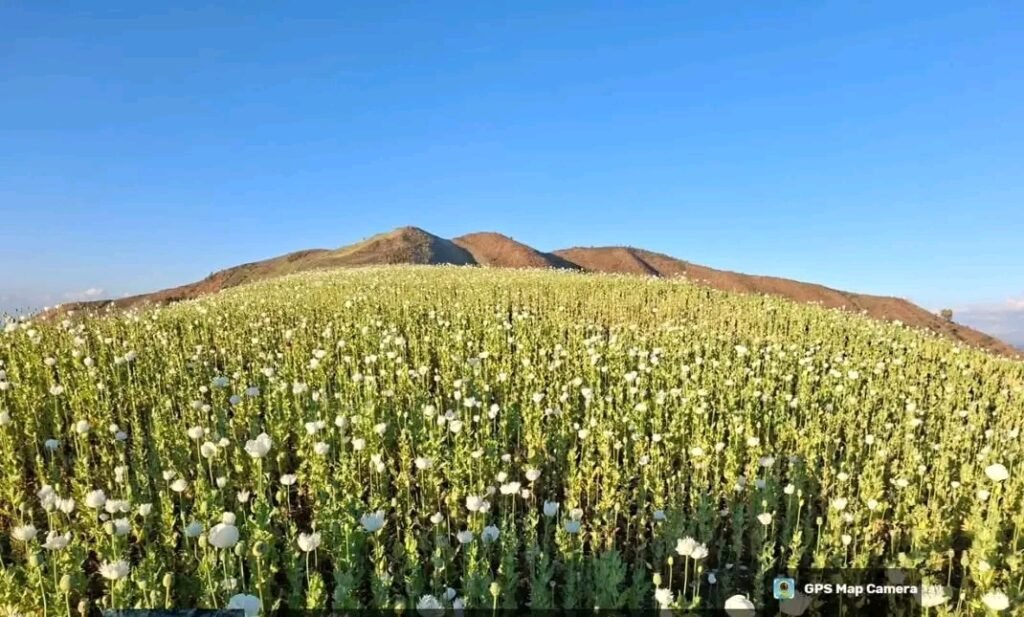
These acts of bravery by ZUF are not isolated incidents but part of a sustained “War on Drugs” campaign that transcends ethnic divisions, focusing squarely on healing the Earth from the scourge of illicit opium poppy cultivation.
This incident occurs amid intensified state-led crackdowns. In early January 2026 alone, joint teams (Manipur Police, CRPF, Forest Department, NCB) destroyed over 50 acres in nearby Moljol-Tusam areas (January 7-8), 12.9 hectares in Senapati (January 6), 40 acres at Ngatan Hill Range (January 9), and more—often burning huts, seizing fertilizers, herbicides, and equipment.
Poppy cultivation has become a proxy battleground in ethnic tensions since May 2023, with accusations of protection or profiteering by armed elements.
Official drives sometimes appear selective or inadequate, leaving security vacuums that groups like ZUF fill through unilateral action.ZUF’s intervention, while risky and vigilante in nature, was correct and necessary to confront the immediate threat of poppy plantations that ravage forests, pollute soil and water, and sustain narco-economies eroding the hills’ integrity.
Their proactive stance—going where state mechanisms lag—deserves acknowledgment as a bold step toward reclaiming sacred lands from exploitation.
The hill districts of Manipur, including Tamenglong, Kangpokpi, Churachandpur, Chandel, Ukhrul, Kamjong and Noney, lie within the Indo-Burma biodiversity hotspot, a global treasure trove of life. Tamenglong district, spanning over 4,391 square kilometers, is affectionately known as the “orange bowl” of Manipur, its slopes adorned with vibrant citrus groves amid dense subtropical forests. Rivers like the Barak and Irang originate here, feeding vital wetlands downstream.

The forests are a symphony of life, the towering oaks, bamboo thickets, rhododendron blooms, and sacred groves protected by ancient taboos. Wildlife abounds—western hoolock gibbons, India’s only apes, swing through the canopy with their haunting calls; rare orchids, some endemic, carpet the understory; clouded leopards prowl silently. These ecosystems perform irreplaceable services: anchoring soils on steep slopes to prevent landslides, sequestering carbon to combat climate change, regulating water cycles for regional agriculture, and preserving genetic diversity for future generations.
Moreover, in this pristine hills of Tamenglong district, thousands of Amur Falcons—graceful long-distance migrants known locally as Akhuaipuina or Tamuanpui—arrive each autumn from Siberia for a vital stopover before continuing their epic journey across the Indian Ocean to southern Africa, including South Africa. These birds congregate in massive roosts at sacred forest sites like Chiuluan, Puching, Phalong, and Guangram, where tall trees provide essential refuge amid the subtropical woodlands.
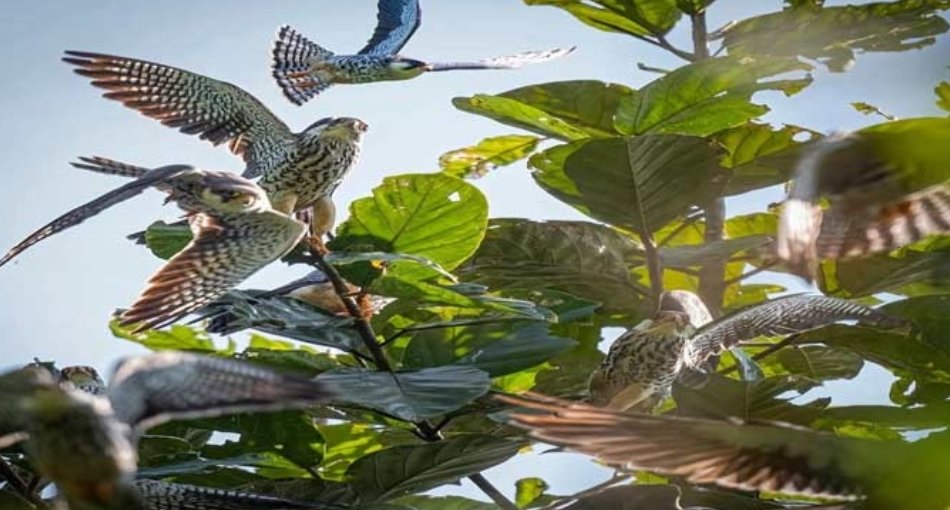
Tragically, these vital nesting and roosting forests face severe destruction from illicit poppy cultivation, as hillsides are cleared through slash-and-burn methods, fragmenting habitats and threatening the falcons’ safe havens.
This paradise faces a grave threat from illicit poppy cultivation. Driven by global opium demand, cultivators clear vast tracts using slash-and-burn methods, planting Papaver somniferum on vulnerable hillsides. Thousands of acres have been affected, with chemicals leaching into soils and waters, exposing earth to erosion, and fragmenting habitats.The devastation is multifaceted: deforestation accelerates soil loss, leading to frequent landslides; water sources contaminate, affecting rituals and health; biodiversity declines as species lose homes; carbon sinks vanish, worsening climate impacts.
In the adjoining Tamenglong and Kangpokpi district, once-pristine slopes now bear scars visible from afar, threatening the very foundation of life in these hills.
The Zeliangrong community, which comprises the Zeme, Liangmai, Inpui and Rongmei tribes—share a profound, unbreakable bond with these hills. Their name symbolizes unity, derived from the tribes’ initials, forged through common ancestry and migration legends from sacred caves.
Their cosmology reveres Tingkao Ragwang, the supreme deity manifested in nature’s elements.Life rhythms align with the Earth: sustainable jhum cultivation with long fallows allows regeneration; sacred groves remain inviolate, abodes of spirits preserving biodiversity.
Festivals like Gaan-Ngai, celebrated in January, are vibrant tributes to renewal—sacred fires lit, offerings made, dances performed in traditional attire of feathered headdresses, woven shawls, and beaded ornaments symbolizing harmony with wildlife and harvests.
Rituals invoke blessings for fertile soils, pure waters, and healthy forests. Folklore and oral traditions reinforce reverence, teaching respect for every tree, river, and creature. This indigenous wisdom has sustained ecosystems for millennia, offering models for global conservation amid modern crises.
Poppy cultivation assaults this rich and sacred heritage on the far corner of the earth, unexplored paradise—encroaching ancestral lands, polluting sacred waters, displacing native crops, and eroding community cohesion through addiction.
However, the ZUF which was established in 2011 to unite and protect Zeliangrong interests amid land and identity threats, it has evolved into a powerful force for environmental justice. Their manifesto emphasizes safeguarding territories from external encroachments, viewing poppy as an alien invasion degrading ecology and culture.
ZUF’s “War on Drugs” is community-driven, with cadres from affected villages acting on local intelligence. Operating in remote terrains, they issue warnings before action, prioritizing restoration.
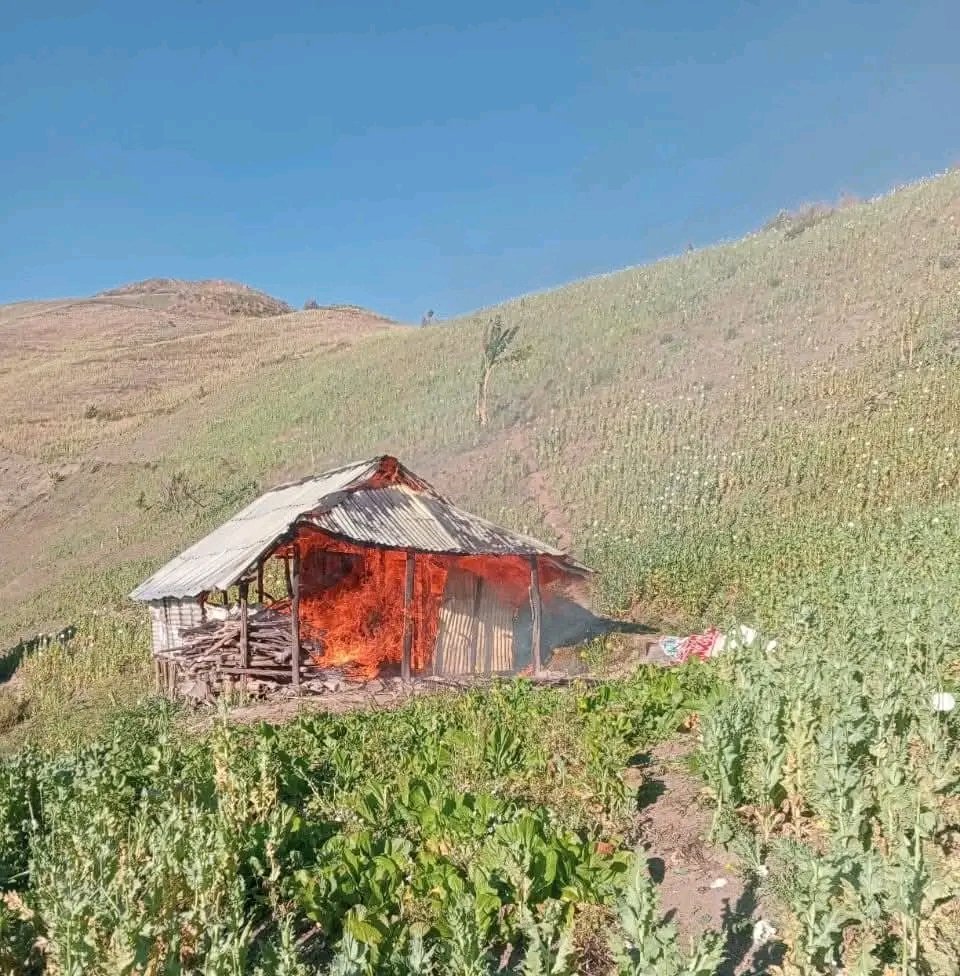
In Waphong and Sapermeina, multiple waves dismantled fields, shelters, and structures, ignoring cultivators’ defiance.In Poringlong Sadar Hills, ZUF destroyed plantations and huts, reiterating no tolerance for drugs in Zeliangrong areas.The campaign culminated recently in Kharam Vaiphei, where the Kamson group faced armed attack while eradicating fields.
These actions complement broader efforts, destroying hundreds of acres while highlighting governance gaps in addressing poverty and conflict fueling cultivation.ZUF’s systematic approach—surveillance, ultimatums, decisive strikes—prevents opium yields and enables natural recovery.
Defending the Earth honors ancestors and secures futures. Village support provides vital information, sustaining operations where others falter. ZUF’s journey—from armed protection of identity to ecological vanguard—illuminates indigenous leadership’s power. Their actions allow regeneration: seeds sprout in cleared areas, wildlife returns, soils heal.
Global parallels inspire—Amazon guardians, African community patrols. In Manipur, alternatives like reviving Tamenglong’s orange groves, bamboo crafts, and eco-tourism offer paths forward.
As ZUF stands firm today amid gunfire for tomorrow’s forests, every environmental activist salutes their sacrifice. We urge global action: recognize Zeliangrong stewardship, fund reforestation with native species, promote livelihoods honoring traditions, amplify voices in international forums.
By reclaiming these hills from destruction, ZUF emerges as true nature warriors—indigenous guardians whose courage honors ancestral reverence and secures a legacy for all beings.
We must applaud them wholeheartedly, for in protecting Tamenglong’s forests, they protect the sky’s wanderers, the trees’ singers, and the Earth’s boundless richness—a beacon of hope reminding us that true stewardship blooms from the heart of those who call the land home.
However, eradicating this menace cannot rest solely on ZUF or any single community. Every community—Zeliangrong, Kuki-Zo, Naga, Meitei, and others—must unite in this shared responsibility. Collective involvement through dialogue, joint monitoring, alternative livelihoods for vulnerable farmers, and transparent state enforcement is essential to protect Manipur’s sacred hills from irreversible damage.
Vigilantism may yield short-term gains but risks escalation; sustainable victory demands grassroots cooperation and impartial governance.
Manipur’s hills, rich in biodiversity and cultural heritage, cannot afford perpetual division over drugs. True liberation from the poppy scourge requires all stakeholders to stand together—destroying fields today while building a drug-free tomorrow.
ZUF’s drive prove that safeguarding our planet is a shared sacred duty—for all peoples, in all lands.Let us rise together, honoring the Earth’s call through action, reverence, and unity.

Naorem Mohen is the Editor of Signpost News. Explore his views and opinion on X: @laimacha.

Naorem Mohen
View More PostsNaorem Mohen is the Editor of Signpost News. Explore his views and opinion on X: @laimacha.