For decades, New Delhi treated the Northeast as a distant frontier — roads came late, investments slower, and serious strategic thinking only when crises forced its hand. Geography, however, never changed.
The Northeast remains India’s natural gateway to Southeast Asia, and Myanmar remains the lock that can open that gate or keep it permanently shut.
That is why Prime Minister Narendra Modi’s meeting with Myanmar President U Min Aung Hlaing should not be waved away as routine diplomacy. For the people of Manipur especially, this engagement carries far heavier weight than most Delhi headlines suggest.
India’s Act East Policy is meaningless without Myanmar. Every road, every trade corridor, every ambition to turn the Northeast from a security burden into an economic powerhouse runs straight through Myanmar. Those who ignore this basic fact will keep misunderstanding both the urgency of the relationship and the hard realities on our borders.
President Min Aung Hlaing choosing India for his first foreign visit as President was no small signal. In diplomacy, first visits reveal priorities. At a time when big powers are jostling fiercely across Asia, Myanmar’s move shows it sees New Delhi as a serious strategic player worth courting.
The visit began in Bodh Gaya — a powerful reminder of the civilizational and Buddhist bonds that have linked our peoples for centuries. But sentiment alone doesn’t run modern geopolitics. National interest does. And India’s interests in Myanmar have rarely been more pressing.
No serious talk about this meeting can skip the wound that is still bleeding in Manipur. Since May 3, 2023, ethnic violence between Meitei and Kuki communities has claimed over 300 lives, displaced more than 70,000, burned villages, shattered trust, and turned parts of the state into segregated zones.
A central and explosive issue in this crisis has been illegal immigration from Myanmar, particularly from Chin-Kuki ethnic kin fleeing the post-coup civil war. The Manipur government has repeatedly highlighted how porous borders have allowed undocumented migrants to enter, allegedly contributing to demographic shifts, poppy cultivation, drug trafficking, deforestation, and added pressure on already scarce resources.
Many in the valley see cross-border kinship networks being exploited, turning a refugee situation into a security and identity threat.
Kuki groups reject blanket accusations, arguing historical ties and genuine refugee needs. But for ordinary people in Imphal, Churachandpur, or Moreh, the consequences are not theoretical — they are daily fear, blocked highways, arms flowing across the border, and a breakdown of social fabric that no amount of central packages can quickly repair.
This is the ground reality. Instability inside Myanmar does not stay inside Myanmar. It spills directly into Manipur.
India shares a 1,643 km porous border with Myanmar. The old Free Movement Regime was exploited. Arms, narcotics, insurgents, and undocumented migrants moved too freely. Since 2023, Delhi has accelerated fencing, biometric checks, and tighter regulation.
The Modi-Min Aung Hlaing meeting gives India direct leverage to push for better intelligence sharing, coordinated action against cross-border armed groups, and stricter controls on illegal crossings.
Engagement is not endorsement of Myanmar’s internal politics. The country remains messy — junta rule, ethnic armed organisations, civil war. Yet India cannot afford isolationism. We live with the consequences on our side of the border.
For Manipur, stronger cooperation on border management could mean distinguishing genuine Indian citizens from new illegal arrivals, reducing infiltration that fuels local tensions, and curbing the conflict economy. This is realism, not romance.
Beyond security lies another game-changing opportunity that barely gets discussed in Manipur’s streets but could reshape our future — rare earth minerals.
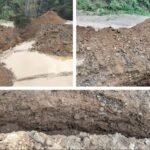
Heavy rare earths like dysprosium and terbium are the invisible backbone of EVs, wind turbines, missiles, fighter jets, and advanced electronics. China controls 60-70% of mining and nearly 90% of processing. Myanmar, especially Kachin State, has emerged as a major alternative source for heavy REEs. Post-coup mining exploded, with massive exports to China. Rebel groups like the KIA control key areas, striking their own deals while leaving toxic environmental damage behind.
For India, this is strategic oxygen. We import heavily from China — a dangerous dependency. Indian Rare Earths Limited and Geological Survey teams have already scouted Kachin for partnerships. The goal is clear: secure raw supplies from Myanmar, build processing capacity (ideally with Quad partners), and reduce vulnerability.
Any such supply chain will run through the Northeast. Logistics hubs, testing facilities, and transport corridors could finally bring real economic activity to Manipur, Mizoram, and beyond. For once, the Northeast would not just be a transit route — it could become a strategic asset in India’s quest for critical mineral independence.
The same logic applies to roads and trade. The India-Myanmar-Thailand Trilateral Highway, Kaladan project, border haats — all depend on a functional relationship with Myanmar. Without stability, these remain expensive dreams. With cooperation, they become lifelines that open markets, create jobs, and end the decades-long feeling of being cut off from both mainland India and our eastern neighbours.
Young people in Manipur are tired of migrating for opportunities that should exist at home. They want results — completed roads, functioning trade points, industries that employ locals, not just photo-ops in Delhi.
Some will call engagement with the Myanmar leadership controversial. They are right to raise human rights and governance concerns. But foreign policy is not a moral science exam. It is about protecting India’s interests in an imperfect world. With a long, sensitive border and ongoing Manipur crisis, disengagement would punish our own border states more than it pressures Naypyidaw.
The Modi-Min Aung Hlaing meeting is a chance to push for tighter border security, reduced illegal immigration, faster infrastructure, and mineral partnerships that actually benefit the Northeast.
It signals that Delhi is finally treating the eastern frontier with the seriousness it deserves instead of the usual neglect.
For Manipur and the Northeast, what happens in Myanmar no longer stays in Myanmar. It directly shapes our security, our economy, our demographic balance, and our future.
Strong, pragmatic India-Myanmar ties are not optional. They are essential for stability in Manipur, economic hope in the hills and valleys, and India’s broader strategic autonomy from China.
The coming years will test whether this diplomatic opening delivers on the ground — fewer infiltrators, functional borders, real jobs from connectivity and minerals, and healing space for Manipur’s wounds.
The people here are done with grand announcements. They want tangible change where it hurts and where it matters. Geography has already decided our destiny. Now it is up to New Delhi to stop treating the Northeast as an afterthought and start treating it as the strategic bridge it was always meant to be.
The Myanmar meeting is one important step in that direction. Whether it becomes a turning point depends on delivery, not declarations.

Naorem Mohen is the Editor of Signpost News. Explore his views and opinion on X: @laimacha.

Naorem Mohen
View More PostsNaorem Mohen is the Editor of Signpost News. Explore his views and opinion on X: @laimacha.