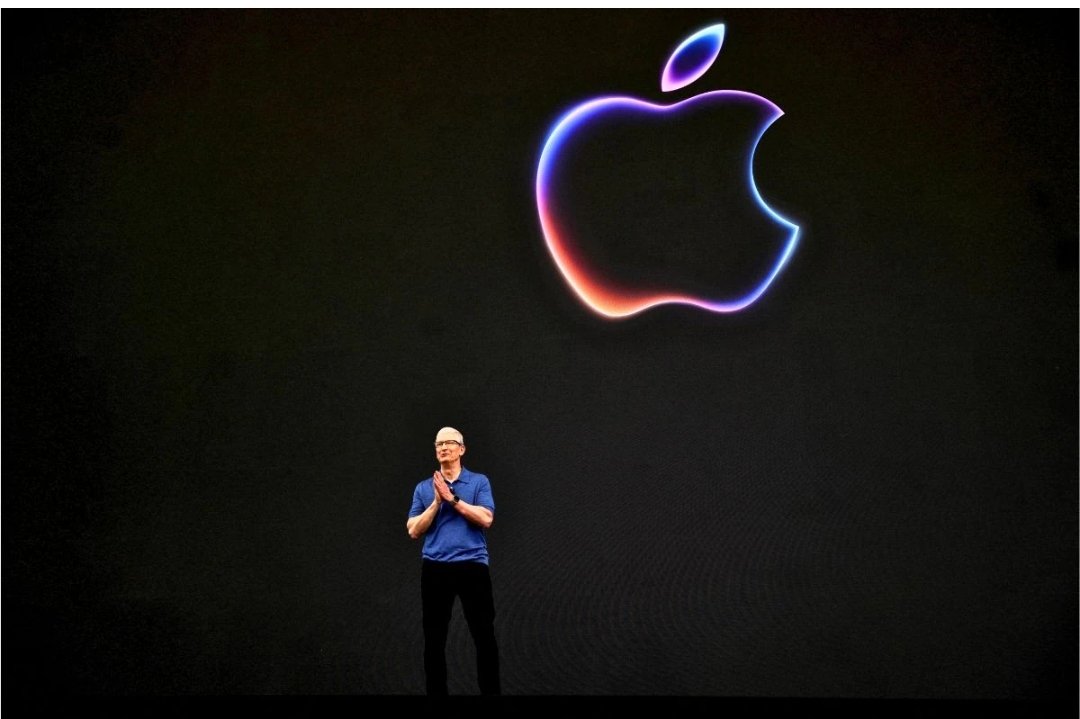
Apple announced today it is releasing one of the world’s largest and most sophisticated multimodal datasets to external researchers and developers, a bold strategic pivot designed to accelerate global AI innovation even as the company grapples with internal challenges in developing competitive generative models.
Dubbed the Apple Multimodal Research Corpus (AMRC), the dataset represents a significant achievement in AI training infrastructure, comprising over 1.2 trillion tokens of tightly synchronized image, text, and video data. This vast resource is meticulously structured to enable next-generation models to learn from integrated sensory inputs—mirroring human perception far more closely than traditional single-modality datasets.
At its core, the AMRC includes 800 billion high-resolution annotated images, each enriched with dense natural-language captions, precise object bounding boxes, and pixel-level semantic segmentation masks. These annotations go beyond basic labeling: they capture hierarchical relationships between objects, contextual scene understanding, and fine-grained attributes such as material textures, lighting conditions, and emotional tone in human subjects.
This level of detail allows models to develop nuanced visual reasoning capabilities critical for applications like autonomous systems, augmented reality, and medical imaging.Complementing the image corpus are 300 billion text-image pairs, carefully curated from ethically sourced web content, opt-in user-generated media, and high-quality synthetic generations. Unlike noisy open-web datasets, every pair in AMRC undergoes multi-stage human and automated verification to ensure factual accuracy, cultural sensitivity, and linguistic diversity.
The collection spans more than 200 languages, with deliberate over-sampling of low-resource dialects to reduce bias against underrepresented global populations.The video component—50 billion frames of 4K-resolution footage—introduces temporal depth previously unavailable at this scale. Each frame is paired with synchronized audio transcripts, action labels, and dynamic annotations tracking object motion, camera movement, and interaction events. This enables training of models that can reason about causality, predict future states, and understand narrative flow—essential for video generation, robotic planning, and immersive storytelling.
To address gaps in real-world data coverage, Apple has incorporated 100 billion synthetic data points generated using its most advanced internal diffusion, autoregressive, and 3D reconstruction models. These synthetic samples are not mere filler: they are designed to simulate rare but critical scenarios—such as extreme weather events, medical anomalies, or edge-case user interactions—while maintaining photorealism and physical accuracy.
Metadata layers include depth maps, surface normals, optical flow fields, and simulated physics logs, giving models access to information typically unavailable in real-world captures.“Multimodal training is the future of AI,” said Dr. Elena Marquez, head of Apple’s AI Research Division, during a closed-door briefing with select academic partners. “Humans don’t experience the world through isolated channels. We see, hear, read, and interact simultaneously.
The AMRC is engineered to replicate that integration at scale, enabling models to achieve true cross-modal understanding and robust long-context reasoning.”What sets AMRC apart from predecessors like LAION-5B or Google’s JFT-300M is its obsessive focus on data quality, privacy, and coherence. Every sample passes through a proprietary pipeline that removes personally identifiable information, detects deepfakes, and flags potentially harmful content. Apple’s privacy-preserving synthesis engine regenerates sensitive elements—such as faces or license plates—using differential privacy techniques, ensuring compliance with global regulations while preserving utility.
The release follows months of internal acknowledgment that Apple’s on-device AI models, while highly efficient and privacy-focused, continue to lag behind cloud-based leaders in key benchmarks. Apple’s current flagship models score significantly lower than GPT-4o, Gemini 2.0, and Llama 3.1 in tests of logical reasoning, creative writing, and complex instruction-following.
Engineers cite limited access to diverse, high-quality training data and conservative scaling strategies as primary bottlenecks.“This is Apple admitting it can’t win the AI race alone,” said Marcus Holt, a senior AI analyst at DeepTech Insights. “They’ve built an unmatched data moat through billions of consenting devices, but turning that into frontier models requires computational scale and algorithmic agility they haven’t yet mastered.
By open-sourcing the fuel, they let the global research engine run—while buying time to refine their own stack.”
Access to AMRC will be tightly controlled but meaningfully open:
Academic institutions receive full dataset access through secure, air-gapped cloud partitions with audit logging and usage monitoring.
Verified developers gain limited subsets tailored for integration into consumer apps, AR/VR experiences, and accessibility tools.
Enterprise researchers can request custom data slices with embedded governance rules, watermarking, and real-time compliance tracking.
To spur innovation, Apple is launching the AMRC Global Challenge next quarter, backed by a $10 million grant pool. Top prizes will reward breakthroughs in multimodal reasoning, on-device efficiency, safety alignment, and bias mitigation. Winning models will be showcased at WWDC 2026 and fast-tracked for potential integration into iOS, macOS, and visionOS.This initiative represents a philosophical earthquake for Apple, a company long defined by vertical integration and secrecy.
By transforming from a gated garden into a foundational infrastructure provider, Apple is betting that leadership in AI will increasingly belong to those who control the data layer—not just the model layer. Whether this generosity accelerates catch-up or cedes ground to faster-moving rivals remains the central question for Cupertino’s next decade.