October 2025 is slipping away, and with it, the last flicker of hope for Manipur’s internally displaced persons. In July, the President Rule governance unveiled a three-phase rehabilitation plan with bold timelines: Phase One in July, Phase Two in October, and full closure of all 350 camps by December. The promise was clear—secure return, rebuilt homes, restored lives.
Yet, as the month ends, there is no movement, no rebuilding, no sign of commitment on the ground. The question now hangs heavy: Was this elaborate plan nothing more than a public relations exercise, designed to project action while delivering none?
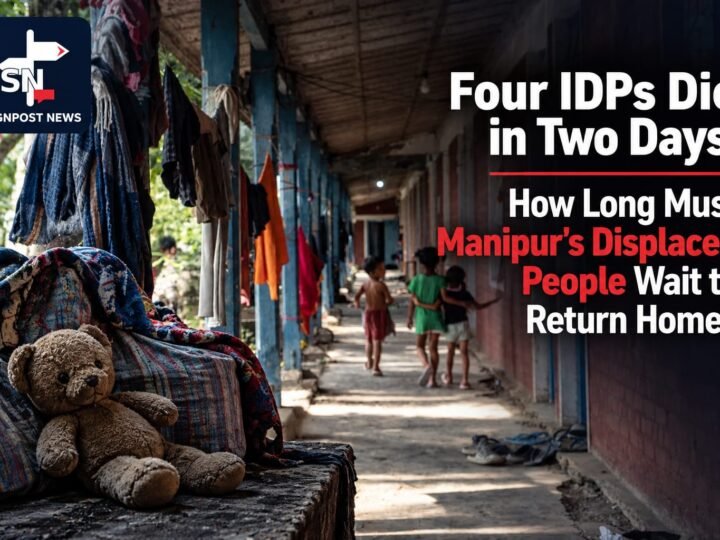
Phase One limped forward with a few families returning under heavy security, only to be halted, reasons unknown. Phase Two, meant to bring thousands home, has vanished into silence. High-level meetings continue—officials congratulated themselves for “identifying locations” for rehabilitation—but no buses roll, no homes rise, no safety is assured. In the camps, children grow thinner, elders weaker, and despair deeper.
Take the Meitei families displaced from villages in Bishnupur district. For months, they have pleaded for safe passage back to their lands. Delegations met the governor, who promised action within days. District officials visited camps, distributing pamphlets about welfare schemes.
But when families tried to return, they were stopped at checkpoints by security forces citing vague “concerns.” Today, they remain exiled, celebrating festivals like Ningol Chakkouba in makeshift shelters, their ancestral homes just miles away—yet unreachable.
The irony is bitter.The story repeats in Dolaithabi, Imphal East. Over a hundred IDPs, mostly sheltered at Sajiwa camp, were assured by the district commissioner that coordinated returns were imminent. In July, they marched to the Iril River with banners pleading for the help. Officials nodded, promised follow-up, and then—nothing. Security personnel turned them back. No alternative housing, no compensation, no plan.
Across Kuki and Meitei camps alike, the pattern is the same: grand announcements, fleeting visits, and then abandonment. Under President’s Rule since February, central oversight was supposed to bring accountability. Instead, it has delivered bureaucracy without backbone. Relief committees are ignored, and the voices of the displaced drowned out by bureaucracy paperwork and file process. Was it all for show?
The press conferences, the governor’s assurances, the neatly typed rehabilitation blueprints—they certainly looked good on paper. But optics without outcomes breed only cynicism. Unfulfilled promises don’t just delay recovery; they risk everything.
Amid the festering IDP crisis, a bitter clash has unfolded between Manipur Lok Sabha MP Dr. Bimol Akoijam and former Chief Minister N. Biren Singh, turning the plight of displaced families into political ammunition. N Biren Singh, speaking recently, professed profound worry for the thousands enduring squalid relief camps statewide, insisting the ordeal could have been alleviated had President’s Rule not descended on the state in February this year, derailing decisive action.
Bimol Akoijam, undeterred, unleashed a scathing rebuke, decrying N Biren’s outpourings as crocodile tears laced with hypocrisy, misinformation, and rank political opportunism.
Scrap the phases if they cannot be honored. Instead, deploy neutral security for escorted returns, fund community-driven reconstruction, and bring displaced leaders into real decision-making. For the families of Bishnupur and Dolaithabi, October is not just another month ending—it is a betrayal made visible. Rhetoric must give way to refuge. Act now, or let history record this not as a crisis managed, but as a people forsaken.