Imphal, October 2026: Divine Panthou has called upon the Meitei community to return to its ancestral religion, preserve its language and traditional customs, and work towards securing legal safeguards for its land and identity. He said the gradual neglect of ancestral religious practices had weakened the community’s cultural and social foundations.
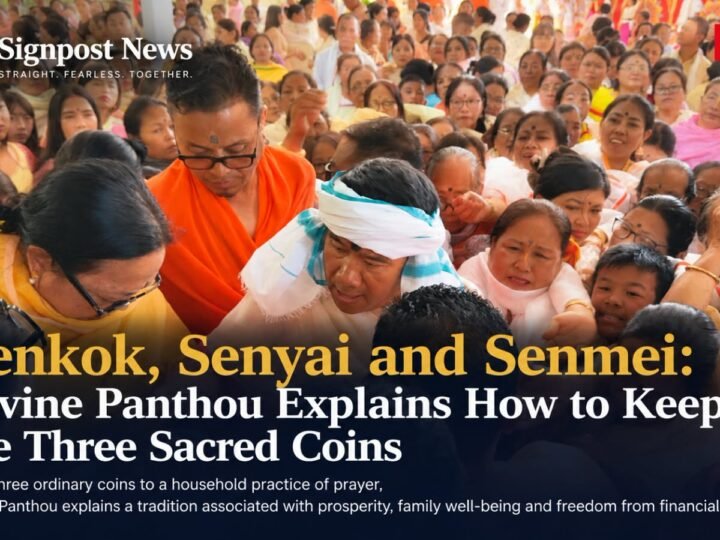
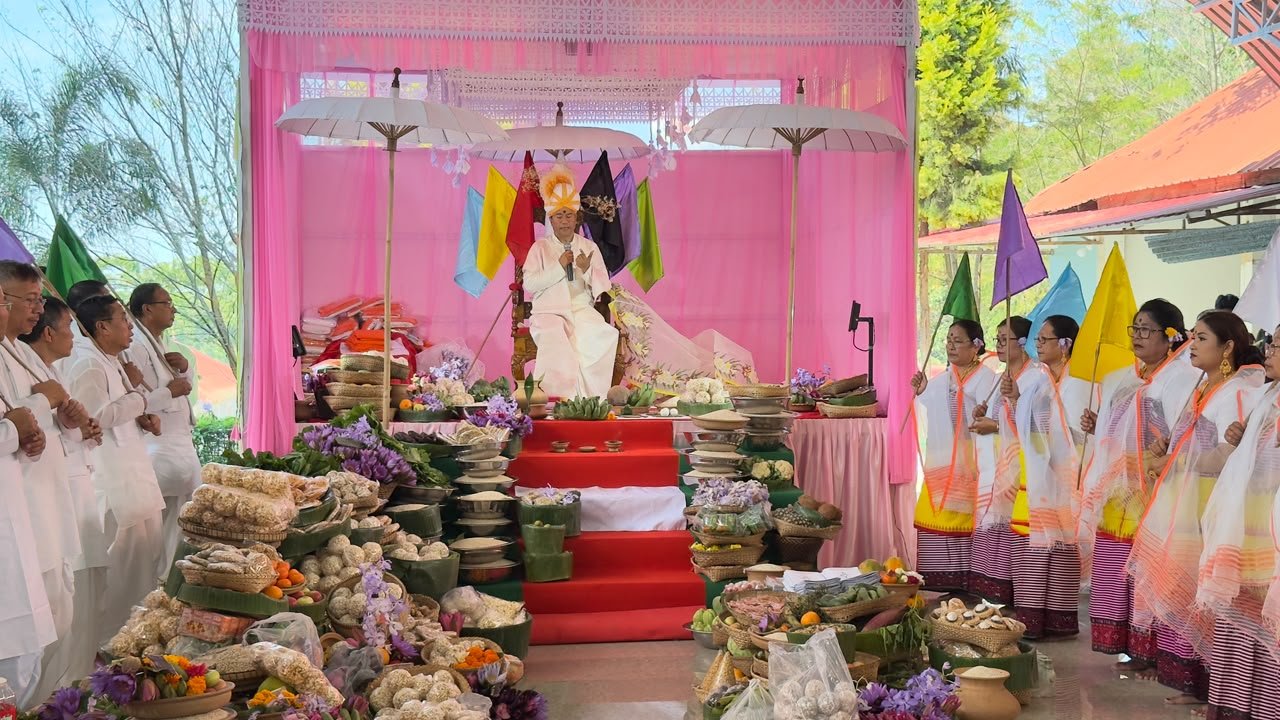
He was addressing devotees and members of the public during the Mera Thanil Meitei Phambal Tongba Meitei Makok Happa 2026 programme organised by Ima Leishem Innat Loisang at Selloi Langmaiching in Imphal East on 26 October 2026. As part of the event, Divine Panthou also showered Senyai Maru to all devotees which is to be planted in their homestead land, at the Chingkhei direction, for prosperity.
Speaking on the significance of the ceremony, Divine Panthou said the gathering demonstrated how a community divided by differences could come together through love, understanding and mutual respect. He welcomed the participation of people who had come to learn about the ancestral religion even if they were not its followers.
Referring to the prophecy of Ipu Khongnang Thaba, he said the religious observances performed on the hills of Selloi Langmaiching carried a deeper meaning. According to him, the ceremony symbolised the return of the Meitei ancestral religion to its roots and the renewed responsibility of the community to preserve its spiritual inheritance.
Divine Panthou clarified that the religious revival movement was not intended to convert people from one religion to another. Rather, he said, its purpose was to encourage Meiteis to understand their own ancestral religion, language, customs and traditional values.
He emphasised that preserving religion should not be confined to ceremonies and rituals. It must also find expression in everyday life, beginning within the family and extending to social conduct, relationships and responsibilities towards the community.
He called upon both women and men to take equal responsibility for preserving the traditions inherited from their ancestors.
Turning to the question of constitutional and legal protection, Divine Panthou expressed concern over what he described as the absence of adequate safeguards for the Meitei community despite its indigenous roots in Manipur.
He referred to the constitutional protections available to Scheduled Tribe and Scheduled Caste communities, including political reservation, educational and employment opportunities, and certain land-related safeguards.
According to Divine Panthou, the question of protecting Meitei land, identity and future generations should receive serious attention before further cultural erosion takes place. He warned that a community which gradually loses touch with its religion, language and ancestral customs risks weakening the foundations of its collective identity.
Divine Panthou urged Meiteis not to hesitate in identifying themselves with their ancestral heritage. He said people should take pride in their identity while showing love and respect towards others.
He also expressed concern that many Meiteis had become increasingly absorbed in religious traditions other than their own while paying insufficient attention to the teachings and practices passed down by their ancestors.
The revival of the ancestral religion, he maintained, need not be a distant goal. It could begin immediately if people practised their faith with sincerity, discipline, affection and a sense of responsibility.
Describing life without spiritual guidance as a form of darkness, Divine Panthou said religious understanding should help people develop good character, mutual respect and a stronger sense of belonging.
He concluded by appealing to Meitei women and men to work together in protecting their ancestral religion, language, customs, people and land.
The Meitei Phambal Tongba Meitei Makok Happa 2026 programme at Selloi Langmaiching thus became an occasion not only for religious observance but also for reflection on the future of Meitei cultural identity and the responsibilities of the present generation.