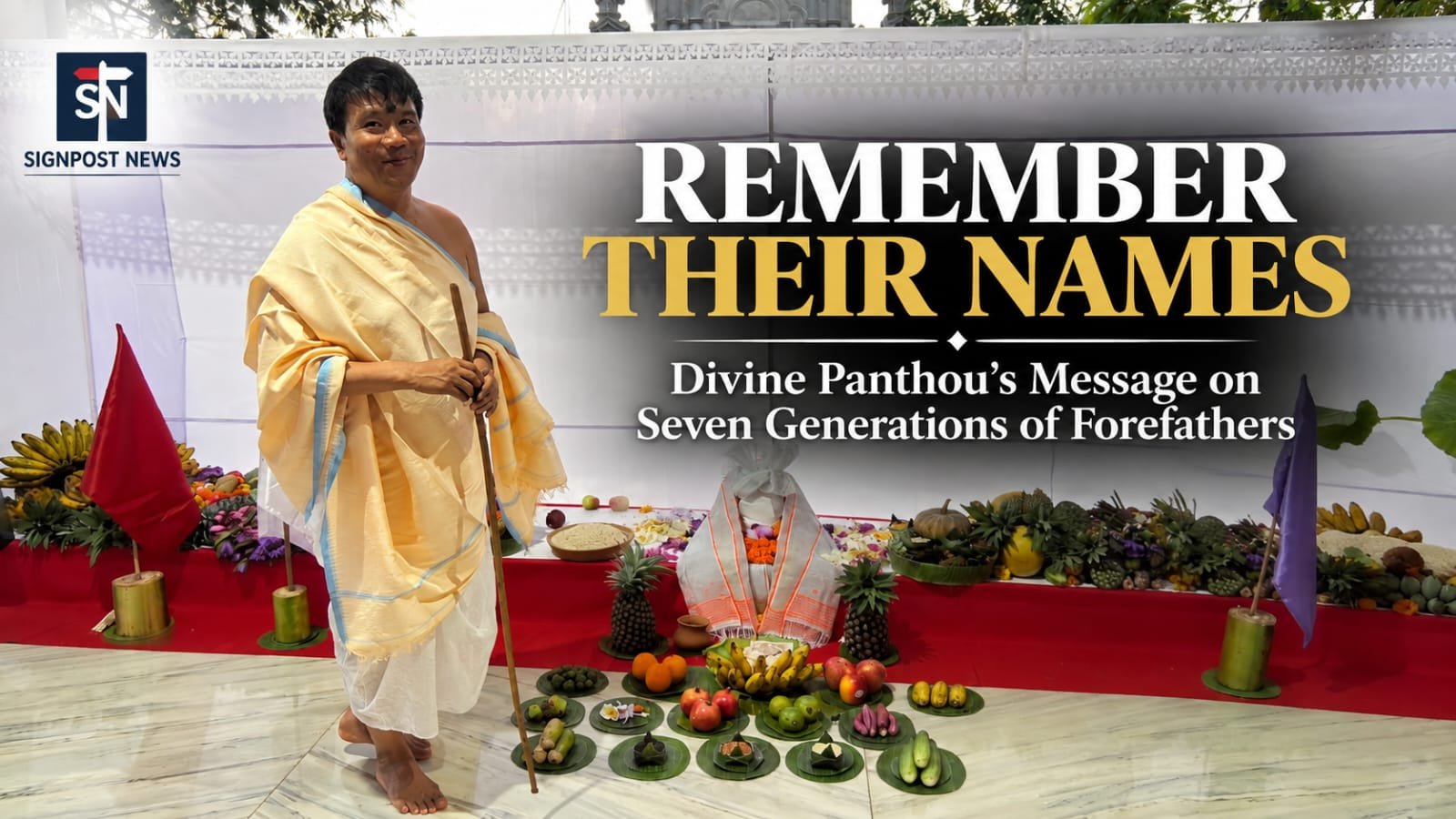
At the 32nd Langban Thanil Ipa Ipu Purol Taret Looklen Katpa observance at Selloi Langmaiching, Divine Panthou urged families to preserve the memory of those who came before them — if not seven generations, at least father, grandfather and great-grandfather.
There are names we hear from our parents and grandparents when we are young. They may belong to a grandfather, a great-grandfather or someone who lived so long ago that no photograph remains in the family. As generations pass, however, some of those names slowly disappear from everyday conversation, until one day the children of the family no longer know who they were.
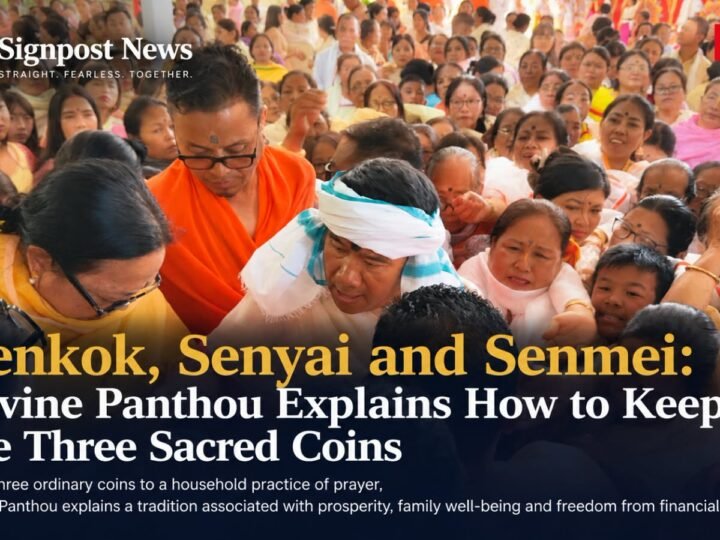
It was this relationship between the living and those who came before them that gave meaning to the 32nd Langban Thanil Ipa Ipu Purol Taret-ki Looklen Katpa, held at Selloi Langmaiching in Imphal East on Saturday, September 26. More than 1,500 devotees participated in the religious observance organised by Ima Leishem Inat Loishang at Panthou Ishaikol Nung, Nongpok Chingu Thong, Meitei Laikol, Thalo Sipi Lol, Selloi Langmaiching.
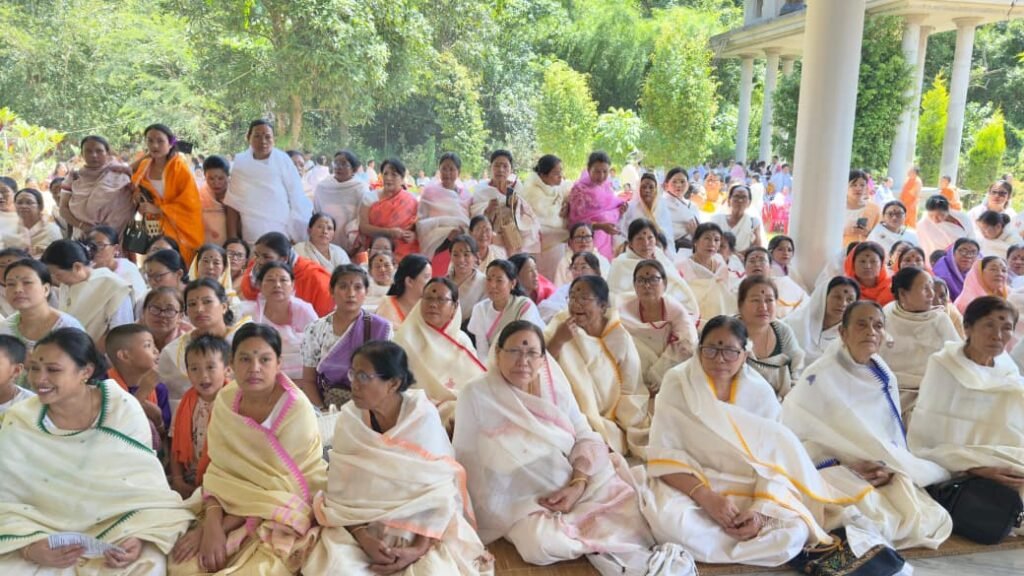
The gathering was not merely about performing an annual ritual or coming together for a community feast. At its centre was a much older responsibility — remembering the forefathers who gave each generation its family, lineage and connection to the land. Divine Panthou’s teaching during the observance brought that responsibility back to something every family can understand: knowing and remembering the names of those from whom we came.
What Looklen Katpa means
At the heart of the observance was Looklen Katpa, a traditional ritual performed to satisfy or gratify the departed ancestors. Food is prepared and offered as part of the ritual, but Looklen Katpa carries a meaning beyond the physical act of placing food before the ancestors. It expresses remembrance, gratitude and a continuing relationship between the living and their forefathers.
During the Langban observance, food was first offered to Tengbanba Mapu and subsequently to Ipa Ipu Purol Taret, the forefathers extending back through seven generations. The ritual remembered the ancestors of the seven Salais — Mangang, Luwang, Khuman, Angom, Moirang, Kha Nganba and Sarang Leishangthem.
Men (Piba) prepared the food for the ceremony and, at the Chingkhei hills of Selloi Langmaiching, the forefathers were ritually called to receive what their descendants had prepared for them. Within the spiritual understanding expressed during the observance, the ancestors come to receive the offerings made by their children and descendants. Looklen Katpa is therefore an act through which the living seek to gratify their forefathers while acknowledging the relationship that continues across generations.
The meaning also reaches into ordinary family life. The present generation did not begin with itself. The homes we inherit and the land on which we live were once inhabited, cultivated and loved by people who came before us. Some of their names remain familiar; others may survive only in the memories of the oldest members of a family.
Remembering them is therefore an expression of gratitude as much as a religious responsibility. When an elder dies without passing on those names and stories, an entire part of the family’s memory can disappear. Once lost, recovering it may not be easy.
If seven are forgotten, remember three
One of Divine Panthou’s central messages during the observance was that people should remember their forefathers up to the seventh generation. Yet the teaching also recognised a reality faced by many families today: not everyone can trace seven generations by name. Family records may have disappeared, elders may have passed away without leaving those details behind, or the connections may simply have faded with time.
Panthou therefore asked people not to abandon the effort merely because all seven generations can no longer be remembered. If seven are beyond memory, he said, families should at least try to remember three — father, grandfather and great-grandfather. Their names should be known and, where possible, the dates of their death remembered. Most importantly, that knowledge should be passed on to the children so that the next generation does not begin with even less memory than the present one.
There is something deeply human in this teaching. Family history is not preserved only in books or official records. Much of it survives because a grandmother remembers a name, a father tells a story, or a child asks who lived in the family home before them. When those conversations stop, family history can disappear quietly.
Remembering the names of forefathers therefore becomes a bridge between generations. A child who knows the names of a grandfather and great-grandfather begins to understand that the family existed before his or her own lifetime and that today’s generation is part of a much longer story.
Life, death and the departed soul
The day’s religious programme began with the rendering of a traditional Meitei song starting with “Salai Ipa Ipu Meekou Sheishaklon,” followed by the playing of the Meitei pung. Divine Panthou then gave his blessings and delivered a teaching on “Mee Mapoki Ashiba amadi Ahingbagi Paotak,” reflecting on human life and death and the relationship between those who are living and those who have departed.
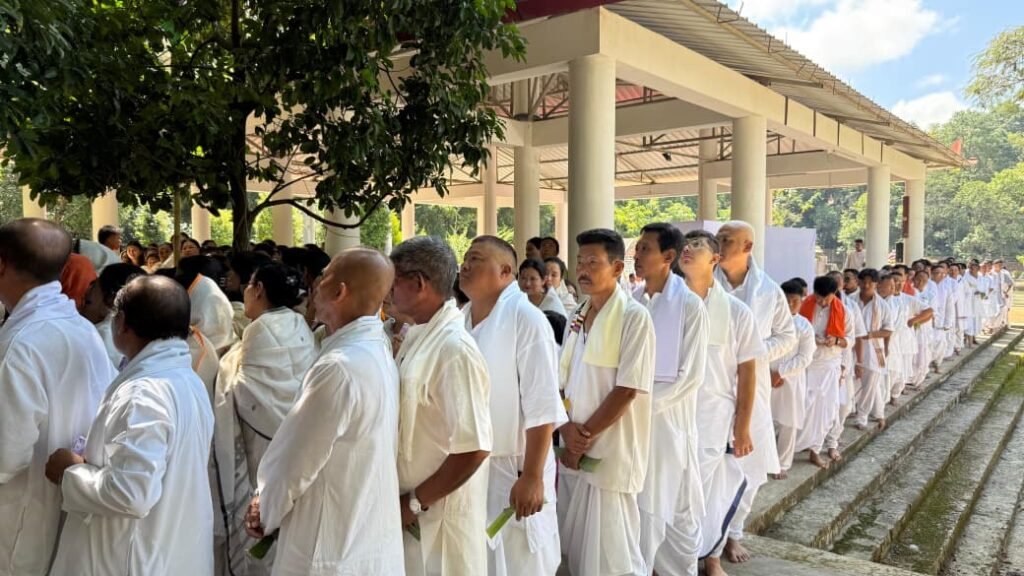
Within the spiritual understanding presented during the observance, death should not erase a person’s place within the family. Panthou spoke about keeping a place for departed souls and maintaining their connection with descendants through remembrance. The responsibility falls upon the living because they are the ones who can speak the names of the departed and carry those names forward.
His message also touched upon ancestors whose descendants, over generations, may have adopted different names or religious identities. Panthou called for those ancestral connections to be remembered rather than allowed to disappear. Even when identity has changed with time, the forefathers themselves remain part of the lineage from which the present generation came.
It was in this context that Panthou made the larger call: “Let Meitei revive.” The message at Selloi Langmaiching presented such revival as something that begins within families, through the recovery of lineage and ancestral memory. Before memory disappears, younger generations can sit with their elders, ask for names, listen to what they remember and preserve whatever remains of that family history.
When food becomes remembrance
Food gives Looklen Katpa an intimate connection with everyday family life. We prepare food for the people we love, welcome family members home with a meal and gather around food during important moments of life. During Langban, food becomes part of the ritual through which the living remember and seek to gratify those who are no longer physically present.
The descendants prepare the food, ritually call their forefathers and make the offering. What is offered may be food, but what gives the act its deeper meaning is remembrance. The ritual acknowledges that the life enjoyed by the present generation has a history and that there were fathers, mothers and forefathers who built families and homes long before the present generation arrived.
After the religious observance concluded, more than 1,500 devotees joined the community feast. The rituals associated with Langban will continue until Langban Thasu, carrying forward the tradition of remembering and honouring departed forefathers.
The larger message from this year’s observance, however, does not have to remain at Selloi Langmaiching. It can continue in individual homes whenever children sit beside their parents and grandparents and ask about the people who came before them. Names can be written down, stories can be recorded and whatever a family still remembers can be handed to the next generation.
Remember seven generations if memory still reaches that far. If it does not, begin with three — father, grandfather and great-grandfather. Know their names, remember them and let the children know who they were.
For in remembering our forefathers, we are also remembering a part of ourselves.